Building Trust: Institutions, Retail, and Crypto Market Security
Governance, Regulated Custody, and Cross-Sector Cooperation 2024-2026
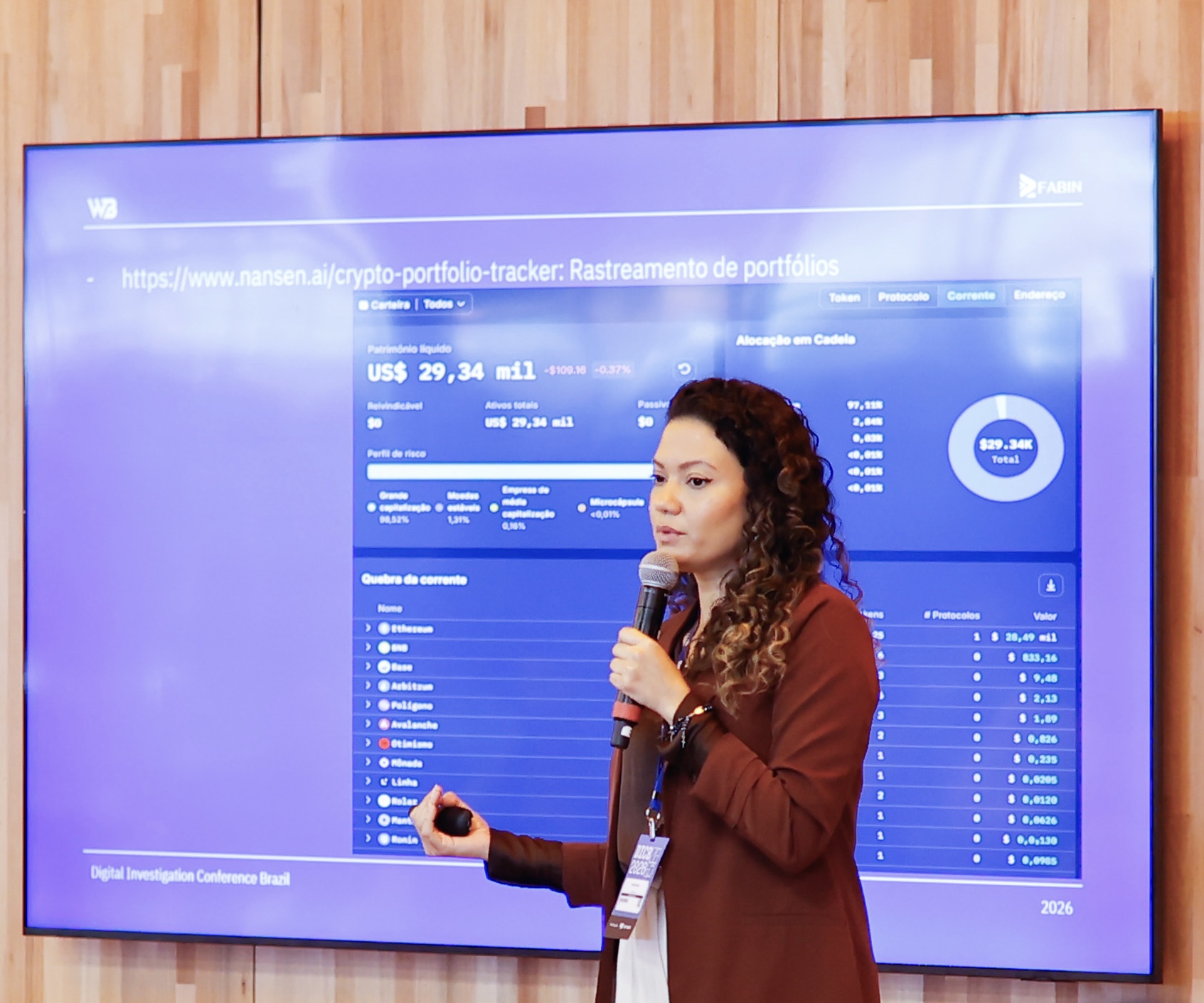
30min · Full recording from 19/03/2026 at MERGE Stage. Also available on YouTube.
The Trust Paradox in Crypto vs Traditional Finance
Institutional Context 2024-2026: Crypto markets face a paradoxical challenge: the industry promotes "trustless" (decentralized, no intermediary), yet users MUST TRUST institutions before participating. This panel unites three pillars of Brazil's regulated market—María Fernanda (Ministry of Justice, 12 years law enforcement + 4 years institutional), Víctor Rugu (BV Bank, 13+ years vehicle financing leadership), and Verónica (Crypto Finance, regulated custodian)—to demonstrate how institutional trust and decentralized security converge in 2024-2026. Source: MERGE Panel, October 2024, São Paulo.
5 Key Learning Points:
- 1. Crypto Crimes Exploit Human Vulnerability, Not Technical Flaws: 95% of crypto fraud (romance scams, fake investment, sextortion, insider theft) exploits social engineering, not technical weakness. Even "technical" attacks start with phishing. Implication: institutional custody + regulatory training eliminate these gaps. Source: María Fernanda, Ministry of Justice, 2024.
- 2. Banks Sell Trust via Governance, Risk, and Compliance: Classic banking model = compliance + risk management + governance. This is NOT replaced by digital assets; it's ENHANCED. BV Bank (13+ years leader) maintains this tripod while innovating with blockchain. 2024-2026: digital assets enhance (not replace) trust. Source: Víctor Rugu, BV Bank Strategy & Innovation, 2024.
- 3. Regulated Custodians as Translation Layer Between TradFi and Blockchain: Crypto Finance acts as intermediary between blockchain technology and traditional banks. Banks do NOT understand smart contracts directly; they need "compliance + regulated custody." In 2024, emerging regulations leave no room for error: failures erode client trust. Source: Verónica, Crypto Finance, MERGE Panel 2024.
- 4. Public-Private Cooperation (PPC) Cross-Border is Critical Missing Infrastructure: María Fernanda identifies that international criminals frequently operate without inter-agency response. Exchanges/custodians "not obligated" but collaborative in investigations multiply security capacity. This requires continuous dialogue, not punitive regulation. Example: sextortion investigation requires blockchain traceability + coordinated legal response. Source: María Fernanda, Brazil Ministry of Justice, 2024.
- 5. Five Blockchain Characteristics as "Digital Legos" Reconfigurable: Víctor Rugu articulates: (1) Representativeness (tokenization), (2) Programmability (automation), (3) Interoperability (fluid data), (4) Immutability (final records), (5) Traceability (audit trail). Combined = trust network where security increases with value at stake, inverse to counterparty risk. Source: Víctor Rugu, BV Bank, MERGE October 2024.
5 Subsections - Session Summary:
1. Crime Typology: Social Engineering vs Technical Vulnerability
María Fernanda (12 years enforcement, 4 years institutional) reveals crypto crimes = identity theft (romance scams, fake "intelligent women" on Telegram), investment fraud (300-400% return promises), sextortion (illegal content distribution), and insider theft (employees stealing funds with fake documents). Even last year's massive "hack attack" began with phishing, not exploit code. Radical implication: blockchain technology IS MORE secure than TradFi; the breach is human. Solution: institutional custodians + regulatory education eliminate 95% of fraud. Source: MERGE Panel, October 2024, São Paulo.
2. Banking Trust Model: Governance + Risk + Compliance
Víctor Rugu (Strategy & Innovation, BV Bank leader 13+ years in vehicle financing) teaches: "Banks sell trust with money and operations." The "rice and beans" = compliance + risk management + governance. When BV Bank iterates on digital assets 2024-2026 (DVP smart contracts, product digital passports, Brazil Central Bank CBDC Pilot Phase 2), it does NOT replace this core. It enhances it. Crypto deposits do NOT substitute traditional deposits; they expand options. Even using stablecoins on credit card to travel creates subjective "insecurity"—why institutional regulated intermediaries (BV Bank, Crypto Finance) are critical. Source: Víctor Rugu, BV Bank, MERGE October 2024.
3. Translation Layer: Regulated Custodians as Bridge
Verónica (Crypto Finance, regulated custodian) articulates: "We are the translation layer between blockchain and traditional banks." Banks trust governance/AML/KYC/regulation; blockchain offers transparency/immutability/neutrality. Crypto Finance performs this translation: accept crypto assets, apply institutional custody (protected private keys), generate audit reports, comply with AML/CFT. Result 2024: "Less room for error." Failures (lost funds, non-compliance) irreversibly erode trust. This forces regulated custodians to stay "on top of your game," raising industry standards across the board. Source: Verónica, Crypto Finance, MERGE Panel, October 2024.
4. Cross-Border Cooperation: Missing Regulatory Infrastructure
María Fernanda identifies that sextortion, romance scam, and trafficking investigations require cross-border information. Many international custodians/exchanges "not obligated" (by local law) to respond, creating gaps. Her proposal: public-private dialogue (PPC). Real example: a teacher in Brazil lost all savings to a "smart woman" on Telegram who stole his crypto. He didn't know how to enter safely; María Fernanda proposes: "Companies can provide safety education + regulated custody." The 2024-2026 future requires inter-agency cooperation treaties (governments, exchanges, custodians) to pursue transnational criminals. Conversely, when this cooperation exists, retail trust grows exponentially. Source: MERGE Panel, October 2024.
5. Five Blockchain Characteristics: Digital Legos Reconfigurable for Financial Innovation
Víctor Rugu closes with the architectural metaphor: digital assets/blockchain = Legos. Five "pieces": (1) Representativeness (tokenization: any physical/virtual asset → token), (2) Programmability (automations, security layers, contract logic), (3) Interoperability (data flows between institutions/systems without silos), (4) Immutability (what is registered is irreversible, eliminating fraudulent historical revision), (5) Traceability (full on-chain audit). Combined, these characteristics generate "added value" = security increases with value at stake (inverse to TradFi where larger money = larger counterparty risk). 2024-2026 uses: BV Bank implements DVP (Delivery vs Payment) in CBDC pilots, product digital passports (mobility/insurance), automatic settlement. Source: Víctor Rugu, BV Bank, MERGE October 2024.
6. FAQs:
Q: If I'm retail and want to invest safely in crypto in 2024, how do I trust?
A: Use regulated custody (Crypto Finance, banks like BV) + platforms with KYC/AML compliance. Even if something goes wrong, there's a legal "safety net" + authority cooperation (María Fernanda, Ministry) to recover funds. Without regulated custody, you only have blockchain trustless—no protection from social engineering. Source: MERGE Panel, October 2024.
Q: Is blockchain "secure" technically vs social engineering?
A: Yes. 95% of crypto crime exploits HUMAN vulnerability (phishing, romance scams), NOT technical flaw. The problem: even "technical" hacks start with phishing. Solution: education + institutional custody eliminates exposure to these attacks. Blockchain technology is MORE transparent/auditable than TradFi. Source: María Fernanda, Ministry of Justice, 2024.
Q: Do regulated custodians "contradict" crypto decentralization?
A: No. They are complementary layers. Blockchain = decentralized backend (trustless), Regulated Custody = institutional frontend (governance/compliance). Optionality: you choose. Retail uses custody (safety); pro traders use smart contracts directly. Both coexist, increasing market optionality. Source: MERGE Panel, October 2024.
Q: What privacy do I lose with public-private cooperation in crypto?
A: Cooperation (exchanges reporting to authorities) applies ONLY to criminals (sextortion, trafficking, romance scams). Legal users with complete KYC don't lose privacy; they gain security. María Fernanda emphasizes: crypto's cross-border nature requires international dialogue—without it, criminals win. Source: MERGE Panel, October 2024.




Leonardo Rubinstein
Journalist at Jornal Web3