
Built with the leaders of crypto and the financial sector
VISA Santander Polygon Labs Coinbase Circle Solana Foundation Ripple dYdX Securitize Mercado Pago Kraken B3 Parfin Arbitrum Bit2Me Kaleido BCP Bolivia Tritemius UCM VISA Santander Polygon Labs Coinbase Circle Solana Foundation Ripple dYdX Securitize Mercado Pago Kraken B3 Parfin Arbitrum Bit2Me Kaleido BCP Bolivia Tritemius UCM
MERGE Institute × Tritemius

Created by MERGE, the largest institutional crypto and digital assets conference in Southern Europe and Latin America, and Tritemius, the Spanish fund exclusively specialized in Web3 and digital assets.

Learn blockchain, crypto and digital assets from the industry leaders.

Blockchain, crypto and digital assets are already transforming banking, markets and business.

Online executive program with 9 modules in blockchain, DeFi, tokenization and digital assets. Taught by active professionals in banking, regulation, protocols and Web3. From the fundamentals to the future of the financial system, with a practical focus and institutional vision.

9 modules +8 instructors +50h of content Certificate
Discover MERGE Institute in 3 minutes
9
program modules
+8
active professionals
+50h
of educational content
+5K
MERGE community
Start free · Free blockchain, DeFi and crypto classes

Where do you want to start? Choose your class.

Five recorded classes: one on fundamentals to start and four specialized in blockchain, digital assets, DeFi and Web3. Select the one that best suits you, you receive it by email instantly.
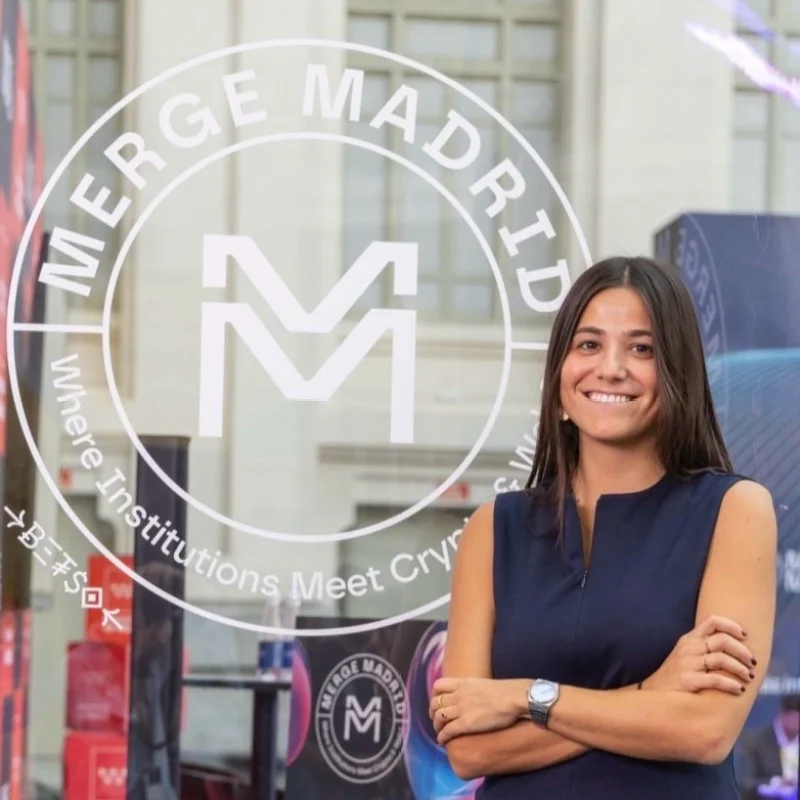
Fundamentals
+30 min class

Problems of the current financial system and how Blockchain solves them

Paula PascualCEO of MERGE
See details

Starting point for any profile. Why this new financial infrastructure emerges and what specific problems of the current system it is solving.

  • Limitations of the current financial system
  • Blockchain as new infrastructure
  • Foundational cases: Bitcoin and Ethereum
  • State of the ecosystem and adoption
Banking and digital markets
+30 min class

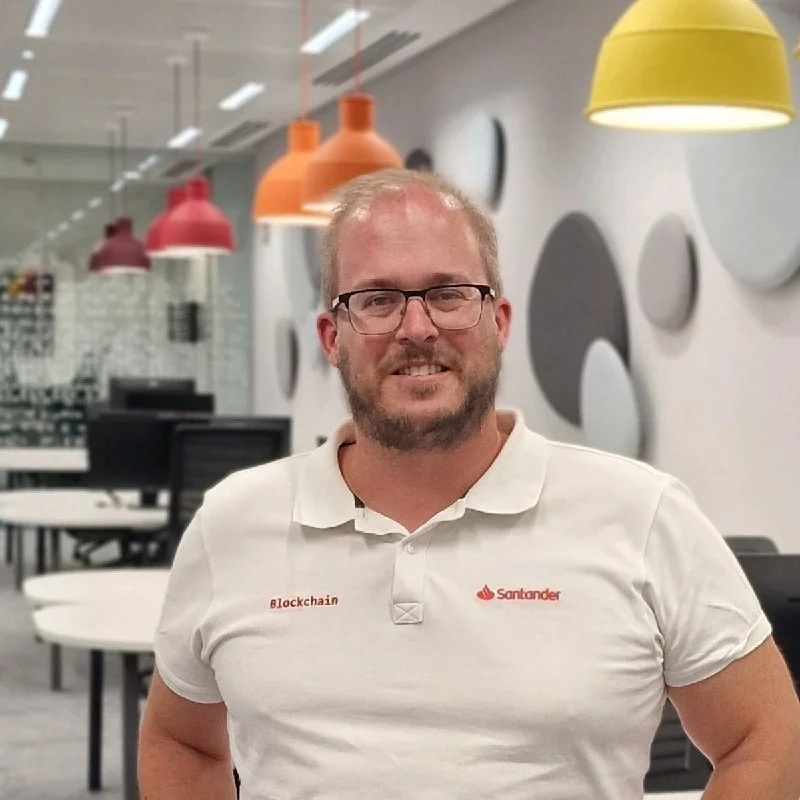
The role of banking within digital assets: key custody

Ramón PajaroBanco Santander
See details

Stablecoins, institutional custody, tokenized deposits and the infrastructure that banking integrates today. A real case from inside a systemic institution.

  • Digital assets in private and corporate banking
  • Custody, settlement and tokenized deposits
  • Tokenization of bonds, funds and RWAs
  • How to position yourself to lead the transition
Enterprise blockchain
+30 min class

Enterprise blockchain: use cases beyond the financial sector

Javier GarcíaKaleido
See details

When blockchain makes sense in business, sector-specific cases (supply chain, identity, energy) and what has worked in corporate adoption.

  • When to use blockchain and when not to
  • Cases: supply chain, identity, energy
  • Public vs private vs consortium networks
  • What has failed in enterprise adoption
DeFi and decentralized finance
+30 min class

Fundamentals of Decentralized Finance (DeFi)

Xavier ArmengolDeFi Strategy Mentor
See details

Wallets, DEX, lending, staking. How the decentralized financial system operates from within and why it changes the role of the traditional intermediary.

  • Wallets, custody and basic operations
  • Lending, staking and DEX
  • Why DeFi changes the role of banks
  • Employability in digital assets
Web3 and the future of the Internet
+30 min class

Web3 and business models: stablecoins, DeFi and prediction markets

Manuel EchanovePolygon Labs
See details

How crypto is rewriting the Internet infrastructure: onchain payments, prediction markets, programmable stablecoins and models with real traction.

  • Stablecoins as programmable infrastructure
  • Prediction markets and new primitives
  • RWA tokenization: BlackRock, Securitize
  • Sustainable models vs hype
Who it's for

A program to understand the new financial system, wherever you come from.

Generalist by design. Same content, different entry points depending on your sector and professional stage.

If you work in the financial sector

Banking, asset management, fintech, payments or consulting. You want to understand how your industry is being transformed by digital assets and position yourself to lead change in your organization.

If you work in another industry

Tech, retail, energy, telco or logistics. You want to understand how crypto and blockchain will impact your sector, or pivot professionally into the digital assets ecosystem.

If you're a student or early career

University student or in your early professional years. You want to specialize in one of the fastest-growing sectors in terms of employability: blockchain, crypto and decentralized finance.

If you already work in crypto or Web3

You're already inside the crypto and Web3 industry, but you lack the institutional vision: how it impacts the traditional financial system and how to open doors with banking and regulation.

Training program

9 modules in blockchain, DeFi and digital assets.

From the paradigm to the future of money. Each module covers a key pillar of the ecosystem: crypto assets, digital banking, DeFi, Web3, MiCA regulation, blockchain technology, tokenization and infrastructure.

M0
The new financial paradigm
Overview: blockchain, digital assets, smart contracts, DeFi and Web3. Why this new infrastructure emerges and how to navigate the program.
Paula PascualCEO of MERGE · Forbes 30 under 30
See details
  • Limitations of the current financial system
  • Blockchain as new infrastructure
  • Foundational cases: Bitcoin and Ethereum
  • Current state of the ecosystem and institutional adoption
  • Program roadmap
Includes: introduction to the key pillars of the ecosystem
Start with the free class on this topic
M1
Digital Assets & Digital Money
Fundamentals of digital assets and the new money on blockchain. Tokenization and stablecoins as the monetary base of the ecosystem.
Paula PascualCEO of MERGE · Forbes 30 under 30
See details
  • Types of digital assets: cryptocurrencies, tokens, NFTs and their classification
  • Tokenization: concept, market impact and real cases
  • Stablecoins and programmable money: USDC, USDT, digital euro
  • Payments, trading and onchain collateral
  • Risks, regulation and institutionalization of the market
Includes: analysis frameworks, supplementary readings and case studies
M2
Banking, markets and the financial system
How digital assets integrate into banking, markets and financial architecture: custody, digital money and tokenization.
Ramón PajaroCrypto & Blockchain · Banco Santander
See details
  • The role of banking in digital assets: opportunities and resistance
  • Stablecoins, tokenized deposits and CBDCs
  • Institutional custody: regulation and providers
  • Tokenization of financial assets: bonds, funds, equity
  • Tokenized markets and T+0 settlement
  • Compliance and technology integration in banking
Includes: analysis of real banking cases and regulatory trends
Start with the free class on this topic
M3
DeFi: programmable financial system
Reconstruction of financial functions through software: credit, trading, liquidity, collateral and governance.
Xavier ArmengolDeFi Strategy Mentor
See details
  • DeFi fundamentals and architecture: key protocols
  • Wallets and basic operations: MetaMask, multisig, hardware
  • Lending, staking, DEX and onchain derivatives
  • Collateralization, liquidations and risk management
  • Liquidity, composability and market fragmentation
  • Tokenomics, governance and on-chain analytics
Includes: practical demonstrations and analysis of real protocols
Start with the free class on this topic
M4
Web3 and business models
Cases with real traction in payments, stablecoins, tokenization and DeFi. Framework to distinguish real adoption from narrative.
Manuel EchanoveHead of Payments, Stablecoins & RWAs · Polygon Labs
See details
  • Stablecoins and onchain payments: Visa, Stripe, Circle
  • Real world asset tokenization (RWA): BlackRock, Securitize
  • DeFi as financial infrastructure for businesses
  • Prediction markets and new primitives
  • Lessons learned: NFTs, DAOs and metaverse
  • Evaluation framework and key adoption metrics
Includes: project database and analysis frameworks
Start with the free class on this topic
M5
Enterprise Blockchain
Blockchain adoption in business: when it makes sense, what models work and how to connect corporate cases with the ecosystem.
Javier GarcíaHead of Digital Assets & Tokenization · Kaleido
See details
  • When to use blockchain in a business context
  • Public vs private vs consortium networks
  • Institutional infrastructure: providers and standards
  • Sector cases: supply chain, identity, finance, healthcare
  • What has failed in enterprise adoption and why
  • Solution design, integration and risk management
Includes: analysis of real corporate cases and decision framework
Start with the free class on this topic
M6
Infrastructure and technology
Technical foundation of the ecosystem: blockchain architecture, consensus, scalability, interoperability and security.
Iñigo Garcia de Mata
Iñigo Garcia de MataCo Founder & CTO · Sybol
See details
  • How blockchain works and consensus mechanisms
  • Nodes, validators, Layer 1 and Layer 2
  • Scalability: rollups, sidechains, sharding
  • Interoperability and bridges between chains
  • Smart contracts and oracles: Chainlink, Pyth
  • Privacy, custody and cybersecurity
Includes: architecture diagrams and ecosystem comparisons
M7
Regulation and compliance
Regulatory landscape for digital assets: MiCA, custody, asset classification and investor protection.
Alfredo MuñozPhD in Law UCM · Of Counsel CECA MAGAN
See details
  • Global regulatory landscape and sandboxes
  • MiCA in detail: scope, timeline and real impact
  • Utility tokens vs security tokens: legal implications
  • Regulated custody of digital assets
  • Investor protection and transparency obligations
  • Legal implications for issuers, exchanges and providers
Includes: MiCA executive summary and compliance checklist
M8
Future of the financial system
Evolution towards financial infrastructure based on blockchain, stablecoins, tokenization and automation.
Luis PastorCEO & Co-founder · Tritemius
See details
  • Institutional integration: how major players adopt blockchain
  • Asset tokenization: the next wave
  • Payments and stablecoins as global infrastructure
  • DeFi and hybrid infrastructures: CeFi + DeFi
  • AI + blockchain: convergence and opportunities
  • Micropayments, agent economy and sustainability
Includes: prospective analysis and 5-year trends

Download the full program

Receive the detailed program with contents, faculty, calendar and formats in your email. No commitment.

Does the program fit you? Reserve your spot now.

Next Executive cohort on June 15, 2026 · Limited spots · 12 remaining.

Start with a free class
Executive program pricing

Choose how you want to learn.

Same program, different intensity. From self-study to tailor-made corporate cohorts.

Open

Open Program

€1.499
One-time payment · 1 year access
  • +50h of on-demand content, always up to date
  • Learn whenever and wherever you want, no schedule
  • Quizzes and self-assessed practical cases
  • Official MERGE Institute certificate
  • Access to the MERGE community (Discord + WhatsApp)

Are you a company or community?

We design ad-hoc plans for institutions, chambers and institutional partners: tailor-made corporate cohorts, intensives, co-branding and use cases for your sector.

Contact the team
Why now

2026 is the year the financial system is being rewritten.

MiCA is in force. The first European regulatory framework for digital assets requires banking and fintech to act. Those who don't adapt will be left out of the market.

BlackRock, JPMorgan, Santander and BBVA are already tokenizing real assets. Tokenization has moved beyond pilot projects and is now routine operations at the world's largest institutions.

Stablecoins already surpass traditional players like Visa and Mastercard in transaction volume. What was marginal 3 years ago now moves trillions of dollars per year.

Talent demand in crypto and blockchain grows faster than supply. Roles opening in banking, asset management, fintech and consulting that didn't exist 2 years ago.

Now is the time to get trained.

Frequently asked questions

We answer your questions.

Do I need prior knowledge of crypto or blockchain?

No. The program starts from the fundamentals (M0 and M1) through to advanced topics. If you already have experience, the DeFi, regulation and future of the financial system modules will give you additional depth and insight.

What language is it taught in?

The program is taught in Spanish. Masterclass sessions with international leaders may be in English with subtitle support.

How many hours of dedication does it require?

The Open program totals more than 50 hours of content, distributable at your own pace. Each module is designed to be completed in 1-2 weeks with 3-4 hours per week. You have full access for 1 year from the enrollment date.

When does the program start?

It depends on the program:

Open Program: you start whenever you want. Once you complete payment you have immediate access to the content and start at your own pace.

Executive Program: starts by cohort, there are 4 per year. The next one is on June 15, 2026, and the following ones on September 15, December 15 and March 15, 2027.

What is the difference between Open and Executive?

The Open Program is 100% self-managed: recorded content, at your own pace for 1 year.

The Executive Program includes the same + quarterly cohort with live sessions every Tuesday from 18:30 to 20:30 CET for 12 weeks, small group, real networking and access to MERGE Madrid. The Executive requires attending live sessions on schedule, it's not self-paced. Sessions are recorded in case you need to review them.

Is it an official master's degree?

No. It is a non-university Executive Program, designed and taught by active professionals in the industry. The "University Master's" title in Spain is legally reserved for official university degrees (with ECTS). Our program is equivalent in hours and depth to a master's, but its value lies in the active faculty and the MERGE × Tritemius network, not in a university seal.

Is there a certificate upon completion?

Yes. Upon completing the program you will receive an Executive Program certificate from MERGE Institute × Tritemius accrediting your training in blockchain, crypto and digital assets.

Can I pay with cryptocurrencies?

Yes, we accept payments in euros, dollars and major cryptocurrencies. Details will be shared when we open spots.

Do you run courses for companies?

Yes. We design specific courses tailored to the needs of each organization, where program materials are combined with dynamics and use cases designed according to the specific needs of the company, chamber of commerce, association or institution. Write to us at [email protected] or from the "Are you a company or community?" banner above.

Is it related to the MERGE conferences?

MERGE Institute is born from the same team that organizes MERGE Madrid and MERGE LatAm, in partnership with Tritemius. Students have priority access, discounts and exclusive in-person meetups.

Haven't chosen yet? Your first class is waiting for you.

Five free classes: one on fundamentals and four specialized. Start with yours, no commitment.

Choose my free class
Web3 | Metaverse | NFTs | Crypto | Digital Assets | Blockchain | Extended Reality