Best Crypto Conferences in Europe (2026): MERGE Madrid and Six More Events

The standout institutional gathering is MERGE Madrid 2026, running 27-29 October 2026 across the Bolsa de Madrid and the Palacio de Cibeles, with 3,000+ attendees and 200+ international speakers from more than 40 countries. Europe now hosts a dense calendar of credible events because MiCA became applicable to crypto-asset service providers on 30 December 2024, giving banks and regulators a reason to meet in person. That said, "best" depends on your goal, so match each event below to what you actually need.
This guide lists the European crypto conferences worth planning around in 2026, starting with MERGE Madrid, then adds a comparison table, a city-by-city breakdown, the themes driving agendas, and practical tips on networking, speaking, and attendance. It is written for founders, investors, developers, policy professionals, and marketers deciding where to spend their travel budget.
MERGE Madrid 2026 runs 27-29 October 2026; tickets are on sale now and prices rise as the event approaches. Buy your ticket →
1. Why Europe Is a Premier Hub for Crypto and Blockchain Events
Europe has become the world's most structured stage for digital-asset dialogue, and its conference circuit reflects that. The reason is regulatory certainty, geographic diversity, and capital.
Regulatory Clarity Driving Institutional Interest
The single biggest driver is the EU's rulebook. MiCA is sequenced: stablecoin rules under Titles III and IV applied from 30 June 2024, and rules for crypto-asset service providers under Title V applied from 30 December 2024. Existing providers were given time to adjust, since firms operating under national regimes before December 2024 receive transitional treatment that lasts until 1 July 2026 in most jurisdictions, though several member states adopted shorter transition periods at their discretion. Operational resilience rules followed too, as DORA, the Digital Operational Resilience Act, became applicable on 17 January 2025, adding cybersecurity requirements for CASPs and financial institutions. Clear rules bring traditional finance into the room, which is why bank, broker, and regulator attendance has climbed.
A Diverse, Multilingual Ecosystem of Cities
No single city dominates. London, Amsterdam, Lisbon, Zurich, Barcelona, Madrid, Paris, Cannes, and Berlin all host significant gatherings, each with a different center of gravity: developers in one place, allocators in another, policy in a third. Talent density across Germany, the Netherlands, France, and Eastern Europe keeps engineering-led events well supplied, and Europe's time zone bridges US and Asian trading hours, which matters for deal-making.
Access to Capital and Institutional Players
European venture funds, family offices, and increasingly sovereign and pension allocators are active in digital assets, and crypto-native funds cluster in Zug, Luxembourg, and Dublin. The practical result is that a well-chosen European conference now puts founders, protocol teams, bank digital-asset desks, and the lawyers who advise them in the same building.
2. The Best Crypto Conferences in Europe in 2026
The list below starts with MERGE Madrid, the most detailed entry, followed by six other verified 2026 editions. This is a curated guide, not an independent ranking; every date and city has been checked against each organizer's own information.
| Conference | City / Country | 2026 Dates | Primary Focus | Best For |
|---|---|---|---|---|
| MERGE Madrid | Madrid, Spain | 27-29 October | Institutional crypto, stablecoins, tokenization, Europe-LatAm | Banks, regulators, founders, investors |
| EthCC[9] | Cannes, France | 30 March - 2 April | Ethereum developer ecosystem | Developers, protocol teams |
| Paris Blockchain Week | Paris, France | 15-16 April | TradFi and digital-asset convergence | Institutions, allocators, policymakers |
| Digital Assets Summit | London, UK | 13-14 May | Institutional digital assets | Asset managers, allocators |
| European Blockchain Convention | Barcelona, Spain | 16-17 September | Digital-asset deal floor | Banks, funds, custodians |
| London Blockchain Conference | London, UK | 22-23 October | Enterprise blockchain | Enterprises, fintechs, policymakers |
| Web Summit | Lisbon, Portugal | 9-12 November | Broad tech, with a Web3 vertical | Startups, investors, media |
1. MERGE Madrid 2026 (Madrid, 27-29 October)
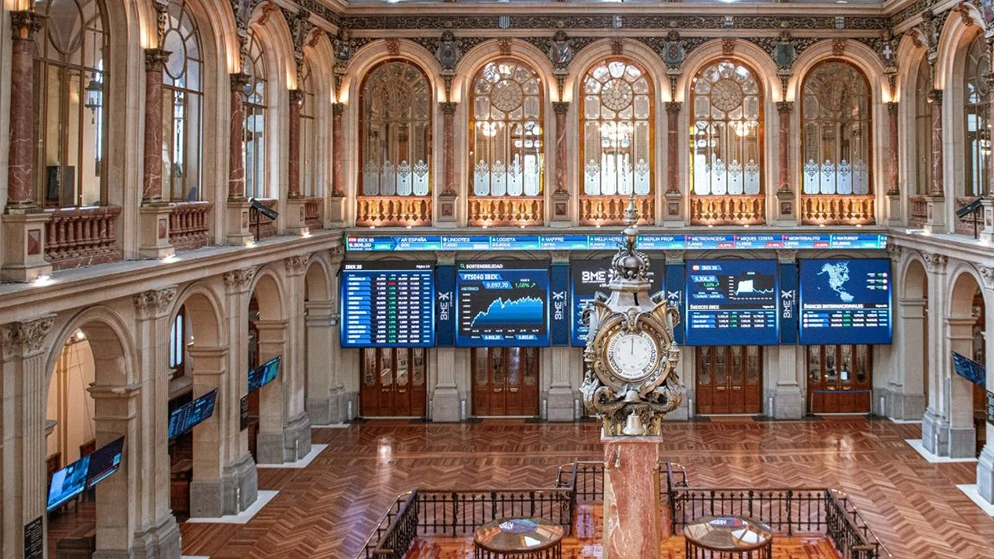
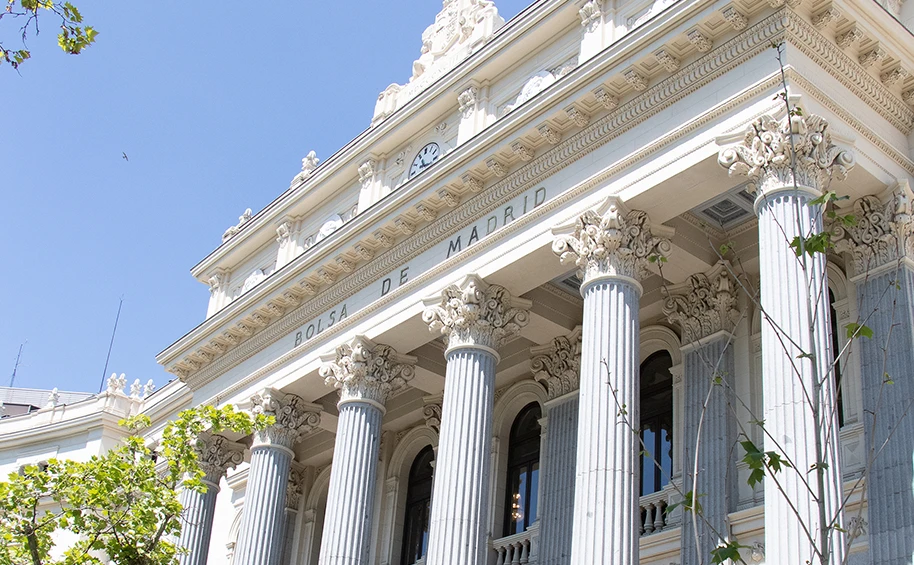
MERGE, positioned as Europe's largest crypto and tech event, is the institutional crypto, blockchain, and Web3 conference connecting Europe and Latin America. The scale is concrete: MERGE Madrid 2026 takes place on 27-29 October 2026 across two landmark venues, with the Bolsa de Madrid hosting the Institutional Summit on 27 October and the Palacio de Cibeles serving as the main congress on 28-29 October, bringing together over 3,000 attendees, 200+ international speakers, and 40+ exhibitors from more than 40 countries.
The agenda runs across six tracks (Digital Money, Payments and Stablecoins; Banks, Brokers and Institutional Crypto; Tokenization and Capital Markets; Regulation, Compliance and Legal Frameworks; Blockchain Infrastructure and Emerging Technologies; and Innovation, Culture and the Web3 Economy) over three stages. The Institutional Summit sets the tone: MERGE starts on 27 October with the Institutional Summit at the Bolsa de Madrid, with access reserved for around 400 attendees focused on speakers and Business Pass holders, aimed at a senior institutional audience including C-level executives, founders, partners, and senior leadership from banks, custodians, asset managers, regulators, and established digital-asset companies.
The speaker roster is bank-heavy by design. Confirmed participants include Coty de Monteverde, Global Head of Crypto and Digital Assets at Banco Santander, alongside Massimo Cervesato, VP Global Blockchain and Digital Assets at Mastercard; Cassie Craddock, VP and Managing Director for the UK and Europe at Ripple; and Francisco Maroto, Head of Blockchain and Digital Assets at BBVA. Each speaker represents their own organization, not a partnership with or endorsement of MERGE. Talks are split between Spanish and English, with the session language shown on the agenda and live translation on the main stage, which is part of what makes the Europe-LatAm bridge real rather than rhetorical.
Who it suits: bank digital-asset desks, custodians, payment firms, regulators observing the market, tokenization and capital-markets teams, and founders who want to meet institutional counterparties rather than a retail trading crowd.
2. EthCC[9] (Cannes, 30 March - 2 April)
EthCC is Europe's largest Ethereum-focused gathering. EthCC[9] takes place from 30 March to 2 April 2026, at the Palais des Festivals et des Congrès in Cannes, France. The 2025 edition set the scale, as EthCC held in Cannes in 2025 attracted more than 6,500 accredited participants and 10,000 attendees. Focus: Ethereum protocol, infrastructure, and developer tooling. Best for developers, protocol teams, and builders who want deep technical sessions and recruiting access.
3. Paris Blockchain Week (Paris, 15-16 April)
Paris Blockchain Week has repositioned itself around institutional adoption. Paris Blockchain Week 2026 takes place 15-16 April at the Carrousel du Louvre in Paris, bringing together 10,000+ global decision-makers for one of Europe's largest crypto conferences. The seventh edition carries the theme "The Bridge Between TradFi and Digital Assets," with side events running 11-16 April. Best for institutions, allocators, and policymakers focused on regulation, custody, and tokenization.
4. Digital Assets Summit (London, 13-14 May)
A tighter, allocator-focused format in the City. The Digital Assets Summit runs 13-14 May 2026 at Convene, 200 Aldersgate in London, with a virtual option. Focus: institutional digital assets, market structure, and tokenization. Best for asset managers, banks, and allocators who prefer a smaller, senior room over an expo floor.
5. European Blockchain Convention (Barcelona, 16-17 September)
Positioned as a European deal floor. The European Blockchain Convention (EBC12) returns to Barcelona on 16-17 September 2026 at the Palau de Congressos de Catalunya. The twelfth edition expects 6,000 attendees and 300 speakers, with themes spanning RWA tokenization and stablecoins. Best for banks, funds, custodians, and founders prioritizing pre-arranged one-to-one meetings.
6. London Blockchain Conference (London, 22-23 October)
An enterprise-leaning event. The London Blockchain Conference 2026 is provisionally scheduled for 22-23 October 2026 in London, with Evolution London as the expected venue, subject to official confirmation. Unlike events focused on token prices or speculation, it concentrates on real-world use of blockchain, Web3, digital assets, and AI. Best for enterprises, fintechs, and policymakers.
7. Web Summit (Lisbon, 9-12 November)
The largest generalist tech event on the list, with a meaningful Web3 vertical. Web Summit 2026 returns to Lisbon's MEO Arena and FIL Exhibition Centre from 9 to 12 November, expected to draw more than 70,000 attendees from over 160 countries, including 900+ speakers, 2,300+ startups, and 1,200+ investors. Best for early-stage startups, generalist investors, and media, rather than crypto specialists seeking depth.
3. Top Crypto Conferences by European City
The same cities recur because each has a distinct draw.
Spain (Madrid and Barcelona)
Madrid anchors the institutional calendar through MERGE Madrid, which deliberately pairs the Bolsa de Madrid for the Institutional Summit on 27 October with the Palacio de Cibeles for the main congress on 28-29 October. Barcelona complements it in September, where the European Blockchain Convention returns for its twelfth edition on 16 and 17 September 2026, drawing thousands of professionals from across the continent. Spain's growing startup scene and bilingual reach into Latin America make it a natural convergence point.
United Kingdom (London)
London remains a dense hub despite EU regulatory divergence, trading on its status as a global financial center and the FCA's engagement with digital assets. Beyond the London Blockchain Conference, a two-day conference and exhibition connecting over 2,500 industry leaders, business decision-makers, tech innovators, and investors, the City also hosts the institutional Digital Assets Summit in May and a cluster of smaller finance summits through the spring.
Netherlands (Amsterdam)
Amsterdam's strengths are logistics, near-universal English, and a pragmatic regulatory stance, which have long made it a comfortable host for enterprise blockchain and co-located AI and IoT programming. Dutch banking crossover from institutions such as ING and Rabobank keeps the enterprise conversation grounded in real deployment.
Portugal (Lisbon)
Lisbon's flagship is Web Summit, where the mix of scale and startup energy makes it one of the most-attended tech conferences in the world. Portugal's founder-friendly tax history and quality of life drew a resident crypto community, which supports a steady run of side events each November.
France (Paris and Cannes)
France now hosts two of Europe's biggest crypto events. Paris leans institutional, with a 2026 Paris Blockchain Week agenda centered on institutional adoption, compliance, custody, tokenization, ETFs, and evolving market structure as the EU's Markets in Crypto-Assets regulation enters full implementation. Cannes, meanwhile, has become EthCC's home, confirmed as the host city through 2028.
Switzerland (Zug and Zurich)
Switzerland punches above its weight for institutional and investment-grade gatherings, thanks to FINMA's clarity and the "Crypto Valley" ecosystem around Zug. Expect smaller, higher-signal investor formats rather than mass-market expos.
Germany (Berlin, Munich, and Frankfurt)
Berlin is Europe's developer capital, home to hackathons and a dense protocol ecosystem, while Frankfurt increasingly hosts banking and markets-focused sessions. German editions tend to pair deep engineering with a serious compliance lens shaped by BaFin's oversight.
4. Types of Crypto Events Across Europe
Not every conference serves the same purpose. Knowing the format saves wasted travel.
Large-Scale Summits and Expos
Broad audiences, expo floors, and brand visibility define this category. MERGE Madrid, Paris Blockchain Week, and the European Blockchain Convention sit here, combining keynote stages with exhibition space and structured networking.
Developer Conferences and Hackathons
These are built for builders. EthCC is the clearest European example, and ETHGlobal rotates hackathons through European cities. For a protocol team, the value of a crypto hackathon in Europe is talent recruitment, open-source contribution, and grant discovery rather than business development.
Investor and VC Forums
Smaller and often invitation-only, a crypto investor summit is about deal flow, warm introductions, and off-record roundtables. London's Digital Assets Summit and various Zug and Zurich gatherings fit this mold; the MERGE Institutional Summit, capped at around 400 attendees, plays a similar role for the Europe-LatAm institutional audience.
RegTech and Policy Forums
A fast-growing category since MiCA, these focus on compliance, licensing, and digital identity. MERGE's dedicated Regulation, Compliance and Legal Frameworks track reflects how central this has become to the institutional agenda.
Vertical-Specific Conferences
A DeFi conference in Europe now tends to emphasize institutional-grade, compliant protocol design rather than retail yield. An RWA conference in Europe focuses on tokenizing bonds, funds, and private credit. AI-and-blockchain crossover events are the newest entrants, while NFT, gaming, and metaverse-only summits have thinned out.
5. Key Themes Dominating European Crypto Conferences in 2026
Agendas across the continent now converge on a handful of topics.
Real-World Asset (RWA) Tokenization
Tokenizing bonds, funds, and other instruments is the headline institutional theme, and MiCA provides the legal rails that make European venues the natural place to debate it. MERGE's dedicated Tokenization and Capital Markets track and the RWA tokenization themes at the European Blockchain Convention both reflect the shift from proof-of-concept to deployment.
DeFi Maturation and Institutional Adoption
The conversation has moved from retail yield to institutional-grade protocol design and the question of how decentralized services fit within MiCA. Note that crypto-assets fluctuate in value and can lose value; where investment risk is discussed, see MERGE's risk notice.
AI Integration with Blockchain Infrastructure
Decentralized compute, on-chain agents, and data provenance are an emerging crossover category, and the EU AI Act gives European conferences a distinct regulatory angle that US events lack.
Stablecoins and the Digital Euro
Euro-denominated stablecoins are a focal point now that stablecoin issuers have been subject to MiCA since 30 June 2024, and the ECB's digital euro work keeps central banks in the discussion. This is central enough that Santander, BBVA, Trade Republic, and Western Union are set to debate the future of stablecoins at MERGE Madrid 2026, analyzing how this infrastructure will transform payments, international transfers, investment, and asset settlement.
Blockchain Policy and MiCA Compliance
Compliance has become a business model in its own right. ESMA and EBA consultations, cross-border passporting, and the approaching end of transitional periods are recurring agenda items. Past MERGE editions have seen participation from bodies including the Banco de España, the CNMV, and the European Banking Authority; participation is not endorsement.
Web3 Infrastructure and Interoperability
Layer 2 scaling, cross-chain bridges, and modular architectures remain the backbone of any Web3 summit in Europe, and they anchor the infrastructure tracks at both developer-led and institutional events through the 2026 calendar.
MERGE Madrid's agenda spans all six of these themes across three stages; see who is speaking before you book. View speakers →
6. Upcoming European Crypto Conferences 2026-2027
A forward-looking view of the circuit. Always confirm dates on each organizer's official site before booking.
Spring (March-May)
The spring window is busy. EthCC[9] runs 30 March to 2 April 2026 in Cannes, Paris Blockchain Week follows on 15-16 April at the Carrousel du Louvre, and London's Digital Assets Summit runs 13-14 May 2026. London also opens the year with the Digital Assets Forum in early February.
Summer (June-August)
Summer is quieter on the headline circuit, dominated by ETHGlobal hackathons rotating through European cities and a run of smaller developer and DeFi meetups. It is a good window for builders rather than business development.
Autumn (September-November)
Autumn is the densest stretch. The European Blockchain Convention runs 16-17 September 2026 in Barcelona, MERGE Madrid follows on 27-29 October, the London Blockchain Conference is provisionally set for 22-23 October 2026, and Web Summit closes the year in Lisbon from 9 to 12 November.
Looking Ahead to 2027
Several organizers have already published future dates. EthCC is confirmed in Cannes through 2028, and the next editions are set for 5 to 8 April 2027 and 3 to 6 April 2028. Watch each organizer's site for 2027 announcements as the 2026 editions wrap.
7. Networking, Speaking, and Sponsorship Opportunities at European Crypto Events
The agenda is only half the value; the hallway and the stage are the other half.
How to Maximize Networking
Preparation beats improvisation. Reach out on LinkedIn ahead of time, join the event app early, and pre-schedule one-to-one meetings. Side events are where much of the real dealmaking happens: at Barcelona's EBC, for example, organizers expect around 10,000 pre-arranged one-to-one meetings across the two days. Structure your day around priority meetings rather than trying to catch every keynote, and at MERGE the Speakers and Sponsors Lounge and curated 1:1 meetings are built for exactly this.
Securing Speaking Opportunities
Crypto speaking opportunities come through calls for papers, curator invitations, and sponsor-included slots. Build a track record first with thought-leadership writing, podcast appearances, and smaller panels, then approach larger stages with a specific, non-promotional angle. Startup-focused formats are often the most accessible entry point: MERGE's Startup Pack, for instance, bundles a 20-minute startup-track keynote or a booth with Standard tickets.
Sponsorship and Brand Visibility
For B2B brands, the audience quality matters more than headline attendance. MERGE's sponsorship is modular, spanning speaking, booths, branding, curated meetings, and events, with tiers set by total investment from Bronze upward. Evaluate any sponsorship on booth traffic, qualified leads, media coverage, and speaking inclusions rather than logo placement alone, and remember that reaching roughly 400 senior decision-makers at an institutional summit can outweigh a larger but less targeted crowd.
8. How to Choose the Right Crypto Conference to Attend
Start from your objective, then filter.
Define Your Primary Goal
If you are raising capital, prioritize investor forums and summits with strong allocator attendance. If you are hiring, favor developer conferences and hackathons such as EthCC. For business development, large expos with broad ecosystem representation, including MERGE Madrid and the European Blockchain Convention, give the widest surface area. For learning, choose events with deep content tracks and recorded sessions.
Match Format to Budget
Budget for the ticket, travel, accommodation, meals, and side events together, not just the pass. Premium institutional access costs more but concentrates senior counterparts; broad expos offer volume at lower per-ticket cost. Where available, recorded content and livestreams let teams cover an event without sending everyone.
Assess Quality Indicators
Look at speaker relevance to your vertical, ask organizers for attendee demographic data, and weigh the track record of the organizing team. Community sentiment on X and Telegram is a useful, if noisy, signal.
Consider Logistics
Hub airports (Madrid Barajas, London Heathrow, Amsterdam Schiphol, Lisbon Humberto Delgado) simplify travel, and non-EU attendees should check Schengen visa timing early. A strong local community means better pre- and post-conference side events.
9. Practical Tips for Attending European Crypto Conferences
Registration and Ticketing
Buy early. Prices rise as the event approaches, and the current price is always shown on the organizer's tickets page. Look for community-partner codes, speaker referrals, and newsletter discounts; MERGE's newsletter sign-up, for example, carries 20% off a ticket. Many large events also offer limited free expo or livestream access.
Travel and Accommodation
Book accommodation as soon as you confirm, since conference-week hotels fill quickly. For multi-day events, serviced apartments can be more comfortable and cost-effective, and flexible bookings hedge against schedule changes.
On-Site Preparation
Bring a charged power bank, comfortable shoes, and a digital or NFC business card. Set up the event app before you arrive and pre-schedule meetings. On security: use a VPN on public Wi-Fi, keep significant holdings on a hardware wallet rather than a phone, and be alert to social engineering, which is common around large crypto gatherings.
Post-Conference Follow-Up
Send personalized connection requests within 48 hours while context is fresh, log contacts in your CRM immediately, and a short post-event recap on LinkedIn reinforces your presence and attracts inbound interest.
Key Takeaways
- MERGE Madrid 2026 runs 27-29 October 2026, with the Institutional Summit at the Bolsa de Madrid on 27 October and the main congress at the Palacio de Cibeles on 28-29 October, drawing 3,000+ attendees and 200+ speakers.
- Europe's conference density is a direct consequence of regulatory clarity, as MiCA has applied to crypto-asset service providers since 30 December 2024, with transitional periods running to 1 July 2026 in most member states.
- The strongest 2026 European editions span developer (EthCC Cannes), institutional (Paris Blockchain Week, Digital Assets Summit London, European Blockchain Convention Barcelona), enterprise (London Blockchain Conference), and generalist (Web Summit Lisbon) formats.
- Choose by goal: fundraising favors investor forums, hiring favors hackathons, and business development favors large institutional expos.
- RWA tokenization, stablecoins, institutional DeFi, AI-and-blockchain, and MiCA compliance dominate 2026 agendas.
If you want the institutional, Europe-meets-LatAm end of that spectrum, the full agenda and speaker list live on the MERGE Madrid 2026 page.
MERGE Madrid 2026 brings banks, regulators, and the digital-asset ecosystem together on 27-29 October; prices rise as the event approaches. Buy your ticket →
Frequently Asked Questions About Crypto Conferences in Europe
What is the biggest crypto conference in Europe?
It depends on how you measure. By sheer headcount, Web Summit in Lisbon is the largest tech event with a Web3 vertical, expected to draw more than 70,000 attendees from over 160 countries, including 900+ speakers. Among crypto-native institutional events, MERGE Madrid is positioned as Europe's largest crypto and tech event, with over 3,000 attendees, 200+ international speakers, and 40+ exhibitors from more than 40 countries, while Paris Blockchain Week brings together 10,000+ decision-makers.
Which European city has the most blockchain and Web3 events?
London, Paris, Lisbon, Barcelona, and Madrid each host multiple significant events a year, and France now hosts two of the largest with Paris Blockchain Week and EthCC in Cannes. Switzerland's Zug and Zurich punch above their weight for institutional and investor-focused gatherings thanks to the "Crypto Valley" ecosystem.
Are there DeFi-specific and RWA-specific conferences in Europe?
Yes. Most major European summits now run dedicated DeFi and real-world-asset tracks rather than treating them as side topics. RWA tokenization is a headline theme at the European Blockchain Convention in Barcelona, and MERGE Madrid dedicates a full track to Tokenization and Capital Markets. Standalone DeFi events also appear in London and Amsterdam, typically with an institutional, compliance-aware angle rather than a retail one.
When is MERGE Madrid 2026 and where is it held?
MERGE Madrid 2026 takes place on 27, 28, and 29 October 2026, with the Bolsa de Madrid hosting the Institutional Summit on 27 October and the Palacio de Cibeles hosting the main congress on 28 and 29 October. Talks are split between Spanish and English, with live translation on the main stage.
How can I find speaking opportunities at European crypto conferences?
Most conferences recruit speakers through a call for papers, direct curator invitations, and sponsor-included slots. Build credibility first through writing, podcasts, and smaller panels, then pitch a specific, educational angle rather than a product promotion. Startup-track formats, including MERGE's Startup Pack, which bundles a short startup-track keynote option, are often the most accessible route for first-time speakers.
Do I need to worry about regulation when attending as a business?
If you provide crypto-asset services to EU customers, yes. MiCA applies to persons engaged in the issuance, public offer, or admission to trading of crypto-assets in the EU, and to crypto-asset service providers offering services within the EU, with geographic scope determined by the location of the customer or place of business, not the location of the asset or blockchain. This is educational information, not legal or investment advice; consult a qualified adviser for your situation, and note that crypto-assets can lose value.