Latin America's strongest crypto events in 2026 run on a year-round circuit: MERGE's Latin American editions (Buenos Aires in 2025, São Paulo in 2026 and Buenos Aires again on 8–10 March 2027), LABITCONF, which celebrates its 14th edition on 30 and 31 October in Buenos Aires, Blockchain Summit Latam's Lima–Santiago–Bogotá tour, and Bitso's Stablecoin Conference, held on 15 and 16 June at the World Trade Center in Mexico City. These gatherings have become where banks, regulators, and builders meet. Keep in mind that dates, venues, and ticket prices change each cycle, so always confirm against each event's official site before booking travel.
This guide maps the LATAM crypto event landscape for 2026: who runs each conference, what it focuses on, when and where it happens, and which profile of attendee it suits best. The angle throughout is institutional, because the region's most important shift is not retail speculation but banks, brokers, and asset managers building custody, trading, and tokenization services for serious clients.
In 30 seconds
- The circuit. LATAM has crypto events all year round: Buenos Aires, São Paulo, Mexico City, Lima, Santiago and Bogotá.
- The next big date. MERGE Buenos Aires, 8 to 10 March 2027 at Palacio Libertad.
- Who each one is for. MERGE and Blockchain Summit Latam for institutions; LABITCONF and Peru Blockchain Conference for the Bitcoin community and builders.
- How to choose. By goal: institutional dealflow, hackathons, trading or media.
The next big date on the circuit: MERGE Buenos Aires, 8 to 10 March 2027. Get your ticket →
1. Why LATAM Is Now a Global Hotspot for Crypto Events
The macro backdrop explains the energy. Persistent inflation in parts of the region, large remittance corridors, and uneven access to banking have pushed households and businesses toward dollar-denominated stablecoins and self-custody as practical tools, not ideology. That real-world demand gives regional conferences a substance that purely speculative markets lack.
The numbers back this up at the institutional level. Brazil processed an estimated $319 billion worth of crypto transactions between mid-2024 and mid-2025, making it Latin America's largest market and placing it fifth in Chainalysis's 2025 Global Crypto Adoption Index. That scale draws international sponsors, protocol teams, and infrastructure providers who now treat LATAM stages as essential stops rather than optional ones.
Government and regulator interest has elevated the conference scene further. Central banks and securities regulators across the region are writing rules in real time, and event organizers have responded by building policy tracks that put officials, bankers, and builders in the same room. Compared with established global events such as Token2049 or Consensus, the leading LATAM conferences are smaller but increasingly ambitious, with the added advantage of lower attendance costs and direct access to a fast-growing emerging market.
2. Overview: The Best Crypto Events and Conferences in LATAM Right Now
This guide selects events on a few practical criteria: scale and production quality, the seniority and relevance of speakers, a clear thematic focus (especially institutional adoption, stablecoins, and tokenization), and a verifiable 2026 edition. Events without a confirmed 2026 date were left out.
The list below opens with MERGE, which runs dedicated Latin American editions as part of a two-continent series, and then covers seven other verified regional events:
- MERGE (São Paulo and Buenos Aires editions)
- LABITCONF (Buenos Aires)
- Blockchain Summit Latam (Lima, Santiago, Bogotá)
- Peru Blockchain Conference (Lima)
- Stablecoin Conference by Bitso (Mexico City)
- Token Americas (Mexico City)
- LATAM Digital Assets Conf (Buenos Aires)
- Campus Party Brasil (Brasília)
Each entry gets a spotlight, followed by a comparison table and a month-by-month calendar so you can plan back-to-back trips.
3. MERGE: The Institutional Bridge Between Latin America and Europe
What MERGE Is
MERGE is the institutional crypto, blockchain, and Web3 conference series connecting Europe and Latin America. Positioned by its organizers as Europe's largest crypto and tech event, it pairs that claim with hard facts: more than 3,000 attendees, 200+ speakers, and participants from 40+ countries per edition, with over 400 leaders having taken its stages. The thesis running through every edition is the convergence of traditional finance and the digital economy, which is why its agenda leans toward banks, brokers, regulators, and asset managers rather than retail trading.
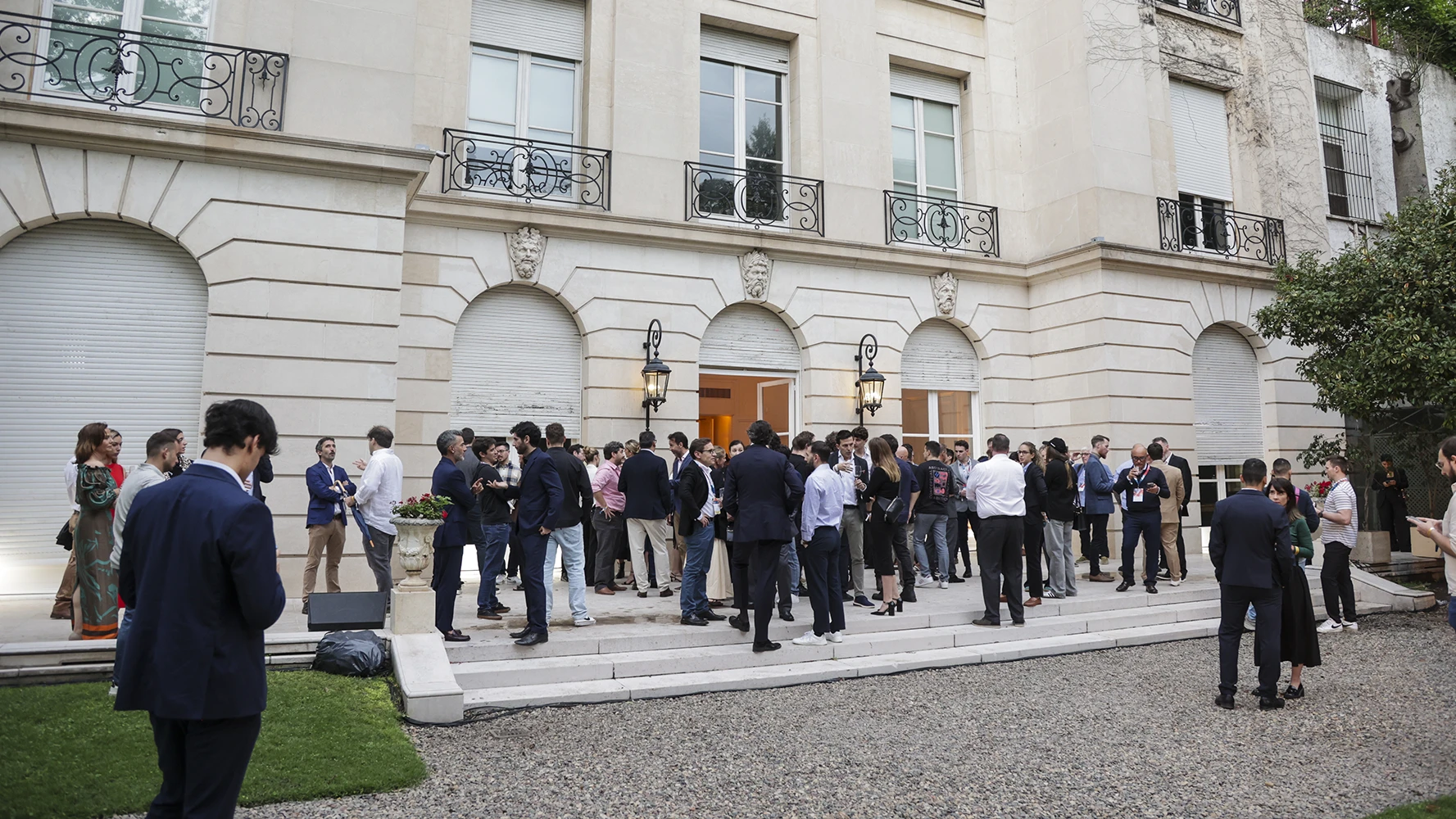
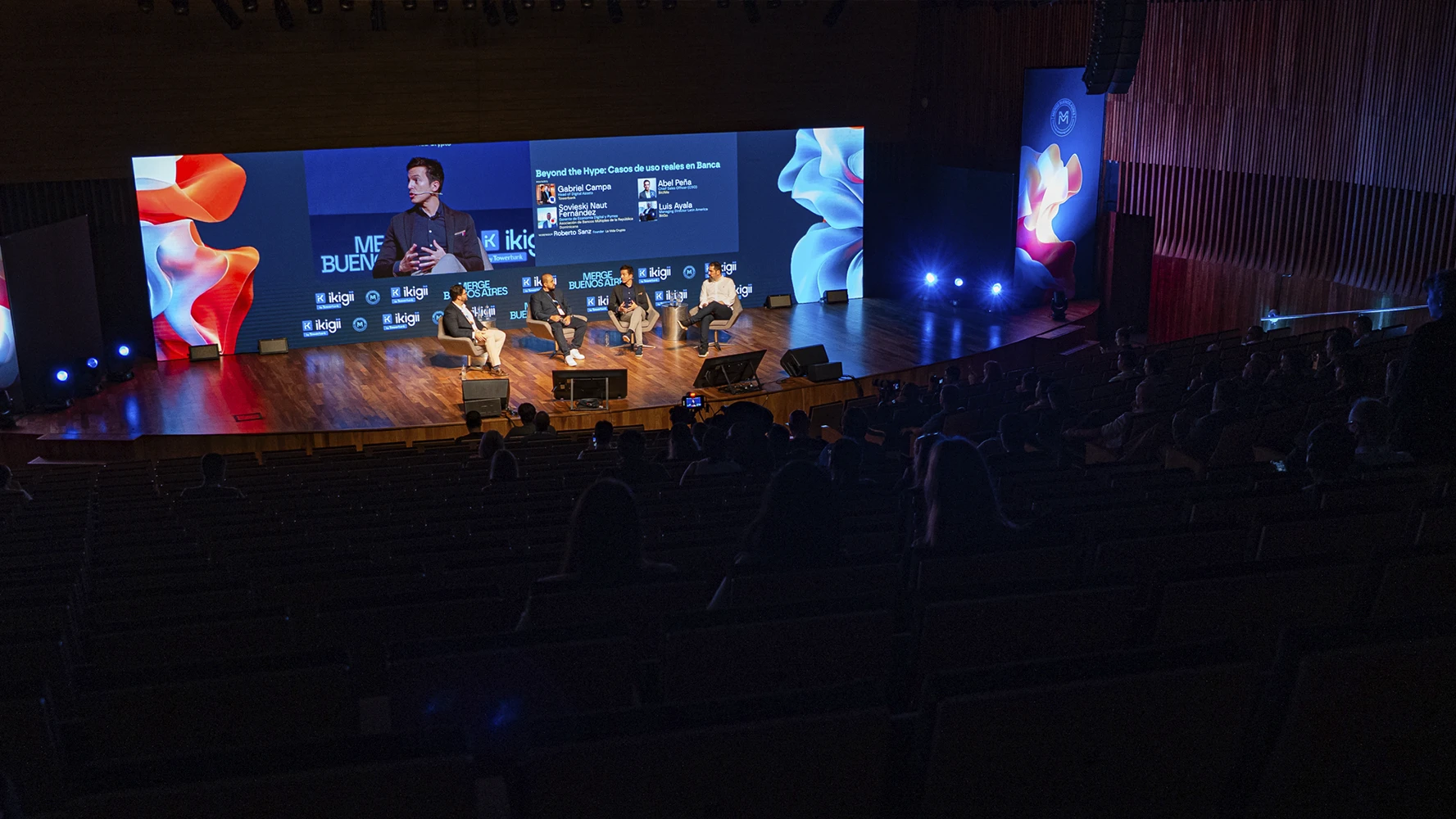
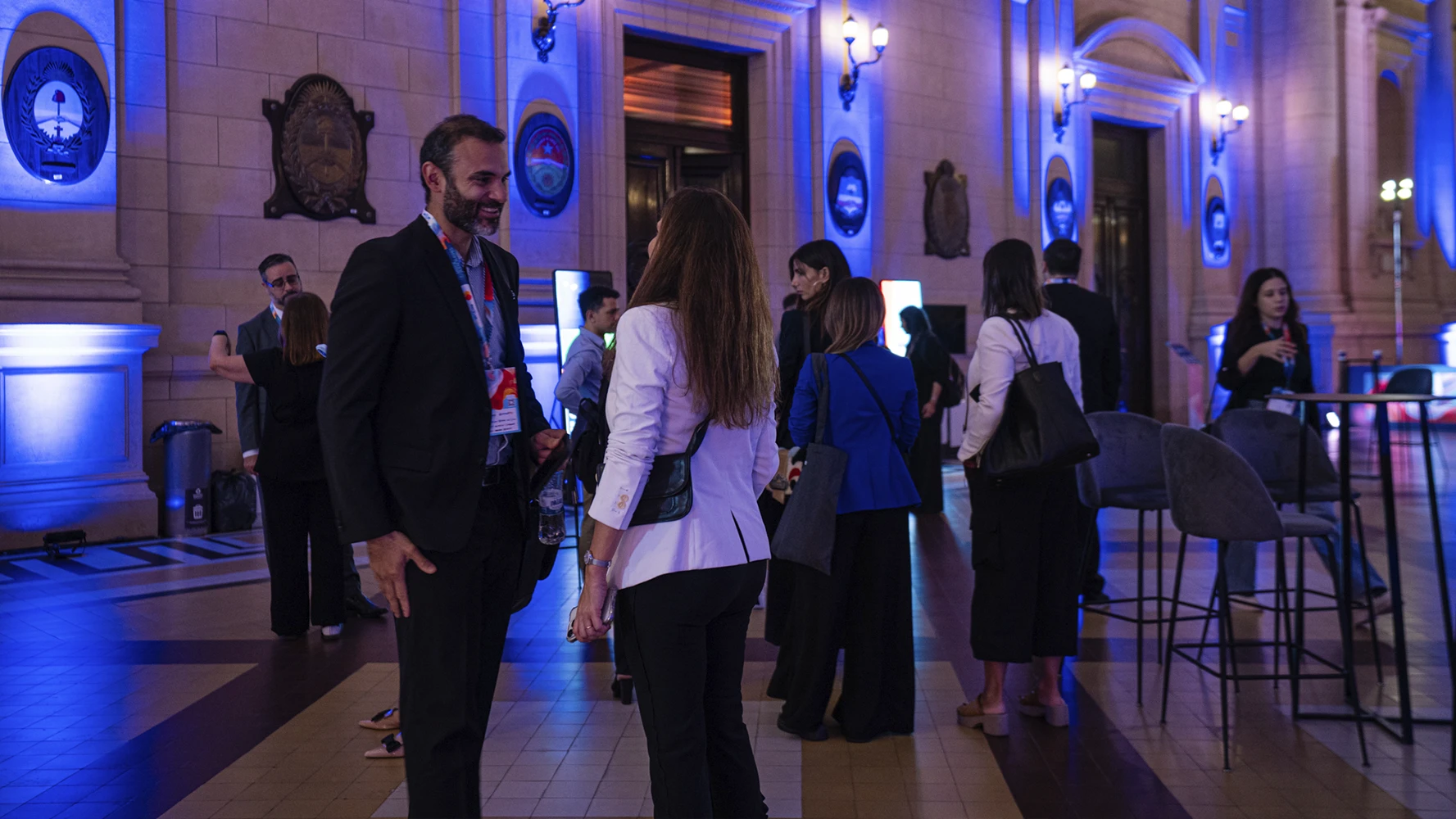
Crucially for this guide, MERGE is not Europe-only. On 24–26 March 2025, Buenos Aires hosted MERGE for the first time outside Spain, the country of origin, marking the first stage of the event's international expansion. That edition ran on 24–26 March 2025 at Palacio Libertad in Buenos Aires.
 São Paulo 2026
 Institutional Summit, São Paulo
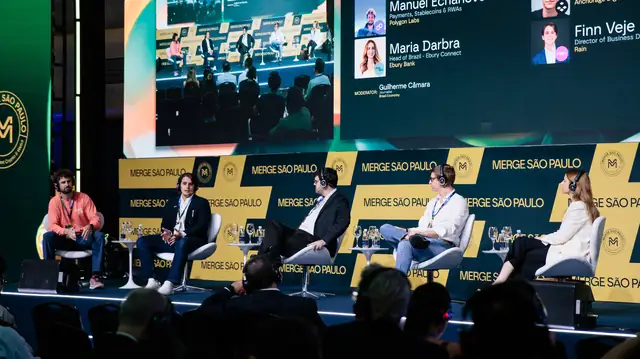 Main stage, São Paulo
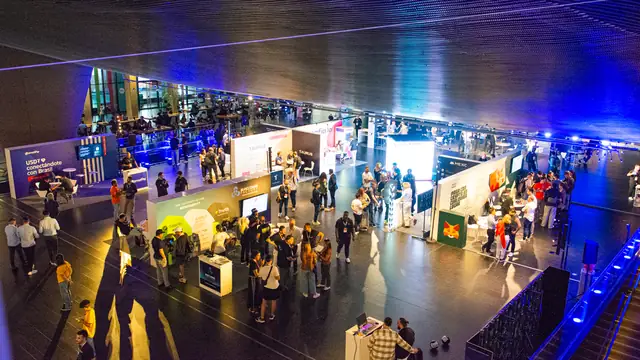 Buenos Aires 2025
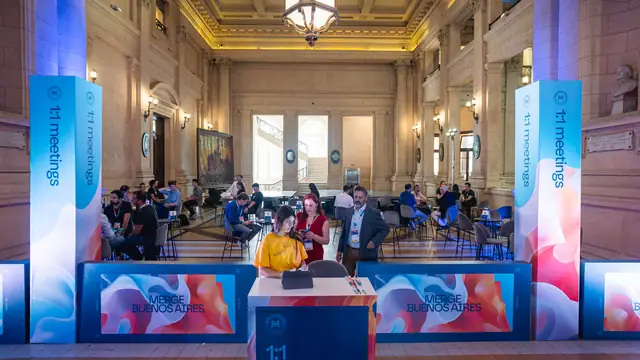 1:1 meetings, Buenos Aires
MERGE in Latin America: Buenos Aires 2025 and São Paulo 2026
What to Expect
MERGE's format combines keynotes, panels, closed institutional roundtables, curated 1:1 meetings, an exhibition floor, and evening networking. Its content is organized around six tracks: Digital Money, Payments and Stablecoins; Banks, Brokers and Institutional Crypto; Tokenization and Capital Markets; Regulation, Compliance and Legal Frameworks; Blockchain Infrastructure and Emerging Technologies; and Innovation, Culture and the Web3 Economy. Sessions run in Spanish and English, with live translation on the main stage, which suits the bilingual, cross-border audience it convenes.
The 2026 Latin American Edition
MERGE São Paulo 2026 took place on 17–19 March 2026 at the Theatro Municipal and the World Trade Center in São Paulo. The Institutional Summit was held at the Theatro Municipal de São Paulo on 17 March, with the main conference on 18 and 19 March at the World Trade Center São Paulo, welcoming participants for two days of content, networking, institutional meetings, and immersive experiences. Following the Buenos Aires edition in 2025, São Paulo was established as the event's new regional hub, reflecting Brazil's strategic role in the digital economy.
The next Latin American edition returns to Buenos Aires: 8 to 10 March 2027 at Palacio Libertad, with an Institutional Summit and two conference days.
MERGE São Paulo 2026 in numbers
Three days, two venues: a closed-door institutional first day and two days of open conference.
Why MERGE Stands Apart
MERGE's differentiator is its institutional positioning and its explicit Europe–LatAm bridge. Past participants have included Banco de España, the CNMV, the European Banking Authority, Banco Central do Brasil, and CNV Argentina, which signals the kind of room it convenes, though participation is never an endorsement of MERGE or of any crypto-asset. It suits bank digital-asset leads, brokers, tokenization teams, regulators, and founders selling into financial institutions. You can review the full track structure on the topics and content page, and the São Paulo edition details on its dedicated page.
Who took the stage in São Paulo 2026
- Monica LongPresident, Ripple
- Coty de MonteverdeGlobal Head Crypto & Digital Assets, Banco Santander
- Roberto E. SilvaPresident, CNV (Argentina)
- Fabio AraujoEconomist, Banco Central do Brasil
- Juan Carlos ReyesPresident, CNAD (El Salvador)
- Courtnay Nery GuimarãesHead of Digital Assets, Bradesco
- Guto AntunesHead of Digital Assets, Itaú Unibanco
- Stijn Vander StraetenCEO, Crypto Finance (Deutsche Börse)
- Antônia SouzaBlockchain & Crypto Director LAC, Visa
Some of the 200+ speakers at MERGE São Paulo 2026, with their role at the time of the event
Brands and institutions at MERGE São Paulo 2026
Plus Itaú, Bradesco, BTG Pactual, BingX, Bullish, Chainlink, Fireblocks, Mastercard, Stellar, Banco Central do Brasil and Argentina's CNV, among many others.
Some of the brands that sponsored or spoke at MERGE São Paulo 2026
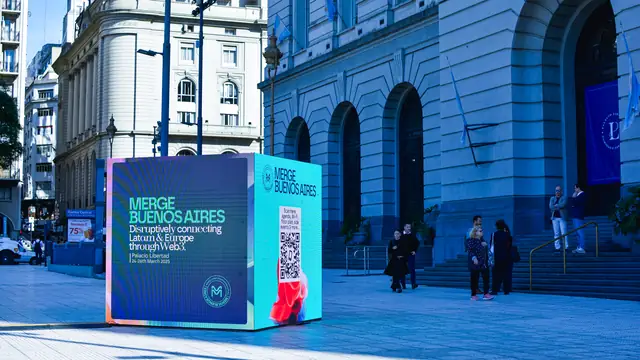
Next edition
MERGE Buenos Aires 2027
- 8-10 Mar 2027Institutional Summit and two conference days
- Palacio LibertadBuenos Aires
- 4,000+expected attendees
- 250+speakers
4. Comparison Table: The Biggest Crypto Events in LATAM
Read the table as a planning tool, not a ranking. It starts with MERGE's Latin American editions and then lists other verified 2026 events alphabetically by focus. Always confirm dates and pricing on each official site, since early-bird windows and venues shift.
| Event | Country / City | Typical month | Primary focus | Best for |
|---|---|---|---|---|
| MERGE (São Paulo / Buenos Aires) | Brazil / São Paulo; Argentina / Buenos Aires | March (Buenos Aires, 8–10 March 2027) | Institutional crypto, banks, tokenization | Banks, brokers, regulators, institutional founders |
| LABITCONF | Argentina / Buenos Aires | October | Bitcoin, blockchain, AI | Bitcoiners, builders, long-term holders |
| Blockchain Summit Latam | Peru / Lima; Chile / Santiago; Colombia / Bogotá | May, August, November | Institutional finance, tokenization, banking | Bankers, regulators, capital-markets teams |
| Peru Blockchain Conference | Peru / Lima | July | Bitcoin, trading, Web3 | Traders, enthusiasts, regional founders |
| Stablecoin Conference (Bitso) | Mexico / Mexico City | June | Stablecoins, payments | Fintechs, payment and treasury teams |
| Token Americas | Mexico / Mexico City | August | Stablecoins, digital dollars | Banks, corporate treasuries |
| LATAM Digital Assets Conf | Argentina / Buenos Aires | August | Digital assets, tokenization | Institutions, protocol founders |
| Campus Party Brasil | Brazil / Brasília | June | Tech, innovation, Web3 | Students, developers, generalists |
The takeaway: if your goal is institutional dealflow and regulatory clarity, MERGE, Blockchain Summit Latam, Token Americas, and the LATAM Digital Assets Conf cluster around that. If you are Bitcoin-native or builder-first, LABITCONF, Peru Blockchain Conference, and Campus Party fit better.
5. Month-by-Month LATAM Crypto Event Calendar for 2026
Planning around the calendar lets you chain multiple events into a single trip and reduce travel costs.
March
- MERGE Buenos Aires · 8–10 Mar 2027
May
- Blockchain Summit Latam · Lima
June
- Stablecoin Conference · Mexico City
- Campus Party · Brasília
July
- Peru Blockchain Conference · Lima
August
- LATAM Digital Assets Conf and Aleph Hackathon · Buenos Aires
- Token Americas · Mexico City
- Blockchain Summit Latam · Santiago
- Blockchain Rio · Rio de Janeiro
October
- LABITCONF · Buenos Aires
- MERGE Madrid · 26–28 Oct 2027
November
- Blockchain Summit Latam · Bogotá
Usual month for each event. Apart from MERGE, none has announced its 2027 dates yet: check the official website before booking.
The LATAM crypto year, month by month
Q1 (January–March). The year's institutional opener is MERGE São Paulo, on 17–19 March 2026 at the Theatro Municipal and World Trade Center. In 2027 March's date is MERGE Buenos Aires, on 8–10 March at Palacio Libertad.
Q2 (April–June). Activity accelerates. Blockchain Summit Latam opened its 2026 circuit in Lima on 13–15 May at Universidad del Pacífico. Campus Party Brasil ran 3–7 June 2026 at Arena BRB Mané Garrincha in Brasília. Bitso's Stablecoin Conference followed on 15 and 16 June at the World Trade Center in Mexico City.
Q3 (July–September). Peak season in South America. Peru Blockchain Conference 2026 took place on 10 and 11 July at the JW Marriott Larcomar in Miraflores, Lima. Blockchain Summit Latam moved to Santiago on 5–7 August, and in Buenos Aires the LATAM Digital Assets Conf ran on 20–21 August. Token Americas held its Mexico City edition in August 2026.
Q4 (October–December). The year-end cluster is dense in Buenos Aires. MERGE Madrid anchors the European side in late October, and LABITCONF closes the Argentine calendar on 30 and 31 October at BA Ferial (ex Costa Salguero). Blockchain Summit Latam concluded its tour in Bogotá on 4, 5, and 6 November at the Universidad Externado de Colombia.
Travel tip: Buenos Aires is busiest for crypto in March and again in late October, São Paulo peaks in March, and Mexico City concentrates its stablecoin events around June and August. Booking flights and hotels six to eight weeks ahead of these windows is prudent.
MERGE Institute
Learn crypto and digital assets from the leaders of the ecosystem
A 12-week programme, taught in Spanish by working professionals from banking, fintech and Web3.
Try a free class →









6. Key Themes Covered at LATAM Crypto Conferences
DeFi and Financial Inclusion
Decentralized finance resonates in LATAM for concrete reasons: large unbanked and underbanked populations, demand for dollar exposure, and expensive cross-border payments. Sessions increasingly move past protocol mechanics toward real-world use cases such as remittances, savings in stablecoins, and on-chain credit. A reminder for any reader weighing these products: crypto-assets are volatile and can lose value, and nothing here is investment advice. MERGE and others publish a dedicated risk notice worth reading before you act.
Web3, NFTs, and the Creator Economy
Gaming, digital ownership, and creator monetization remain active in Brazil, Argentina, and Mexico. General-interest festivals like Campus Party give these topics a broad audience, while specialist events keep the focus on community-owned platforms and creator tooling.
Tokenization of Real-World Assets
Tokenization is arguably the region's hottest institutional theme. In late 2025 Brazil's stock exchange, B3, said it would launch a Brazilian real-pegged stablecoin and a tokenization platform in the first half of 2026. Both launches have slipped: trading of tokenized assets is now expected in early 2027. Blockchain Summit Latam, the LATAM Digital Assets Conf, and MERGE's Tokenization and Capital Markets track all dedicate serious agenda time to land registries, real estate, commodities, and capital-markets instruments.
AI and Blockchain Convergence
AI has become a standing third pillar at several events. LABITCONF's 14th edition added artificial intelligence as a third axis alongside Bitcoin and blockchain. Expect crossover sessions on agentic payments, on-chain data, and AI-driven compliance across the 2026 circuit.
Crypto Trading and Market Infrastructure
Trading competitions, exchange panels, and liquidity discussions remain popular, especially in Argentina and Peru. The Perú Blockchain Conference positions itself as the top Bitcoin, crypto, blockchain, and trading event in Peru, and brokers, on/off-ramp providers, and derivatives desks use these stages to reach retail and semi-professional audiences.
Bitcoin and Grassroots Movements
The Bitcoin-only circuit has deep roots in the region. LABITCONF has convened global references, developers, companies, and communities since 2013, making it the heritage anchor of LATAM's grassroots Bitcoin scene. El Salvador's high-profile experiment also shaped years of Bitcoin education events, a story examined in the next section.
7. The LATAM Regulatory Landscape and Its Role in Shaping Events
Regulation is no longer a side panel; it is a headline draw, because clarity (or its absence) directly affects whether banks and brokers can offer crypto services.
Brazil has moved fastest on institutional rules. In November 2025 the Banco Central do Brasil published three resolutions operationalizing Brazil's 2022 Virtual Assets Law, effectively integrating crypto-assets and stablecoins into the traditional financial system. Starting in February 2026, all crypto firms must request authorization to operate, and companies that fail to comply have until November 2026 to exit the market. Separately, Resolution 561/2026 bars payment firms from settling cross-border transfers in stablecoins or crypto and took effect on 1 October 2026. On the central-bank-money side, Brazil's Drex project dropped its decentralized blockchain elements in favor of a centralized architecture citing immature privacy solutions; in late 2025 the central bank shut down the pilot platform and the project remains in testing.
Argentina continues to attract crypto activity thanks to a history of currency instability and strong dollar demand, with its securities regulator building out a registry regime for virtual asset service providers. That mix of grassroots adoption and evolving oversight is why Buenos Aires hosts so many events.
Mexico regulates virtual-asset activity primarily through its 2018 Fintech Law, with the Bank of Mexico overseeing which instruments regulated institutions may use. The country's position on the US remittance corridor makes stablecoin payments a central event topic, which explains why both Bitso's Stablecoin Conference and Token Americas chose Mexico City.
El Salvador has shifted from pioneer to case study. Following IMF pressure, El Salvador's Congress agreed to remove Bitcoin's legal tender status, ensuring the government and businesses would no longer be required to accept it. The reform, enacted in early 2025, limited Bitcoin's "voluntary" use to the private sector, tied to a $1.4 billion IMF program. Bitcoin remains legal for private trade, and the lesson, that mandated adoption is harder than voluntary adoption, now features heavily in regional policy panels.
The common thread: as regulators across LATAM move from ambiguity toward frameworks, officials increasingly appear on event stages, and institutional attendance rises with them. This is precisely the terrain MERGE's Regulation, Compliance and Legal Frameworks track is built to cover.
8. Notable Speakers and Thought Leaders at LATAM Crypto Events
Homegrown LATAM Voices
The circuit is powered by regional founders, local exchange executives, DeFi builders, and policy advocates who recur across events. Senior figures from banks and payments infrastructure are increasingly common; MERGE São Paulo's first announced speakers included Fabio Araujo of the Banco Central do Brasil and Leandro Pereira of Núclea, which powers the infrastructure behind Brazil's financial data and payments. A speaker's organization appearing on a stage reflects that individual's participation, not a partnership or endorsement.
International Names Who Choose LATAM Stages
Global protocol researchers, founders, and VCs increasingly add LATAM to their speaking tours because the region combines genuine adoption with accessible audiences. The Perú Blockchain Conference, for example, confirmed the virtual participation of Cardano founder Charles Hoskinson alongside representatives of international exchanges, stablecoin issuers, and institutional custody firms.
What Makes a Lineup Credible
The strongest LATAM lineups blend technical, entrepreneurial, and policy expertise, and they deliver it bilingually. Spanish and Portuguese sessions with simultaneous English translation are now standard at the larger events, which is what makes them genuinely cross-border rather than local-only.

The largest conference on crypto and digital assets
Banks, fintechs and the crypto ecosystem at the same table. Two editions in 2027:
9. Networking and Business Opportunities at LATAM Crypto Events
Investor–Founder Matchmaking
Side events, pitch competitions, and demo days are where dealflow actually happens. The clustering of events in Buenos Aires in August illustrates this well: the LATAM Digital Assets Conference anchors a four-day window (20–23 August) in which three events run back-to-back, including the Startup World Cup and the Aleph Hackathon. VC presence is heaviest around these institutional and builder events.
Ecosystem Partnerships and Exchange Relationships
B2B networking floors are central to the format. Exchanges, wallets, and infrastructure providers use booths and curated meetings to scout regional partners. MERGE's model of curated 1:1 meetings and a Speakers and Sponsors Lounge is built specifically for this kind of structured business development rather than ad-hoc hallway chat.
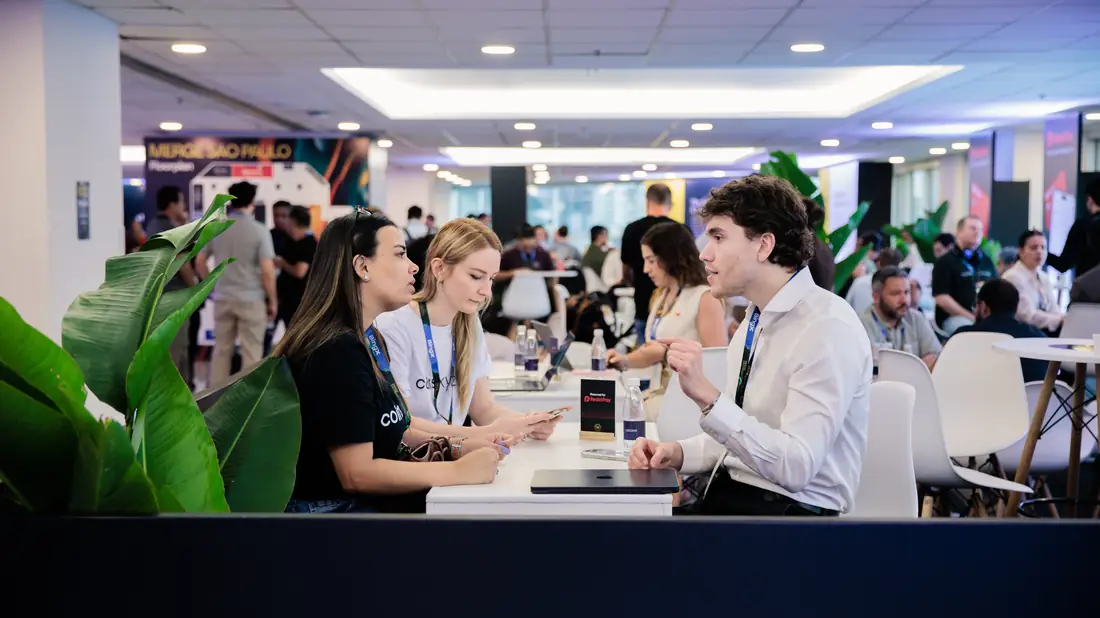
1:1 meetings at MERGE São Paulo 2026: much of the business happens off stage
Developer and Builder Community Meetups
Hackathons co-located with major conferences remain the fastest route into builder communities. The Aleph Hackathon runs 22–23 August in Buenos Aires, and the broader Ethereum developer scene across Lima, Bogotá, Mexico City, and São Paulo provides a developer-first complement to the more institutional summits.
Tips for Making the Most of Any Event
Arrive a day early for pre-conference side events, where the most valuable conversations often start. Use the official event app and community channels to pre-book meetings. Target sponsor booths for product demos rather than treating them as background. And follow up within 48 hours over LinkedIn or X while context is fresh. These habits compound across a multi-city trip.
10. Country-by-Country Breakdown: Crypto Event Hubs Across Latin America
Argentina: The Heart of South American Crypto Culture
Buenos Aires is the region's densest crypto city, anchored by MERGE's 2025 debut, LABITCONF, and the LATAM Digital Assets Conf. The cultural driver is well understood: years of inflation and currency controls have made stablecoins and self-custody everyday tools. LABITCONF returns to Argentina for a fifth consecutive year in 2026 as part of the city's Tecweek.
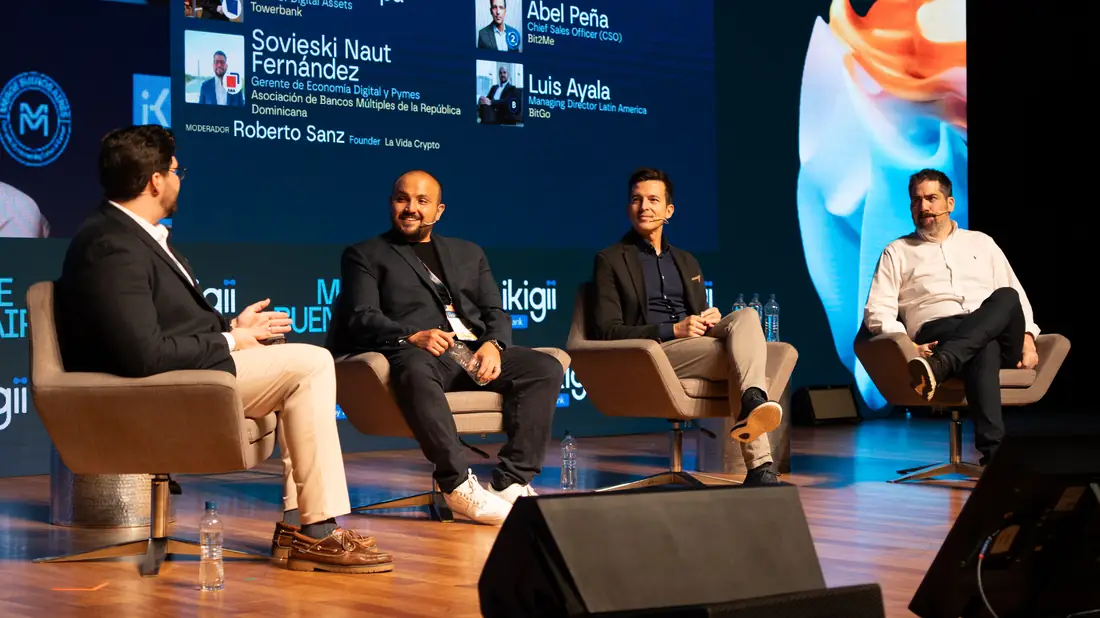
MERGE Buenos Aires 2025 at Palacio Libertad. The 2027 edition returns to the same venue on 8 to 10 March
Brazil: Scale and Institutional Momentum
São Paulo is Brazil's Web3 capital and MERGE's new regional hub, while Brasília hosted Campus Party in 2026. In August, Blockchain Rio brings much of Brazil's ecosystem together in Rio de Janeiro, with regulators and banks in attendance. Brazil's sheer market size attracts international sponsors, and its fast-moving central-bank framework makes it the most institutionally serious market in the region. Brazil ranks fifth in Chainalysis's 2025 Global Crypto Adoption Index.
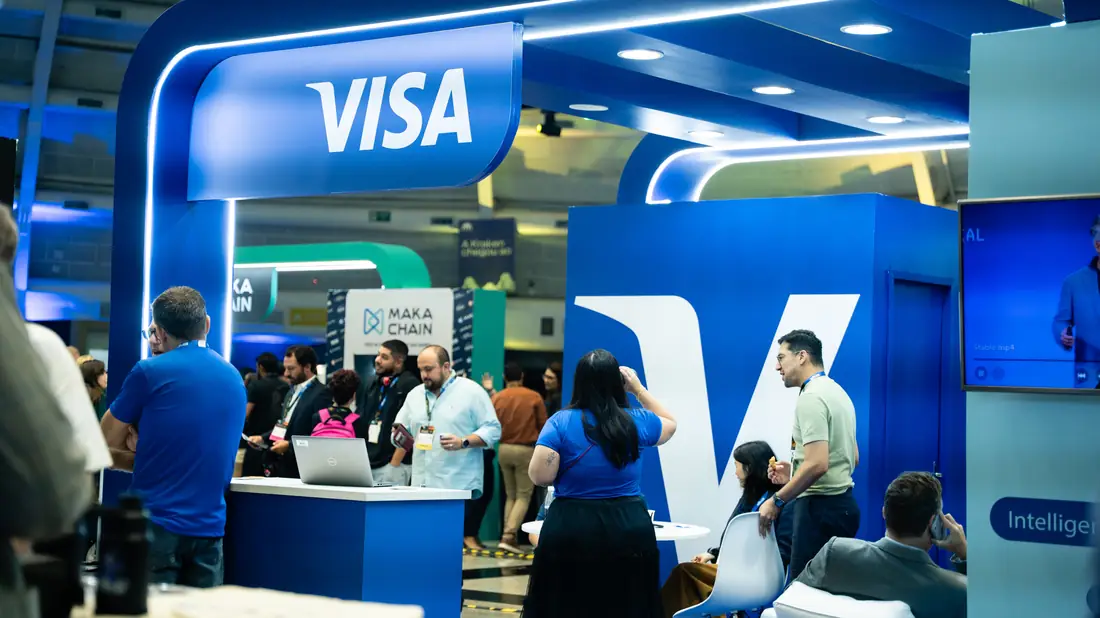
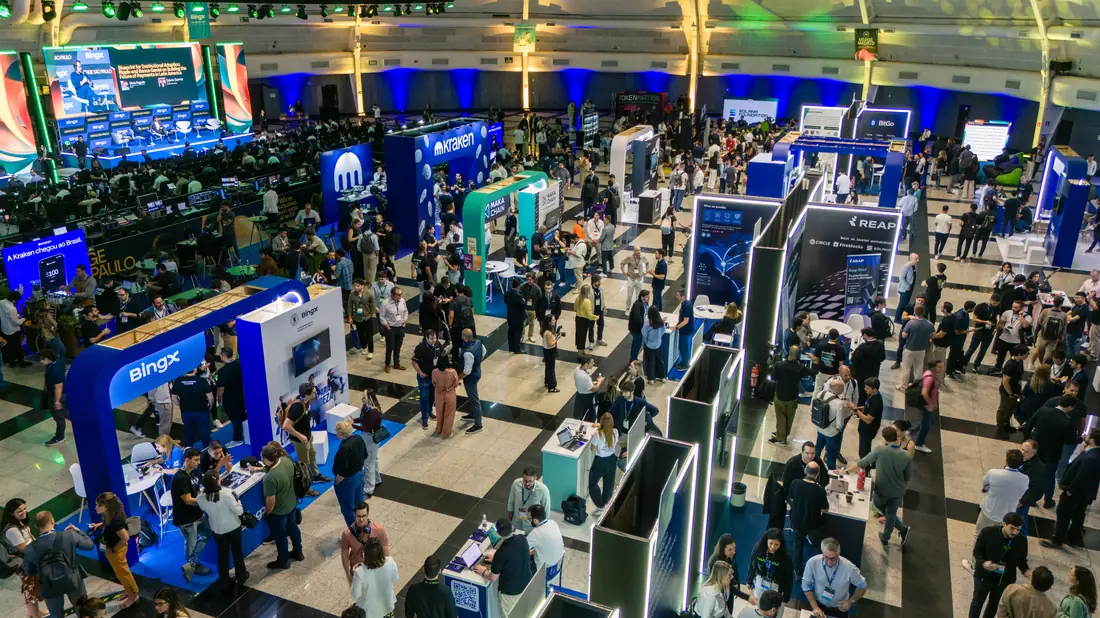
The MERGE São Paulo 2026 expo floor at the World Trade Center: banks, payment networks and exchanges on the same floor
Mexico: North America's Gateway to LATAM Crypto
Mexico City's calendar centers on stablecoins and payments, driven by the US–Mexico remittance corridor. Bitso's inaugural Stablecoin Conference in 2025 drew more than 1,800 people from 43 countries and over 800 companies, and both that event and Token Americas returned in 2026. Exchange influence, led by Bitso and Binance, shapes much of the local programming.
Peru: The Emerging Conference Market
Lima has grown quickly. The Perú Blockchain Conference 2026 reached its fifth edition, and Blockchain Summit Latam chose Universidad del Pacífico in Lima to open its 2026 regional circuit, reflecting rising government and academic interest in digital-asset infrastructure.
Colombia, Chile, and the Rest of the Region
Bogotá and Medellín's startup culture supports a steady stream of events, and Blockchain Summit Latam closed its 2026 On Tour in Bogotá after stops in Lima and Santiago. In 2026 the summit expanded into a regional format with editions in Peru, Chile, and Colombia, connecting central banks, regulators, stock exchanges, market infrastructures, and financial institutions. Uruguay and Panama round out the region as crypto-friendly jurisdictions hosting smaller, niche summits.
MERGE Institute
Learn crypto and digital assets from the leaders of the ecosystem
A 12-week programme, taught in Spanish by working professionals from banking, fintech and Web3.
Try a free class →11. Ticket Pricing and How to Attend LATAM Crypto Events
Free vs. Paid Tiers
Pricing varies widely. Some events run community days and free side events, and a few headline conferences offer limited free general admission; the Perú Blockchain Conference 2026 offered limited free tickets for its Lima edition. Institutional summits sit at the other end, with higher-priced passes that bundle closed roundtables and VIP networking. As a general rule, prices rise as events approach, so the current price is always the one shown on each event's live tickets page.
Sponsorship and Exhibitor Packages
Companies gain visibility through tiered sponsorships and exhibition booths. MERGE's model is modular, combining speaking slots, booths, branding, curated meetings, and events, with tiers running from Bronze upward and booths available in several sizes. This structure lets a brand buy exactly the visibility it needs rather than a fixed package.
Press and Media Credentials
Journalists and content creators can usually apply for complimentary access, and many organizers run formal media-partner programs. LABITCONF, for instance, invites outlets to apply as media partners for exclusive benefits. Apply early, as credential windows close well before the event.
Scholarships and Community Tickets
Developer grants, community tickets, and sponsored travel are common in the Ethereum-aligned builder ecosystem, where protocols frequently fund attendance for promising builders. These are worth seeking out if you are early in your career and contributing to open-source work.
12. How to Choose the Right LATAM Crypto Event for Your Goals
If you are an investor or VC, prioritize events with formal pitch days and institutional dealflow. MERGE's curated 1:1 meetings, the LATAM Digital Assets Conf, and Blockchain Summit Latam fit this profile.
If you are a builder or developer, look for hackathons and technical depth. The Aleph Hackathon in Buenos Aires, Campus Party, and the regional Ethereum circuit are your strongest bets.
If you are a trader or enthusiast, seek trading competitions and exchange panels; the Perú Blockchain Conference and Mexico City's stablecoin events deliver market-focused content.
If you are a corporate or institutional representative, focus on regulatory, tokenization, and enterprise tracks. MERGE, Blockchain Summit Latam, and Token Americas are built around exactly this audience.
If you are a content creator or media professional, prioritize high-production events with speaker access and press facilities, such as MERGE and LABITCONF, both of which run structured media programs.
The largest conference on crypto and digital assets
Banks, fintechs and the crypto ecosystem at the same table. Two editions in 2027:
Key Takeaways
- LATAM's crypto event scene is now driven by real institutional adoption, with Brazil ranking fifth worldwide for crypto adoption according to Chainalysis and regulators actively writing rules.
- The 2026 circuit spans the full year: MERGE in March, Blockchain Summit Latam from May to November, Mexico City's stablecoin events in June and August, the Lima and Buenos Aires clusters in July and August, and LABITCONF in late October.
- MERGE runs dedicated Latin American editions (Buenos Aires 2025, São Paulo 2026 and Buenos Aires again on 8–10 March 2027) alongside its Madrid edition, with an explicitly institutional, Europe–LatAm agenda.
- Regulation is a headline theme, from Brazil's VASP authorization regime and Drex pivot to El Salvador's reversal of Bitcoin legal tender.
- Match the event to your goal: institutional dealflow, builder hackathons, trading, or media coverage each has a clearly stronger fit.
To see how banks, brokers, and tokenization teams are building digital-asset services, explained by practitioners from banking, fintech, and crypto, the MERGE Institute is a natural next step.
FAQ: Attending Crypto Conferences in LATAM
What is the biggest crypto conference in Latin America?
It depends on how you measure. By heritage and Bitcoin focus, LABITCONF is described as the oldest Bitcoin and blockchain conference in the world and the most prestigious in Latin America, with more than 150 speakers in 2026. By institutional scope and its two-continent model, MERGE is a leading contender, convening 3,000+ attendees and 200+ speakers per edition. "Biggest" varies by criteria: attendees, speakers, or media reach.
Do I need to speak Spanish or Portuguese to attend LATAM crypto events?
Not for the major ones. The larger conferences, including MERGE, run sessions in Spanish or Portuguese with simultaneous English translation, and MERGE in particular splits talks between Spanish and English with live translation on its main stage. International attendees are well catered for, though learning a few local phrases goes a long way for networking.
What are the best crypto events in Argentina specifically?
Buenos Aires is the anchor. MERGE debuted there in 2025 and returns on 8–10 March 2027, LABITCONF runs on 30 and 31 October, and the LATAM Digital Assets Conf takes place on 20–21 August. The city also hosts the Aleph Hackathon and a dense schedule of local meetups, giving it the region's highest event frequency.
Are there good DeFi and tokenization conferences in Latin America?
Yes. Blockchain Summit Latam's 2026 regional editions cover digital assets, stablecoins, asset tokenization, payments, market infrastructure, and open finance, connecting banks, regulators, and stock exchanges. MERGE's dedicated Tokenization and Capital Markets track and the LATAM Digital Assets Conf in Buenos Aires are also strong for institutional DeFi and tokenization content.
How do I get a visa to attend a crypto conference in Argentina or Brazil?
Many Western and Latin American passport holders can enter Argentina and Brazil visa-free for short stays, but requirements change by nationality. Always check the destination country's official embassy or consulate site before booking, and request an invitation letter from the event organizer if you need one for a visa application.
What is the ROI of attending a LATAM crypto event versus a global one?
Ticket and travel costs are generally lower than for Token2049 or Consensus, while access to a fast-growing emerging market and to founders building for underserved populations is higher. For investors and institutions scouting regional opportunities, that combination can make the dealflow ROI compelling, though outcomes depend entirely on your objectives and follow-through.
Conclusion: Making the Most of LATAM's Thriving Crypto Event Scene
Latin America has become one of the world's most compelling crypto event destinations because its adoption is real, driven by inflation hedging, remittances, and financial inclusion rather than hype. The 2026 calendar reflects that maturity: MERGE's Latin American editions as the institutional bridge to Europe, LABITCONF as the Bitcoin heritage anchor, Blockchain Summit Latam's banking-focused tour, and Mexico City's stablecoin summits all serving distinct audiences.
The practical lesson is to match your goals to the right event, whether you are an investor chasing dealflow, a builder seeking a hackathon, a trader, or a corporate representative tracking regulation. Attending these gatherings is not only networking; it is a front-row seat to the financial transformation of an entire region. And as regulatory frameworks mature across Brazil, Mexico, Argentina, and beyond, the LATAM event calendar will only expand.
To keep up with the circuit across both Latin America and Europe, and to explore the institutional side of digital assets in depth, start with the MERGE Institute, whose programs are non-university executive certificate programs, not official master's degrees.