Female Leadership in Crypto: Regulation, Mentorship & Market Transitions Brazil
Women Bridging TradFi and Web3 — Critical Role in Adoption, Risk & Governance 2024-2026
30min · Full recording from 18/03/2026 at BingX Stage. Also available on YouTube.
Women at the Frontier: Bridging Traditional Finance and Brazil's Crypto Ecosystem
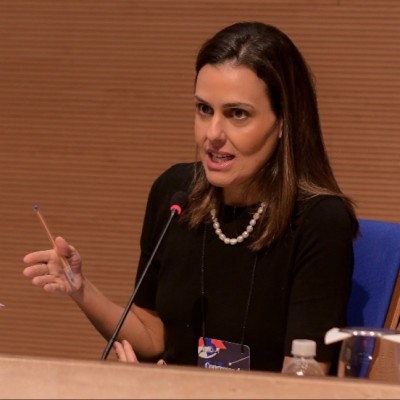
Institutional context: As Brazil implements national crypto regulation (Central Bank resolutions 2024+), a panel of female leaders—from Mercado Bitcoin, Bras, B3, and business innovation—reveals a critical insight: mass crypto adoption won't be driven by technology, but by systemic vision, responsible risk management, and gender-empowered leadership. Vanessa (5 years crypto, 18 years TradFi), Soq (15 years legal/regulatory), Cristia (business innovation), and a fourth speaker explore women's role in governing this transition across 2024-2026.
Key Learning Points
- Bidirectional Market Transitions: Women migrating from TradFi to crypto (Vanessa: 18 years finance → 5 years crypto for financial freedom purpose) and crypto to regulated TradFi (Cristia) prove markets converge; systemic vision and adaptability are portable assets.
- Systemic Vision vs. Silo Optimization: In regulation and risk, women excel at 360° examination: how assets are custodied, how they're liquidated, how consumers are protected. This holistic (not siloed) vision is requirement for Brazil regulation 2024-2026.
- Brazil Regulation as Institutional Inflection: Central Bank resolutions define minimum regulatory capital, prudential treatment of virtual assets, and new market configuration. Expectation: consolidation differentiated from status quo; small-cap player exit; new compliance requirements.
- Women-to-Women Mentorship as Exponential Multiplier: Converting business competition into gender collaboration (companies compete; women leaders don't); formal mentorship + affirmative hiring + intellectual freedom = exponential female talent pipeline 2025-2026.
- Adoption ≠ Technology; Adoption = Trust: Complex crypto products require clear explanation. Women offer risk/sustainability vision generating consumer confidence; without this, retail adoption stalls.
Thematic Deep Dives
- 1. Vanessa's Journey: 18 Years TradFi to Mercado Bitcoin Leadership: Vanessa worked 18 years in traditional finance (information services, legal director). Five years ago (2019), discovered purpose in crypto: financial freedom, removing intermediaries, delivering value directly to investors. Transition was moral/purposeful, not technical. Today leads Mercado Bitcoin corporate ecosystem (exchange, payments platform, asset administrator, education portal). Insight: women leaders migrate for purpose clarity, not money or status alone.
- 2. Legal/Regulatory in Brazil: Soq's Perspective at 15-Year-Old Bras: Soq manages Bras legal/regulatory in UK and Brazil. Bras known for foreign exchange and international payments. Brazil crypto regulation (2024+) requires transposing European rules to local context. Key points: stablecoins in international payments; frictionless compliance; institutional trust. Soq emphasizes crypto regulation isn't isolated market—it's integration into global payments system.
- 3. Business Innovation & Inverse Transition: Cristia Crossing into Regulated TradFi: Cristia made opposite move from Vanessa: worked ~18 months in crypto ecosystem, then migrated to traditional regulated finance. Now leads Business Innovation area. Critical insight: crypto is "innovation lab" for traditional finance. Crypto mindset (fast, decentralized, purpose-driven) can "positively contaminate" traditional finance. Challenge identified: women concentrated in legal/compliance, insufficient in business/P&L leadership.
- 4. Brazil Regulation 2024-2026: Structural Market Shifts: Central Bank resolutions define minimum regulatory capital, prudential treatment (stress tests, reserves), and new custody standards. Consolidation expected: small players lacking regulatory capital will exit; large players (Mercado Bitcoin, Bras, B3 subsidiaries) strengthen. Competition also shifts: which entity types get licenses (banks, brokerages, custodians vs. pure exchanges).
- 5. Women's Role in Risk, Sustainability & Consumer Adoption: Women offer differentiated governance/risk vision: asking not just "does the tech work?" but "is it sustainable? What are systemic risks? Does the consumer understand?" This rigor builds confidence. Retail crypto adoption depends on clear product explanation; women tend to communicate more accessibly, reducing adoption friction.
- 6. Formal Mentorship and Affirmative Hiring as Exponential Multipliers: Panel discusses opening positions via affirmative hiring (because female talent pool exists, just not in director roles). Informal mentorship ("ask me if you need help") fails; structured mentorship (matched pairs, regular check-ins, transparent promotion criteria) multiplies talent exponentially. Concrete example: speaker has open role and can offer it as affirmative hiring. Impact: 2-3 year window, female leadership pipeline explodes.
Panel FAQs
- How does Brazil's crypto regulation differ from Europe/UK? Europe and UK regulate via older frameworks (2020+); Brazil implementing now (2024) observing EMEA evolution. Brazil advantage: learn from others' mistakes. Disadvantage: late-mover risk if regulation proves overly restrictive.
- Why do women demonstrate greater systemic vision in regulation? Not biology; rather, women in finance historically outsiders forced to understand all systems (not just their silo). Upon reaching leadership, they retain that 360° vision.
- How do we reconcile business competition with gender collaboration? Panelists' companies compete for market share; women leaders collaborate in mentorship, shared knowledge, and advocacy for more women in crypto. Not contradiction—separating business from person.
- What happens to small players when Central Bank regulation launches? Many won't meet minimum capital or operational requirements. Consolidation will be painful but necessary. Large players and newly-regulated entrants will be winners.
- Is formal mentorship really scalable in small ecosystem like Brazil crypto? Yes, exponential multiplier effect: 1 leader mentors 2-3 women, those 3 mentor 6-9 more. Within 24 months, formal mentorship system covers entire industry.
- If the female talent pool is small, how does affirmative hiring work? The pool isn't small—it's invisible. Many women work in crypto Brazil; concentration is in non-visible functions (legal, compliance). Affirmative hiring for business/leadership roles surfaces hidden talent.
Leadership synthesis 2024-2026: The panel dismantled notion that crypto/finance is "gender-neutral space" where women compete equally. Reality: women bring systemic vision, responsible risk, and collaborative capacity accelerating adoption and trust. Brazil regulation 2024-2026 offers unique opportunity: codify corporate governance, risk, and sustainability principles with female leadership from inception. If Brazil fails this, loses competitive adoption advantage vs. Europe/UK. If succeeds, exports model to Latin America 2025-2026.






Anna Lucia Berardinelli
Founding President - Brazil Chapter at Association for Women in Cryptocurrency