
1. What Are RWA Assets? (Definition & Core Concept)
A real-world asset (RWA) is anything of value that exists off-chain, a government bond, a loan, a building, an ounce of gold, represented as a token on a blockchain. The token is not the asset itself; it is a programmable claim backed by a legal structure that links the holder to the underlying value.
This is the fundamental distinction between RWAs and crypto-native tokens. Bitcoin, Ether, and governance tokens derive value from their own protocols and network demand. RWA tokens derive value from an external, legally enforceable claim on something that would exist with or without the blockchain. The primary purpose of RWAs is to bring the value and utility of off-chain assets into the on-chain digital economy.
The terms "RWA tokens" and "on-chain assets" are used interchangeably because the whole point is to place an off-chain asset's economic rights onto a ledger that can settle, transfer, and report automatically. Crucially, a token is only as strong as its legal wrapper, typically a special-purpose vehicle (SPV), a trust, or a regulated fund structure that holds the underlying asset and defines what the token holder is actually entitled to.
RWA Crypto vs. Traditional Securities
An RWA token is a blockchain-native instrument, not a scanned copy of a paper certificate. The rights that a transfer agent and custodian would administer manually, dividend or coupon payments, ownership transfers, redemption, are encoded in smart contracts. Compliance logic such as whitelisting can live inside the token itself, so a transfer only settles between approved wallets. The economic exposure is the same as the traditional security; the settlement and servicing layer is what changes.
2. How RWA Tokenization Works: The End-to-End Process
Blockchain tokenization follows a repeatable lifecycle regardless of asset class. The asset is identified and valued, a legal structure is created to hold it, tokens are issued on a chain, investors are onboarded with compliance checks, and the position is then serviced on an ongoing basis. Each step has an off-chain and an on-chain component, and the weakest link usually sits in the legal and operational plumbing rather than the code.
Asset Identification and Valuation
Not every asset tokenizes cleanly. The best candidates have clear title, a verifiable cash flow, and an accepted valuation method. Independent appraisers and auditors establish a baseline value, and for income-producing assets a servicer confirms the cash flows that the token will distribute.
Legal Structuring
An issuer forms an SPV or trust to hold the asset, or issues directly on-chain where the law allows. Jurisdiction choice determines investor protections, tax treatment, and enforceability. This is where cross-border enforcement risk is introduced, because a token can trade globally while the legal claim sits under one country's courts.
Token Issuance on the Blockchain
Issuers choose a chain, often Ethereum, Polygon, Stellar, or Solana, and a token standard. ERC-20 suits fungible instruments, while permissioned standards such as ERC-1400 and ERC-3643 embed identity and transfer restrictions for regulated securities. The smart contract encodes the holder's rights: income distribution, voting where relevant, and redemption.
Distribution and Investor Onboarding
KYC and AML checks are performed before any allocation, and the resulting whitelist is enforced at the contract level so only verified wallets can hold the token. Primary issuance happens through permissioned platforms for regulated products or, for lighter-touch instruments, through public venues.
Ongoing Management and Reporting
Oracles such as Chainlink and Pyth feed valuation and reference data on-chain, and smart contracts automate reporting and income distribution. This is also a risk surface: real assets lack continuous price feeds, so stale or manipulated oracle data can misprice a token.
3. Types of Real-World Assets Being Tokenized
The RWA universe spans nearly every asset class, but the money is highly concentrated. The tokenized real-world asset market (excluding stablecoins) reached approximately $33.5 billion by mid-2026, tripling in twelve months, with Treasury and money market products accounting for roughly 80% of that total, making tokenized Treasuries the dominant on-chain RWA category by a wide margin.
Tokenized Real Estate
Residential, commercial, and REIT-style exposure can be split into fractional tokens, lowering minimum tickets dramatically. In practice the segment is small: tokenized real estate represents under 2% of total on-chain RWA value by all credible measurements as of mid-2026, largely because local property registries do not yet recognize on-chain claims. Platforms active here include RealT, Lofty, and Tangible.
Tokenized Treasuries and Government Bonds
Tokenized Treasuries became DeFi's preferred collateral because they offer dollar yield with a familiar credit profile. Collectively, tokenized U.S. Treasury products tracked by RWA.xyz exceeded $15 billion by mid-2026, making on-chain treasuries the dominant category in the broader real-world asset tokenization market. Leading products include BlackRock's BUIDL, Franklin Templeton's BENJI, and Ondo Finance's OUSG and USDY.
Private Credit and Corporate Debt
On-chain lending channels capital to real borrowers through protocols such as Maple Finance, Goldfinch, and Centrifuge. Private credit is one of the largest institutional segments by committed value, offering yields above tokenized Treasuries in exchange for higher credit and liquidity risk.
Commodities and Precious Metals
Tokenized gold (PAXG, XAUT), plus oil and carbon credits, give holders a direct, auditable claim to a reserve, with on-chain provenance that traditional commodity ETFs do not provide.
Private Equity, Funds, and Art
Tokenization opens previously illiquid alternatives, VC fund stakes, private equity, and fine art, to smaller allocations. Firms including Apollo and Hamilton Lane now have live tokenized products, though secondary liquidity in these segments remains thin.
4. RWA Market Size & Growth Opportunity
Headline numbers vary widely, and the spread is not sloppy reporting. RWA.xyz distinguishes between "distributed value", tokens that are actually issued and freely tradable on-chain, at roughly $33.5 billion as of early July, and "represented value", which includes assets committed to tokenization but not yet liquid, sitting around $345 billion. Underlying-asset counts run higher still; counting the underlying assets those tokens reference, rwa.xyz reports $369B.
Growth has been steep. On-chain, freely tradable RWA value (excluding stablecoins) reached approximately $33.5 billion as of early July 2026, up from roughly $11.8 to 14.1 billion a year earlier, nearly tripling. Institutional momentum is the driver: BlackRock, Franklin Templeton, Apollo, Hamilton Lane, and WisdomTree all now have live tokenized products.
The long-term projection most often cited is bullish but conditional. A report from Boston Consulting Group and ADDX estimates that asset tokenization will reach $16 trillion by 2030, or 10% of global GDP. Other houses are more cautious: Boston Consulting Group forecasts $16 trillion, Citigroup estimates $4 trillion to $5 trillion, and McKinsey provides a more conservative baseline projection of $2 trillion. Treat all of these as scenarios, not forecasts.
| Year | On-Chain RWA Value (ex-stablecoins) | Context |
|---|---|---|
| 2022 | ~$5B | Early DeFi RWA collateral experiments |
| 2024 | ~$5B | BUIDL launches; tokenized Treasuries scale |
| 2025 (mid) | ~$11.8B | Institutional products multiply |
| 2026 (Sep) | ~$38.6B | Treasuries dominate; private credit grows |
Figures per RWA.xyz as reported by multiple trackers; methodologies differ, so cross-check before citing.
Where banks, asset managers, and market-infrastructure providers compare what is live, MERGE Madrid runs a Tokenization & Capital Markets track across its six tracks. View program →
5. Benefits of RWA Tokenization
Tokenization is more than branding; it changes the mechanics of ownership and transfer. Tokenisation reduces minimum investment sizes, speeds up settlement, and creates new secondary markets for these assets. The structural advantages cluster into five areas.
Enhanced Liquidity
Illiquid assets like real estate and private equity become tradable tokens, and on-chain markets run continuously rather than on exchange hours. Whether that liquidity is deep enough to matter is a separate question addressed in the risks section.
Fractional Ownership via Blockchain
Fractionalization lowers barriers: asset fractionalization, for the first time, is a functionality directly integrated into software, where the concept of traditional fractionalization has existed for years in the form of REITs, ETFs, or mutual funds. That extends fractional access into private markets that ETFs never reached.
Transparency and Auditability
On-chain provenance and immutable records make ownership history verifiable in real time, reducing certain fraud vectors associated with paper-based registries.
Operational Efficiency and Cost Reduction
Smart contracts automate compliance, distributions, and reporting, and can collapse settlement timelines. Tokenized fund shares, for example, are being used to move settlement toward near-instant finality compared with the T+1 standard in traditional markets.
Global Accessibility
A single token can be offered across borders, subject to whitelisting and local law, giving investors in more markets access to instruments that were previously hard to reach.
6. Top RWA Tokens & Protocols: Key Projects at a Glance
The RWA protocol landscape is concentrated at the top, with a handful of issuers controlling most of the value. BlackRock's flagship is the clearest example: BUIDL is the BlackRock USD Institutional Digital Liquidity Fund, a tokenized money market fund launched in March 2024 with Securitize as transfer agent. By mid-2026 it holds over $2.9 billion in assets under management and commands approximately 40% of the total tokenized Treasury market, making it the single largest tokenized real-world asset fund in the world.
Notable RWA Protocols
| Protocol / Product | Asset Type | AUM (mid-2026, approx.) | Note |
|---|---|---|---|
| BlackRock BUIDL | Tokenized MMF | ~$2.9B | Securitize transfer agent; qualified purchasers |
| Circle USYC | Tokenized MMF | ~$3.0B | Institutional Treasury yield |
| Franklin Templeton BENJI | Gov't securities fund | ~$0.7–2.0B | Longest operating track record, Stellar origin |
| Ondo Finance (OUSG) | Tokenized T-bills | ~$0.4–0.6B | Also USDY; crossed $1B tokenized-stock TVL |
| Centrifuge | Private credit | Hundreds of millions | Real-world loan pools |
| Maple Finance | Corporate credit | Hundreds of millions | Institutional lending |
AUM figures are drawn from RWA.xyz-based trackers and move frequently; verify on the live dashboard before use. BUIDL holds ~$2.5B at a $5M minimum for qualified purchasers; OUSG ~$625M at a $100K minimum; BENJI available to retail in select US states.
Emerging RWA Protocols to Watch
Superstate (yield-bearing Treasury tokens for DeFi treasuries), Backed Finance (tokenized ETFs and securities), Swarm (regulated tokenized stocks and bonds), and OpenEden (tokenized T-bills with instant mint and redemption) are expanding the product set beyond the incumbents.
7. RWAs in DeFi: Yield Generation & Protocol Integration
RWA tokens plug into DeFi as collateral, as yield instruments, and as pool assets, bringing cash-flow-backed returns into on-chain markets. The caveat is that integration is still shallow: in one recent snapshot, only about 10% of tokenized RWA value actually flowed into DeFi protocols.
RWA as Collateral in Lending Protocols
MakerDAO/Sky pioneered using RWAs, including tokenized Treasuries, to back DAI, and tokenized money market funds now serve as collateral across lending venues. This links on-chain borrowing to off-chain cash flows rather than purely crypto collateral.
RWA Yield vs. Crypto-Native Yield
RWA yield is often called "real" yield because it comes from underlying economic activity, Treasury bill interest or loan repayments, rather than token emissions. Tokenized Treasuries typically track short-term government rates in the mid-single digits, while crypto-native APYs are more volatile and can collapse when incentives dry up. Remember that crypto-asset values fluctuate and can lose value; where investment risk is involved, review the risk notice.
Liquidity Pools and Secondary Markets for RWA Tokens
Whitelisted pools on venues such as Curve and Uniswap support RWA token trading, but maintaining a peg and deep liquidity is hard when the underlying asset is illiquid or redemption windows are periodic.
MERGE Institute's program covers how RWAs integrate into DeFi, with practitioner instructors from Banco Santander, Polygon Labs, and Kaleido. View program →
8. RWA Assets vs. Traditional Investments vs. Crypto-Native Tokens
A three-way comparison helps place RWAs in context.
| Attribute | Traditional Investment | Crypto-Native Token | RWA Token |
|---|---|---|---|
| Backed by | Physical/financial asset | Protocol utility/speculation | Real-world asset |
| Liquidity | Limited (market hours) | 24/7 (volatile) | 24/7 (often thin) |
| Minimum investment | Often high | Very low | Low (fractional) |
| Transparency | Moderate | High (on-chain) | High (on-chain) |
| Regulatory status | Established | Evolving | Securities law + crypto rules |
| Counterparty risk | Institutional | Smart contract | Both |
The takeaway: an RWA token sits between the two columns on either side of it. It inherits the economic exposure and legal protections of a traditional security while gaining the settlement speed and transparency of a crypto-native token, and it carries both counterparty and smart-contract risk at once. That dual-risk profile is the single most important thing for an institutional buyer to internalize.
9. History & Rise of the RWA Industry: A Brief Timeline
RWA tokenization evolved from a thin 2017-era concept into a multi-billion-dollar sector in under a decade.
Early Pioneers (2017–2020)
The first wave, Harbor, tZERO, Polymath, built security-token rails for tokenized real estate and equity. Enthusiasm outran demand, held back by regulatory uncertainty and almost no secondary liquidity.
DeFi Integration Era (2020–2022)
MakerDAO introduced RWA collateral, and Centrifuge and Goldfinch launched real-world lending pools. Ethereum's programmability made it possible to encode complex RWA structures, and by late 2022 on-chain RWA value sat near $5 billion.
Institutional Adoption Wave (2023–2026)
Regulated incumbents arrived. BlackRock, Franklin Templeton, and others launched compliant products, tokenized Treasuries became the dominant category, and the market tripled in a single year to roughly $33.5 billion by mid-2026. The signal is scale: in May 2026 BlackRock filed with the SEC to launch two new tokenized funds and to offer on-chain share classes for its existing $7 billion money-market fund, signaling that BUIDL was a proof of concept for a much larger tokenization strategy.
10. Risks & Challenges of RWA Assets
A credible RWA allocation starts with the risks, not the yield.
Legal and Counterparty Risk
The token is only as good as its legal wrapper. If the SPV becomes insolvent, the custodian defaults, or a court in the issuing jurisdiction will not enforce the token holder's claim, the on-chain balance is worth little. Cross-border enforcement is a genuine open question.
Valuation and Oracle Risk
Real assets lack continuous price feeds, so tokens depend on oracles that can go stale or be manipulated, and illiquid underlying assets are hard to mark to market accurately.
Regulatory and Compliance Risk
Most RWA tokens are securities and can be reclassified, halted, or forced into redemption by regulators. KYC and AML whitelisting also limits who can hold or transfer a token, constraining the very liquidity tokenization promises.
Smart Contract and Technical Risk
Tokenization contracts can carry code vulnerabilities, upgrade risks, and dependencies on third-party oracles and bridges, any of which can be exploited.
Liquidity and Secondary Market Risk
Token liquidity is frequently thinner than the underlying asset's institutional market. One striking data point: 56% of tokenized assets worth over $100,000 showed zero weekly on-chain activity in one recent snapshot. In stressed markets, tokens can trade at meaningful discounts to net asset value.
11. RWA Regulation: Legal Frameworks & Compliance Landscape
Classification drives everything. The same token can be a security in one framework and a crypto-asset in another.
United States
The SEC treats most RWA tokens as securities, with issuers using Regulation D, Regulation S, or Regulation A+ pathways, while the CFTC claims jurisdiction over commodity-linked tokens. Investor gating reflects this: products like BUIDL are limited to qualified purchasers.
European Union
The EU runs two parallel regimes. The Markets in Crypto-Assets Regulation (Regulation (EU) 2023/1114), known as MiCA, became fully applicable on 30 December 2024. But most tokenized securities fall outside it: tokenized money market funds and tokenized treasury products almost always fall outside MiCA because they qualify as financial instruments; the tokenization is a technological wrapper, not a reclassification, so the existing fund regime applies in full. For secondary trading, the DLT Pilot Regime (Regulation (EU) 2022/858), applicable since 23 March 2023, is the EU framework for trading and settling crypto-assets that are financial instruments on DLT market infrastructures. It is a real sandbox with caps: DLT MTFs can only admit financial instruments with a market capitalization below EUR 500 million for shares or an issue size below EUR 1 billion for bonds.
Asia-Pacific and Offshore Hubs
Singapore's MAS runs Project Guardian, Hong Kong's SFC operates a licensing regime, and the Cayman Islands and BVI remain common SPV domiciles, with the UAE's ADGM and DIFC offering RWA-friendly frameworks.
Global Compliance Best Practices
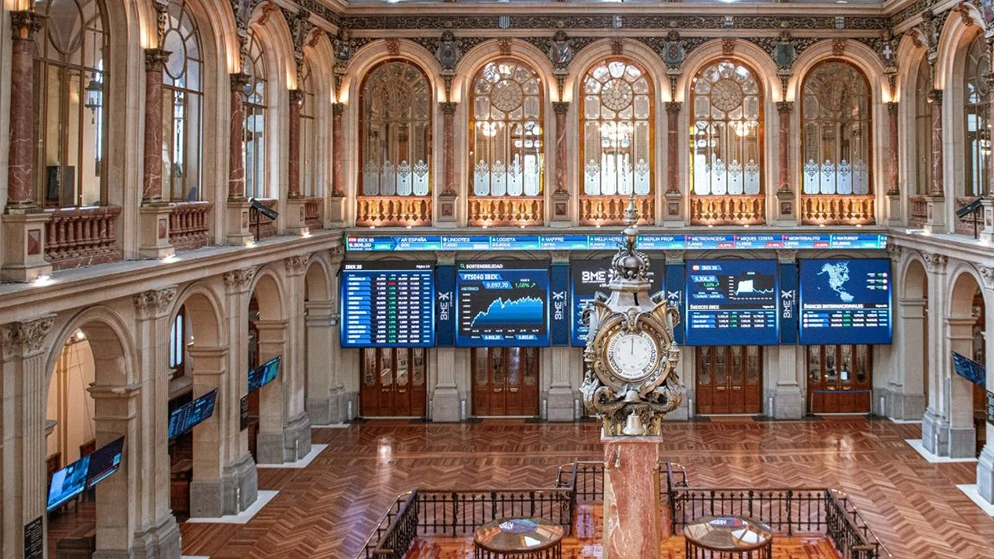
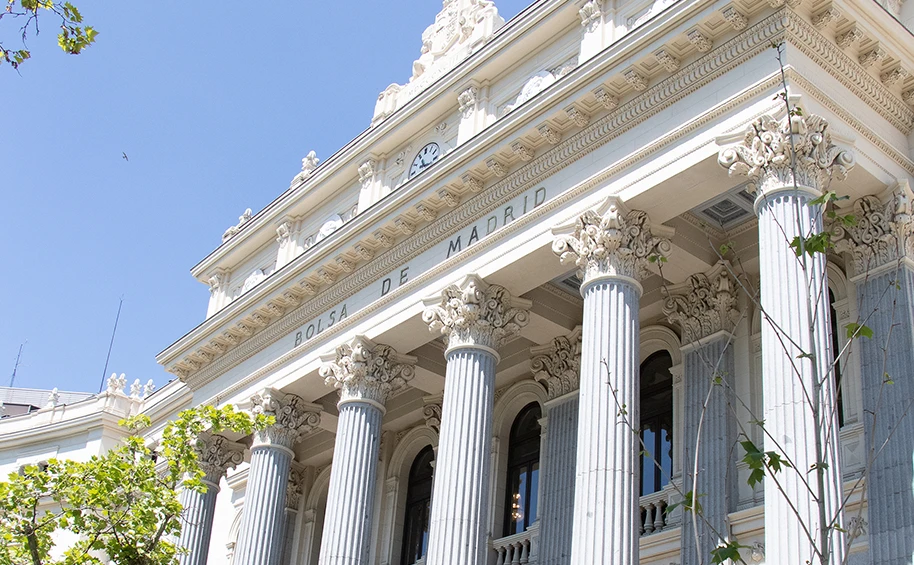
Across jurisdictions the pattern is consistent: embed KYC and AML at the contract level, work with regulated custodians and transfer agents, and obtain legal opinions and third-party audits before issuance. These are exactly the questions on the agenda at the Institutional Summit at Bolsa de Madrid, where banks, regulators, and asset managers discuss tokenization and RWAs, regulated custody, and MiCA at one table.
12. Secondary Trading & Liquidity for RWA Tokens
Buying an RWA token at issuance is straightforward; selling it later is where the market is still immature.
Regulated Alternative Trading Systems (ATS)
Licensed venues such as tZERO, INX, and ADDX provide compliant secondary markets for security tokens, subject to the same investor-protection and reporting obligations as other regulated trading platforms.
Decentralised Exchange (DEX) Trading
DEX liquidity for permissioned RWA tokens is growing through whitelisted pools on venues like Uniswap and Curve, though access is gated to verified wallets.
Redemption Mechanisms
Some products offer on-demand redemption at NAV; others impose periodic liquidity windows. Redemption terms, NAV-based versus market-price, are often the real determinant of how liquid a token is in practice.
The secondary-market gap is a live debate at MERGE: panels at MERGE Madrid 2026 asked where the actual buyers for tokenized assets are and what is trading. View program →
Key Takeaways
- RWA assets are tokenized claims on off-chain value; on-chain value reached about $38.6B in September 2026, up from $33.5B in July, with tokenized Treasuries dominating.
- The gap between "distributed" value (freely tradable) and "represented" value (committed but not liquid) explains why headline figures range from under $20B to over $300B.
- Institutional adoption is the growth engine: BlackRock's BUIDL alone holds roughly $2.9B and about 40% of the tokenized Treasury market.
- Regulation is classification-driven: MiCA has applied since 30 December 2024, but most tokenized securities sit under MiFID II and the DLT Pilot Regime instead.
- The core risks are legal wrapper enforceability, oracle and valuation accuracy, regulatory reclassification, and thin secondary liquidity.
To go deeper on the tokenization stack with practitioners from banks and infrastructure providers, explore MERGE Institute.
MERGE Institute's modules cover tokenization, custody, and RWA integration with 8+ practitioner instructors. View program →
Frequently Asked Questions (FAQ)
What is the difference between RWA crypto tokens and traditional securities?
RWA tokens are blockchain-native representations of real assets that enable continuous trading, fractional ownership, and automated compliance encoded in smart contracts, rather than paper certificates administered by a transfer agent. The underlying economic exposure, and usually the securities-law protections, are the same; the settlement and servicing layer is what changes.
How big is the RWA tokenization market in 2026?
It depends on methodology. The tokenized real-world asset market held about $38.6B of on-chain value, excluding stablecoins, on 27 September 2026 by rwa.xyz's count, while the main trackers put it at $31–36B at mid-year. Longer-term, BCG and ADDX estimate asset tokenization could reach $16 trillion by 2030, though other houses forecast far lower.
What are the best RWA protocols for yield generation?
Leading yield-generating RWA protocols include Ondo Finance (tokenized T-bills), Maple Finance (corporate credit), Centrifuge (private credit pools), and MakerDAO/Sky's RWA collateral, each with a different risk-return profile. This is not investment advice; yields vary, and crypto-asset values can lose value, see the risk notice.
Can anyone invest in tokenized real estate or tokenized treasuries?
Accessibility varies by product and jurisdiction. Some platforms allow retail investors with low minimums, while institutional-grade products are restricted; for example, BUIDL carries a $5M minimum for qualified purchasers, whereas BENJI is available to retail in select US states.
What are the main risks of investing in RWA tokens?
The main risks are counterparty and legal-wrapper risk (the token is only as good as the SPV behind it), oracle and valuation failures, regulatory reclassification, smart-contract vulnerabilities, and thin secondary liquidity, underscored by the fact that 56% of tokenized assets worth over $100,000 showed zero weekly on-chain activity in one recent snapshot. Due diligence on the issuer's legal structure is essential.
How does RWA tokenization relate to DeFi?
RWA tokens enter DeFi as collateral (for example backing stablecoins), as yield instruments in lending protocols, and as liquidity-pool assets, bringing cash-flow-backed "real" yield on-chain. Integration is still early: only around 10% of tokenized RWA value currently flows into DeFi protocols.
Conclusion: The Future of RWA Assets
RWA tokenization is no longer a niche experiment. It is a structural shift in how ownership and value transfer work, resting on three pillars: accessibility through fractional ownership, efficiency through smart-contract automation, and liquidity through continuous global markets. The data confirms the direction of travel, with on-chain value tripling in a year and the world's largest asset managers issuing live products.
The hurdles are equally real: regulatory clarity is still being built, oracle and custody infrastructure is maturing, and legal standardization across borders is incomplete. As frameworks like MiCA and the DLT Pilot Regime bed in and institutions scale their offerings, on-chain assets are positioned to capture a meaningful slice of the hundreds of trillions in global assets, if secondary liquidity and legal enforceability catch up to the technology.
To study how banks, brokers, and asset managers are actually building custody, trading, and tokenized products, MERGE Institute is where practitioners teach the stack end to end.