
To master blockchain, study four layers in order: distributed-systems and cryptography fundamentals, a smart-contract language (Solidity first, then Rust), security and auditing, and a specialisation such as DeFi, protocol engineering, or enterprise blockchain. The reason is that blockchain work sits at the intersection of cryptography, economics, and software engineering, so breadth matters before depth. That said, employers increasingly reward demonstrable skills over credentials: the blockchain job market in 2026 is opportunity-rich but competitive, and employers want demonstrable impact, hands-on experience, and an understanding of how blockchain fits into real-world financial systems.
This roadmap walks through the full path, from core concepts and programming languages to smart-contract security, DeFi architecture, certifications, and the current job market. Read time is roughly 10 minutes, and you will leave with a structured 12-month plan you can start this week.
In 30 seconds
- The order. Fundamentals, a smart contract language, security and, finally, a specialization.
- The language. Solidity to start; Rust now appears in more smart contract vacancies.
- Without coding. Compliance, product and business roles also need blockchain knowledge.
- What gets you hired. A GitHub portfolio and audit contests, more than degrees.
If your background is in business, finance or law, you can follow this roadmap without coding at MERGE Institute: fundamentals in Module 1; consensus, rollups and smart contract security in Module 6; enterprise blockchain with Javier García (Kaleido) in Module 5; DeFi in Module 3; and MiCA and regulation in Module 7 (taught in Spanish). Try a free class →
1. Understanding Core Blockchain Concepts First
Before writing a line of code, build a mental model of how blockchains actually work. These fundamentals determine whether later topics click or confuse.
Distributed Ledger Technology (DLT) and How Blockchains Work
A blockchain is a distributed ledger replicated across many nodes, where transactions are grouped into blocks and cryptographically linked into an immutable chain. Study the differences between public ledgers (open, permissionless, like Ethereum), private ledgers (single-organisation), and consortium ledgers (shared by a defined group of institutions). The trade-offs between decentralisation, throughput, and privacy shape every downstream design choice.
Consensus Mechanisms You Must Know
Consensus is how a network agrees on a single version of truth. Start with Proof of Work (PoW) and Proof of Stake (PoS), then move to Delegated PoS and Byzantine Fault Tolerant (BFT) variants used by enterprise and app-chain networks. Understand why the consensus model dictates finality, energy profile, validator economics, and security assumptions. Add Proof of Authority (PoA) too, where identified entities validate blocks, which many enterprise and consortium networks use.
| Who validates | Where you will see it | |
|---|---|---|
| Proof of Work (PoW) | Miners spending energy | Bitcoin |
| Proof of Stake (PoS) | Validators locking tokens | Ethereum, Solana, Cardano |
| Proof of Authority (PoA) | Identified entities | Enterprise and consortium networks |
| BFT | A group that votes and tolerates faulty nodes | Cosmos, Hyperledger Fabric |
The consensus mechanisms you need to know
Cryptography Fundamentals
Blockchain is applied cryptography. Learn hash functions (SHA-256 on Bitcoin, Keccak-256 on Ethereum), public and private key pairs, and digital signatures. Then study Merkle trees and, at an introductory level, zero-knowledge proofs, which are a key macro trend shaping hiring in 2026, alongside AI-blockchain convergence, regulatory clarity in the EU, and continued buildout of Ethereum Layer 2s, which now secure about $36 billion led by Base and Arbitrum, alongside Solana as a high-throughput base chain.
MERGE Institute
Learn crypto and digital assets from the leaders of the ecosystem
A 12-week programme for business, finance and legal profiles, taught in Spanish. Infrastructure and security in Module 6; enterprise blockchain in 5; regulation in 7.
Try a free class →










2. The Blockchain Developer Roadmap: Beginner to Advanced
A realistic blockchain developer roadmap spans 6 to 12 months of consistent work, with specialist roles taking longer. Structure it in three phases. If you are not going to code, the order is the same but the destination changes: instead of Solidity, go deep on tokenization, stablecoins, regulation, and business models. Compliance and legal are already the sector's second hiring category, with 10.4% of vacancies in the first half of 2026, according to Tiger Research.
| If you will code | If you will not code | |
|---|---|---|
| Fundamentals | Consensus, cryptography, Ethereum | The same: it is the base of everything |
| Language | Solidity, then Rust | Tokenization, stablecoins and business models |
| Security | Testing, auditing, formal verification | Risks, custody and famous hacks |
| Specialization | DeFi, protocols, security | Compliance and MiCA, product, consulting |
Two routes to mastering blockchain
Beginner Phase (Months 1–2)
Learn how Bitcoin and Ethereum work at the protocol level: accounts, transactions, gas, and the mempool. Reinforce basic cryptography and networking. The best free resources are the official Ethereum documentation, the Bitcoin whitepaper, and Khan Academy's cryptography course. For free hands-on practice, the Speedrun Ethereum challenges and Cyfrin Updraft courses are two of the most complete options today.
Intermediate Phase (Months 3–5)
Write and deploy your first smart contracts to a public testnet. Master the core token standards: ERC-20 (fungible tokens), ERC-721 (NFTs), and ERC-1155 (multi-token). Then explore layer-2 scaling solutions and sidechains, which have become central as hiring has consolidated around established protocols, DeFi platforms, RWA tokenization infrastructure, and enterprise blockchain applications.
Advanced Phase (Months 6–12+)
Learn to audit smart contracts for vulnerabilities, contribute to open-source protocols, and pick a specialisation: DeFi, NFT infrastructure, enterprise blockchain, or core protocol development. This is where the market pays a premium, because the market is now large enough that specialization matters more than "getting into blockchain" in the abstract.
3. Essential Blockchain Programming Languages and Tools
Your language choice follows your target ecosystem, but a few are non-negotiable.
Smart Contract Languages
Solidity is the starting point for Ethereum and every network compatible with it, and it remains essential. But Rust has overtaken it in demand: according to recruiter Plexus, in 2025 Rust appeared in 58.5% of its smart contract vacancies and Solidity in 41.5%. Rust powers Solana and Polkadot and is prized for performance and memory safety. Vyper is a Python-like alternative for Ethereum with a smaller surface area for bugs.
| Solidity | Rust | |
|---|---|---|
| 2023 | 44.2% | 25.7% |
| 2024 | 42.9% | 48.5% |
| 2025 | 41.5% | 58.5% |
Language required in smart contract vacancies (Plexus). Some ask for both
Supporting Languages
- JavaScript/TypeScript for front-end dApp interaction via Ethers.js or Viem (Web3.js was archived in 2025)
- Python for scripting, data analysis, and tooling
- Go for Hyperledger Fabric chaincode and the Cosmos SDK
Development Frameworks and Tools
Learn Foundry and Hardhat 3 for contract testing and deployment, and Remix IDE for rapid prototyping. Truffle and Ganache stopped being maintained in 2023, so seeing them in a job listing signals an older project. Add IPFS and Filecoin for decentralised storage. These tools are the daily working environment of a professional smart contract engineer.
4. Smart Contract Development and Security
Security is where blockchain engineering diverges most sharply from conventional software, because code controls real value.
Writing Production-Quality Smart Contracts
Study Solidity best practices: gas optimisation, upgradeability patterns, and granular access control. Then build a testing discipline, writing unit tests in Hardhat and fuzz tests in Foundry. In production, untested code that moves money is a liability, not an asset.
Blockchain Security Fundamentals
Learn the common attack vectors: reentrancy, integer overflow, flash-loan exploits, and oracle manipulation. Add static and dynamic analysis tools such as Slither, Aderyn, and Echidna, and understand the smart-contract auditing workflow end to end.
Formal Verification and Audit Preparation
At the advanced level, explore formal verification with tools such as the Certora Prover, open source since 2025, and learn how to prepare a codebase for a third-party audit. Security expertise dramatically raises employability, because in 2026 blockchain security engineers and auditors are among the most sought-after and best-paid profiles in the sector. Indeed, hiring data shows particularly strong growth in smart contract development, security engineering, and protocol design.
| Tools | What for | |
|---|---|---|
| Testing and fuzzing | Foundry, Hardhat 3, Echidna, Medusa | Finding bugs by running the code thousands of times |
| Static analysis | Slither, Aderyn | Spotting dangerous patterns without running it |
| Formal verification | Certora Prover, Halmos | Proving the contract follows its rules |
| Contests and bug bounties | Sherlock, Cantina, Immunefi | Practising and getting paid to find bugs |
A smart contract engineer's security toolkit in 2026
5. DeFi, Tokenomics, and Web3 Architecture
Decentralised finance is the most active application layer and a field in its own right.
DeFi Development Essentials
Study the core primitives: automated market makers (AMMs), lending protocols, and yield aggregators. Read and responsibly fork established, audited protocols such as Uniswap, Aave, and Compound to learn patterns, then understand cross-chain bridges and liquidity mechanics. Note that crypto-asset values fluctuate and can lose value; if you build or discuss investment mechanics, review the risk notice.
Tokenomics and Economic Design
Learn token supply models, vesting schedules, and governance tokens, plus the basics of incentive alignment and mechanism design. Good contract code with broken incentives still fails.
Web3 Skills and Full-Stack dApp Architecture
Connect smart contracts to front-end UIs with Ethers.js and Wagmi, integrate wallets such as MetaMask and WalletConnect, index on-chain data with The Graph, and study decentralised identity and authentication. These full-stack Web3 skills make you employable across a wider range of teams.
6. Enterprise Blockchain vs. Public Blockchain
The two worlds share primitives but reward different study paths.
Enterprise Blockchain Platforms
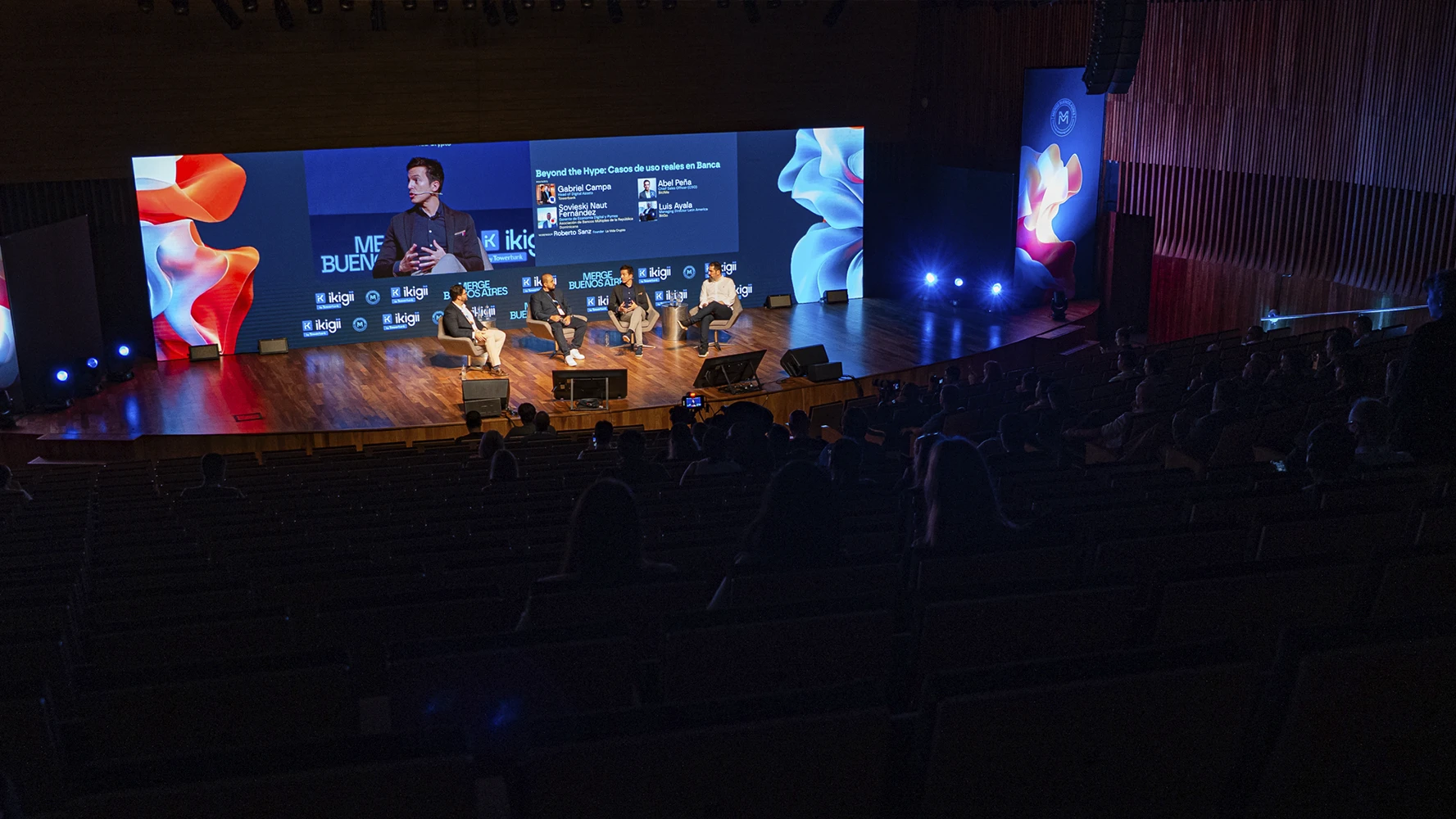
For years, Hyperledger Fabric, with permissioned networks and Go chaincode, and R3 Corda and Quorum, aimed at financial services, were the enterprise reference. Today most enterprise projects are built on Ethereum-compatible networks such as Hyperledger Besu, which has also absorbed users of the now unmaintained GoQuorum; for settling securities between regulated institutions, Canton stands out. The study emphasis here is privacy, identity, and regulatory compliance, the exact concerns institutions bring to the table. This convergence of traditional finance and the digital economy was the theme of MERGE Madrid 2026, one of Europe's reference crypto and tech events, which brought together 3,000+ attendees and 200+ speakers across six tracks, including Blockchain Infrastructure & Emerging Technologies.
| Before | In 2026 | |
|---|---|---|
| Reference network | Hyperledger Fabric, Corda, Quorum | Ethereum-compatible networks such as Besu |
| GoQuorum | Widely used in banking | Unmaintained; its users are moving to Besu |
| Settlement between institutions | Isolated private networks | Canton and permissioned public networks |
| What to study | Chaincode in Go | Privacy, identity and compliance |
Enterprise blockchain, then and now
Public Blockchain Ecosystem
On the public side, prioritise Ethereum and its Layer 2s, such as Base or Arbitrum, then Solana, the second ecosystem by developer count; Polkadot or Avalanche only if your goals call for them. Study interoperability protocols such as Cosmos IBC, which since 2025 also connects to Ethereum, or Polkadot's model, which now allocates compute on demand (Agile Coretime), and the career niches unique to public chains: protocol research, MEV, and validator operations.
7. Types of Blockchain Developers and Career Specialisations
Understanding role categories helps you target your study.
Active developers by ecosystem
Electric Capital tracker, October 2025.
Core Blockchain Developer vs. Blockchain Software Developer
A core blockchain developer works on the protocol itself: consensus implementation, networking, and node development. A blockchain software developer builds on top of existing chains: dApps, smart contracts, and integrations. The latter has far more open positions.
Blockchain Career Path Options
- Smart contract engineer
- Blockchain security auditor
- DeFi and protocol engineer
- Enterprise blockchain consultant
- Blockchain data analyst
- Developer relations and ecosystem developer
Demand is broad, and it is strongest where blockchain intersects with fintech, trading, AI, security, and regulation. Non-coding profiles are growing too: compliance and MiCA specialists, tokenization product leads at banks, and digital asset risk analysts.
MERGE Institute
Learn crypto and digital assets from the leaders of the ecosystem
A 12-week programme for business, finance and legal profiles, taught in Spanish. Infrastructure and security in Module 6; enterprise blockchain in 5; regulation in 7.
Try a free class →8. Hands-On Practice and Portfolio Building
Theory alone does not get you hired. Deploy contracts to public testnets such as Sepolia. Build at least three portfolio projects: a token, an NFT marketplace, and a DeFi protocol fork. Contribute to open-source repositories such as Ethereum clients, OpenZeppelin, and Chainlink, and take part in hackathons such as ETHGlobal's, Colosseum's for Solana, or Chainlink's. Document everything on GitHub with clear READMEs, and sharpen security skills in audit contests such as Sherlock or Cantina and Immunefi bug bounties; Code4rena, one of the pioneering platforms, announced its closure in 2026.
9. Blockchain Certifications Worth Pursuing
Certifications signal commitment but rarely replace a portfolio.
Credentials Employers Actually Recognise
- Certified Blockchain Developer from the Blockchain Council, a commercial course with uneven recognition among technical employers
- Alchemy University Ethereum Bootcamp certificate, free
- Hyperledger Fabric Certified Practitioner (HFCP) from The Linux Foundation
- Cyfrin Updraft certificates, free, with courses on Solidity, security, and Chainlink
How to Evaluate a Blockchain Course or Certification
Check curriculum depth (does it include real practice?), instructor credibility (working practitioners over pure academics), community and mentorship access, employer recognition, and flexibility for self-paced versus cohort-based learning. MERGE Institute, for example, is a non-university executive program, not an official master's degree, aimed mainly at business, finance, and legal profiles and taught in Spanish: its Open Program offers 9 modules and 50+ hours self-paced, with one year of access and a certificate, for €1,499 or from €124/month (VAT included), and the Executive Program adds a 12-week cohort with live sessions, a tutor, and a MERGE Madrid ticket, in groups of up to 30 participants.
MERGE Institute in numbers
Non-university executive program, taught in Spanish.
10. Blockchain Job Market Outlook and Salary Expectations
The market has rebounded, and it has matured. About 66,500 new Web3 jobs were posted in 2025, 47% more than the year before according to Coincub, and after a weak first half of 2026 postings have multiplied again since the summer. Unlike 2021, today's postings sit behind sustainable protocols, real institutional adoption from firms like BlackRock and Visa, and revenue-generating products rather than speculative token launches. Top hirers include exchanges such as OKX, Binance, or Bybit, issuers such as Tether or Ripple, and more and more banks and consultancies.
The blockchain job market
Vacancies: Tiger Research, first half of 2026.
On compensation, recruiter KORE1's 2026 salary guide groups US figures as follows. Junior roles (0 to 2 years) run roughly $90,000 to $120,000 base, mid-level smart contract roles (3 to 5 years) $125,000 to $170,000, senior protocol or smart contract roles (6 to 9 years) $175,000 to $230,000, and smart contract security or audit roles (5+ years) $180,000 to $260,000. At the top end, the best auditors competing in audit contests can earn $200,000 to $700,000 a year in prizes, though these are exceptional cases. The skills recruiters value most right now are Solidity plus Rust, security auditing, and cross-chain development, and freelance and DAO-contributor pathways offer alternatives to traditional employment.
| Experience | Base salary | Total comp* | |
|---|---|---|---|
| Junior | 0-2 years | $90-120k | $95-140k |
| Mid-level | 3-5 years | $125-170k | $150-215k |
| Senior | 6-9 years | $175-230k | $220-340k |
| Lead or principal | 10+ years | $210-280k | $290-450k |
| Security and audit | 5+ years | $180-260k | $230-400k |
US salaries, 2026 (KORE1). * At employers that also pay in tokens or equity
Key Takeaways
- Master blockchain in layers: fundamentals and cryptography, then a language (Solidity first), then security, then a specialisation.
- Solidity remains essential in the Ethereum ecosystem, but Rust now appears in more smart contract vacancies, according to recruiter Plexus.
- Security is one of the highest-leverage specialisations: blockchain security engineers and auditors are among the most sought-after and best-paid profiles in 2026.
- A GitHub portfolio and hackathon and audit-contest results matter more than any single certificate.
- US compensation is strong, with senior protocol or smart contract roles running $175,000 to $230,000 base and security or audit roles reaching $180,000 to $260,000.
For a structured path taught by practitioners, especially if your background is in business, finance, or law, the MERGE Institute program is a sensible next step (taught in Spanish).
Frequently Asked Questions
What programming language should I learn first for blockchain development?
Start with Solidity for smart contract development on Ethereum and every network compatible with it: it has the largest community and the most tutorials. Then add Rust, which now appears in more smart contract vacancies and is the gateway to Solana.
How long does it take to become a blockchain developer?
With consistent daily study and project work, most people reach employable skill levels in 6 to 12 months. Specialist roles such as security auditing or protocol engineering typically require 18 to 24 months.
Do I need a computer science degree to follow a blockchain career path?
No. Many strong blockchain developers are self-taught. That said, solid fundamentals in data structures, cryptography, and networking significantly accelerate the learning curve. And if your background is in business, finance, or law, you can master blockchain without coding by focusing on tokenization, regulation, and use cases.
What is the difference between DeFi development and general dApp development?
DeFi development specifically involves building financial primitives such as AMMs, lending pools, and derivatives, with deep tokenomics knowledge. General dApp development is broader, covering NFT platforms, gaming, identity, and supply-chain applications.
Are blockchain certifications worth it for getting a job?
Certifications signal commitment to hiring managers but rarely replace a strong GitHub portfolio. The best approach is to pursue one recognised certification while simultaneously building verifiable on-chain projects.
What is the difference between a core blockchain developer and a blockchain software developer?
Core developers build and maintain the underlying protocol: consensus code, networking, and cryptography. Software developers build applications and smart contracts on top of existing chains, and that role has far more open positions.
Conclusion: Your Blockchain Mastery Action Plan
The journey is cumulative: fundamentals, then languages, then smart contracts, then security, then a specialisation, then a portfolio, then certification, then a career move. Mastery is iterative, because the ecosystem evolves quickly and continuous learning is non-negotiable. For the next 30 days, pick one chain (Ethereum is the best starting point), set up a development environment, and deploy a contract to a testnet. The market rewards demonstrable skills over credentials alone, and the intersection of cryptography, economics, and software engineering remains rare enough that those who master it hold a durable career advantage. To accelerate the roadmap with a structured, practitioner-led program, explore MERGE Institute.