
A meme coin is a cryptocurrency inspired by an internet meme, cultural joke, or online community rather than a technical problem it sets out to solve. The original, Dogecoin, was launched as a satirical cryptocurrency as a way to make fun of Bitcoin and the many other cryptocurrencies boasting grand plans to take over the world on 6 December 2013, and the category has since grown to tens of billions of dollars in combined value. That said, these assets are highly speculative, carry no intrinsic cash flow, and can lose most or all of their value in a matter of hours.
This guide covers what a meme coin is, where the category came from, how meme coins work on-chain, what actually drives their price, the real risks involved, and a practical framework for researching one before you ever consider buying. Crypto-asset values fluctuate and can fall sharply; nothing here is investment advice.
In 30 seconds
- What it is. A crypto-asset born from an internet meme or joke, not from a technical problem to solve.
- Where it comes from. Dogecoin started the category on 6 December 2013 as a parody of Bitcoin.
- What moves its price. Attention, community and FOMO. There is no revenue, no dividend and no asset behind it.
- The risk. Swings of 50% to 90% within days and a real chance of losing everything.
How crypto-asset prices form, liquidity and tokenomics are covered in depth in Module 9 of MERGE Institute, Crypto-Asset Markets and Valuation (taught in Spanish). See the program →
1. Meme Coin Definition: What Sets Them Apart from Other Crypto Assets
A meme coin is a crypto-asset whose identity, branding, and community are built around humour or a viral online trend instead of an underlying product. Three traits tend to define the category:
- Cultural origin. The project starts from a meme or a joke, not from a technical whitepaper.
- Narrative-driven value. Price is driven mainly by social momentum and attention rather than fees, revenue, or utility.
- Large supply, low unit price. Many issue billions or trillions of tokens, giving each one a very small nominal price.
This distinguishes a meme coin from a utility token (which pays for a specific service or function inside a network) or a security token (which represents a regulated financial instrument such as equity or debt). Meme coins are sometimes framed more generously as "crypto community tokens," because the engaged community is effectively the product.
| Meme coin | Utility token | Security token | |
|---|---|---|---|
| Origin | A meme, a joke or a community | A service or function within a network | A regulated financial instrument |
| What drives its value | Narrative and attention | Use of the service it gives access to | The underlying asset: shares or debt |
| What the holder gets | Membership of a community | Access or payment within the network | Regulated economic rights |
| Example | DOGE, SHIB, PEPE | A token used to pay for a network | A tokenized share or bond |
| In the EU (MiCA) | Other crypto-asset: notified white paper and market abuse rules | Other crypto-asset, with the same white paper rules | Outside MiCA: governed by MiFID II |
Meme coins vs. other types of token
Meme Coin vs. Altcoin: Where Does the Line Fall?
"Altcoin" simply means any cryptocurrency other than Bitcoin, so every meme coin is an altcoin, but not every altcoin is a meme coin. Many altcoins ship defined use cases: smart-contract platforms, DeFi protocols, or payment rails. Meme coins typically launch with no stated utility at all. The line blurs over time, though, because a few meme coins have added functionality after launch, as Shiba Inu did by building out its own ecosystem. One technical nuance: Dogecoin is a cryptocurrency with its own blockchain, but most meme coins, such as SHIB, PEPE or WIF, are actually tokens issued on another network, such as Ethereum or Solana.
2. History and Origin: How Dogecoin Started a Category
Dogecoin is the founding document of the meme coin genre. Billy Markus, a programmer and early cryptocurrency enthusiast, wanted to make digital currency more friendly, and he and Jackson Palmer patterned the currency from the open-source software project Litecoin. It was created by Billy Markus and Jackson Palmer, and was inspired by the Shiba Inu featured in the "Doge" internet meme. The branding leaned into the joke: Dogecoin.com promotes the currency as the "fun and friendly Internet currency," referencing its origins as a "joke."
Early on, the community used it for tipping, charity drives, and Reddit rewards, establishing the friendly archetype that later meme coins copied. The project's visibility then exploded during the 2021 cycle, helped along by celebrity attention: Elon Musk frequently mentions or talks about Dogecoin on his Twitter account, boosting its popularity significantly in recent years. Dogecoin quickly developed its own online community, reaching a peak market capitalization of over US$85 billion on May 5, 2021.
From DOGE to a Multi-Billion-Dollar Market
After 2021, hundreds of meme coins launched across Ethereum, BNB Chain, and Solana, each riding a fresh wave of internet culture. Shiba Inu arrived in 2020, a cluster of dog- and frog-themed tokens followed in 2021, and PEPE broke out in 2023. A rough timeline of the category's growth looks like this:
- 2013: Dogecoin launches as a parody of Bitcoin.
- 2020–2021: Shiba Inu and a wave of imitators appear during the bull market.
- 2023: PEPE goes viral on Ethereum, and Solana meme coins gather pace.
- 2024 onward: Solana tokens such as dogwifhat show the trend has not slowed, and launchpads such as pump.fun let anyone create a token in minutes, multiplying launches (and abandoned projects).
- Dec 2013DogecoinLaunched as a Bitcoin parody, featuring the "Doge" meme dog
- Aug 2020Shiba InuLaunches on Ethereum as the "Dogecoin killer"
- May 2021DOGE peakTops $85 billion in market cap
- Apr 2023PEPEHits $1 billion in three weeks
- Nov 2023dogwifhatThe trend takes off on Solana
- Jan 2024pump.funCreating a token takes minutes and launches explode
From Dogecoin to pump.fun: more than a decade of meme coins
3. How Meme Coins Work: Blockchain Tech and Tokenomics
Most meme coins require no proprietary blockchain. They are deployed as standard tokens on existing networks, commonly as ERC-20 tokens on Ethereum or as the equivalent standards on BNB Chain and Solana. Pepe Coin, for example, is an ERC-20 memecoin on Ethereum built around the Pepe the Frog character, launched in April 2023 with no presale, no transaction taxes, and a renounced contract. Because the standards are open source, a token can be created in minutes.
On the tokenomics side, several patterns recur:
- Enormous supply. Issuing trillions of tokens keeps the per-token price tiny, which many retail buyers find psychologically appealing. SHIB launched in August 2020 as an ERC-20 token on Ethereum, and the initial supply was 1 quadrillion tokens.
- Token burns. Some projects destroy tokens to create deflationary pressure. In the SHIB ecosystem, for instance, Shibarium embeds BONE-based gas, governance, and automated SHIB burns.
- DEX liquidity. The primary trading venue is often a liquidity pool on a decentralised exchange rather than a listed order book.
Supply Mechanics and What They Mean for Price
Whether a coin has an unlimited or a capped supply shapes its "scarcity" narrative, and burn wallets, transaction taxes, and redistribution mechanisms are all ways projects try to influence that narrative. The single most important concept for newcomers is the difference between unit price and market capitalisation. A coin priced at $0.000001 is not "cheap" in any meaningful sense. As one data provider puts it plainly, the per-token price is simply the market cap divided by the number of tokens, so a market cap of $1 billion across 420.69 trillion tokens works out to roughly $0.0000024 each. A low nominal price spread across trillions of tokens can still represent a multi-billion-dollar valuation.
A tiny price per token does not make a coin "cheap": it can still be worth billions. Check the fully diluted value (FDV) too, which counts every token that will ever exist, not just those circulating today.
Price per token vs. market cap

The largest conference on crypto and digital assets
Banks, fintechs and the crypto ecosystem at the same table. Two editions in 2027:
4. What Drives Meme Coin Value? Community, Virality, and Speculation
Meme coins have no balance sheet, no revenue, and no dividend. Value is almost entirely narrative. A single viral post can move prices violently in hours, which is why social platforms sit at the centre of the category. PEPE is a textbook case of attention converting to market cap: the frog-themed memecoin Pepe surged over 85% in the last 24 hours to surpass a $1 billion market cap three weeks after its launch on April 14, 2023.
The community effectively is the product. Engaged holders generate the hype that attracts the next wave of buyers, and endorsements from high-profile figures act as price catalysts, as Elon Musk's commentary repeatedly did for Dogecoin. The dominant investor psychology is fear of missing out, amplified across X (formerly Twitter), Reddit, Telegram, Discord, and TikTok. This "social media crypto" feedback loop is powerful on the way up and brutal on the way down, because the same attention that lifts a price can evaporate just as quickly.
- 1Price risesA viral post, a tweet or a celebrity endorsement sparks the first jump.
- 2Narrative and attentionX, Reddit, Telegram and TikTok amplify the story.
- 3Capital flows inNew buyers pile in on FOMO and liquidity grows.
- 4Metrics improveMore holders, more volume, more mentions: they look like fundamentals.
- 5A signal for the next buyerThose metrics attract more buyers and the price rises again.
This is the reflexivity we cover at MERGE Institute: the price manufactures its own "fundamentals". It works the same way down: when attention fades, the loop reverses and there is no floor to stop it.
The reflexivity loop: how price feeds on itself
5. Notable Meme Coin Examples: DOGE, SHIB, PEPE, and Beyond
| Launch | Type and network | Milestone | Utility | |
|---|---|---|---|---|
| Dogecoin (DOGE) | December 2013 | Cryptocurrency with its own chain, based on Litecoin | Over $85B in May 2021 | Payments at Tesla's online store |
| Shiba Inu (SHIB) | August 2020 | ERC-20 token on Ethereum | 1 quadrillion tokens at launch | ShibaSwap and the Shibarium Layer-2 |
| Pepe (PEPE) | April 2023 | ERC-20 token on Ethereum | $1B in three weeks | None stated |
| dogwifhat (WIF) | November 2023 | SPL token on Solana | Third-largest meme coin by market cap in March 2024 | None stated |
The best-known meme coins, compared
Dogecoin (DOGE)
The original and still one of the most recognised. Beyond its 2021 peak above $85 billion, it is one of the few meme coins with a real-world payment use case: Tesla accepts Dogecoin as a form of payment for select merchandise in its online store, an option it added in January 2022 after Elon Musk publicly supported enabling Dogecoin transactions. And it remains a heavyweight: in August 2026 it was the tenth-largest cryptocurrency by market cap on CoinMarketCap.
Shiba Inu (SHIB)
Shiba Inu is the clearest example of a meme coin trying to grow into a utility ecosystem. Shiba Inu is a decentralized, community-driven cryptocurrency built on the Ethereum blockchain and launched in August 2020 by an anonymous creator known as Ryoshi. It was marketed as a "Dogecoin killer" and has since added infrastructure, including the ShibaSwap decentralised exchange and a Layer-2 network: Shibarium was launched on the Shiba Inu mainnet on August 16, 2023.
PEPE Coin
PEPE illustrates how fast virality now translates into valuation. Pepe Coin is a memecoin deployed on Ethereum in April 2023, named after Pepe the Frog, the cartoon character Matt Furie first drew for his 2005 comic Boy's Club. While it took Dogecoin almost four years for its market capitalisation to reach $1 billion, Pepe Coin surpassed its first billion within three weeks of its launch. It carries no stated utility.
FLOKI, WIF, and Emerging Projects
The dog-and-frog theme keeps generating new entrants. dogwifhat shows the trend extending onto Solana: Dogwifhat (WIF) is a Solana-based dog-themed memecoin that was launched in November 2023. Its rise was rapid and, as with every pure meme play, its fall could be too: following listings on several large centralized exchanges, in late March 2024 it overtook PEPE to become the third largest memecoin by market cap. FLOKI, named after Elon Musk's own Shiba Inu, is another 2021-era project that has tried to bolt utility features onto a meme brand.
MERGE Institute
Learn crypto and digital assets from the leaders of the ecosystem
A 12-week program, taught in Spanish by working professionals. Crypto markets, liquidity and valuation are covered in Module 9.
Try a free class →










6. Meme Coin Risks: Volatility, Rug Pulls, and Market Manipulation
Meme coin volatility is extreme by design. Price swings of 50% to 90% in either direction within days are routine, and because there is no revenue, no asset backing, and no cash flow, there is no fundamental floor beneath the valuation. Where a blue-chip equity can be anchored to earnings, a meme coin is anchored only to sentiment. If you are weighing any of this as an investment, review the risk notice at mmerge.io/riesgos first.
Rug Pulls and Scam Projects
A rug pull is an exit scam in which developers abandon a project and drain its liquidity after attracting investor money. This type of activity, where the owners of a cryptocurrency extract as much liquidity as they can from a project and tank the value of any remaining assets, is a type of exit scam known as a "rug pull," associated in particular with the decentralised finance ecosystem. The most infamous example is the SQUID token, which exploited the Netflix series Squid Game. On November 1, 2021, creators drained approximately $3.38 million from the liquidity pool and abandoned the project, causing the token price to collapse from over $2,800 to effectively zero within minutes. A critical red flag had been visible the whole time: investors could buy SQUID, but the contract itself stopped them from selling, a trap known as a honeypot. Common warning signs include anonymous teams, unaudited smart contracts, and liquidity that is locked only for a short period.
The SQUID rug pull, 1 November 2021
The red flag was visible from day one. Anonymous teams, unaudited contracts and briefly locked liquidity are classic warnings.
Pump-and-Dump Schemes and Market Manipulation
Coordinated buying groups inflate a thinly traded token, early insiders sell into the hype, and latecomers absorb the losses. Low-market-cap coins are especially vulnerable because thin liquidity makes prices easy to move. The regulatory picture is still catching up: most jurisdictions lack rules written specifically for meme coins, so buyer protections are limited. The EU is a partial exception: under MiCA, whoever offers one of these tokens or seeks its admission to trading must notify a white paper, and pump-and-dump schemes count as market manipulation. The institutional and regulatory lens on speculative tokens is exactly the kind of topic debated under the Regulation, Compliance, and Legal Frameworks track at MERGE Madrid, one of six tracks at an event positioned as Europe's largest crypto and tech event, drawing 3,000+ attendees and 200+ speakers from 40+ countries. MERGE itself is not a retail trading event and does not promote any crypto-asset.
7. Use Cases and Real-World Utility: Current Limits and Emerging Applications
Honestly, most meme coins have no functional use case at launch, and many never acquire one. The exceptions are notable precisely because they are rare: Dogecoin is accepted for some Tesla merchandise, SHIB's Shibarium Layer-2 aims to enable cheaper transactions, and a handful of projects have added gaming or community features. There is also a softer "cultural utility" argument, that meme coins act as an accessible on-ramp that introduces new users to wallets, exchanges, and blockchains for the first time, echoing Dogecoin's early history of tipping and charity fundraising.
Where meme coins brush up against serious infrastructure, such as payments and settlement, is where the institutional conversation begins. That intersection of culture and real payment rails maps onto two of the tracks at MERGE Madrid: Digital Money, Payments, and Stablecoins, and Innovation, Culture, and the Web3 Economy. The open question for the whole category remains whether cultural capital can be converted into lasting utility.

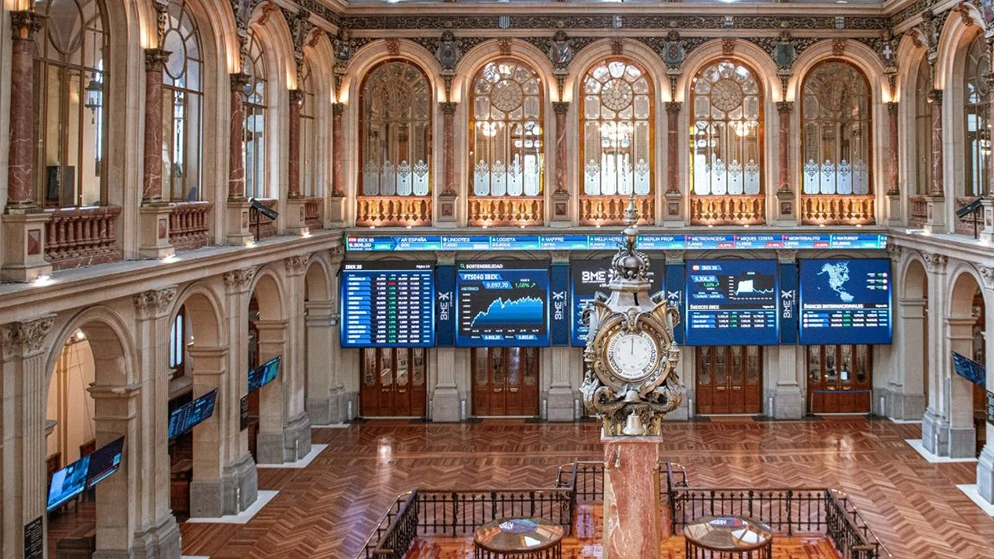
The Palacio de Cibeles, home of MERGE Madrid, where the Digital Money, Payments and Stablecoins and the Innovation, Culture and the Web3 Economy tracks explore where crypto culture meets real payments
8. How to Research and Evaluate a Meme Coin Before Investing
If you are going to look at this corner of the market, treat due diligence as non-negotiable. The following is an educational framework, not a recommendation to buy anything.
Red Flags Checklist
- Anonymous or unverifiable team behind the project.
- No smart-contract audit from a reputable security firm.
- A liquidity pool that is unlocked, or locked for less than six months.
- A missing whitepaper, or one copy-pasted from another project.
- Highly concentrated holdings, for example the top 10 wallets controlling more than 30% of supply.
- A large gap between current market cap and fully diluted value (FDV), or team token unlocks coming up soon.
Positive Signals to Look For
- An active, organic community rather than obvious bot activity.
- Transparent tokenomics that can be verified on-chain.
- Listings on reputable data aggregators such as CoinGecko or CoinMarketCap.
- A verified contract on a block explorer like Etherscan or BscScan.
- A clear roadmap with milestones that have actually been delivered.
Even a project that passes every check can still fall to zero. The SQUID collapse is a reminder that momentum and media coverage are not substitutes for the ability to sell your position.
The largest conference on crypto and digital assets
Banks, fintechs and the crypto ecosystem at the same table. Two editions in 2027:
9. How to Buy Meme Coins: A Step-by-Step Beginner's Guide
This section explains the mechanics for educational purposes only. It is not advice to purchase any token, and you should never commit money you cannot afford to lose entirely. If you are in the EU, only use providers authorized under MiCA: you can check them on ESMA's register or, in Spain, the CNMV's.
Step-by-Step Process
- Choose a venue. Established meme coins such as DOGE and SHIB are listed on major centralised exchanges, while smaller tokens usually trade only on decentralised exchanges like Uniswap or PancakeSwap.
- Set up and fund a wallet. For DEX purchases, a self-custody wallet such as MetaMask or Trust Wallet is standard.
- Acquire a base currency. You will generally need ETH, BNB, or SOL to swap into the target token on a DEX.
- Execute the trade carefully. Connect your wallet, paste the correct contract address (verify it on a trusted aggregator to avoid fake copies), and set an appropriate slippage tolerance.
- Secure your holdings. For any meaningful amount, consider a hardware wallet.
The single most important rule here is risk management: assume any meme coin position can go to zero, and size it accordingly.
10. Future Outlook: Sustainability, Regulation, and Meme Coins' Role in Crypto Culture
In the short term, meme coin cycles are tightly coupled to broader crypto bull markets, and each cycle tends to spawn a new wave of tokens. Regulatory scrutiny of speculative tokens is increasing worldwide, and the category's lack of disclosure and consumer protection is a recurring concern for authorities. At the same time, meme coins have undeniably broadened participation, bringing millions of retail users into crypto for the first time.
The plausible long view is bifurcated. The overwhelming majority of meme coins will fade to irrelevance, while a small number of established names may evolve, through community-owned intellectual property, gaming integrations, or genuine payment adoption, into culturally significant assets with some real utility. Which ones, if any, make that transition is impossible to predict, and no one should treat a meme coin as a reliable store of value.
MERGE Institute
Learn crypto and digital assets from the leaders of the ecosystem
A 12-week program, taught in Spanish by working professionals. Crypto markets, liquidity and valuation are covered in Module 9.
Try a free class →Key Takeaways
- A meme coin is a crypto-asset built on internet culture and community rather than utility, with Dogecoin, launched on 6 December 2013, as the founding example.
- Value is narrative-driven: there is no cash flow or asset backing, so prices depend on attention and can swing 50% to 90% within days.
- Understand market cap versus unit price. A token priced at a fraction of a cent can still carry a multi-billion-dollar valuation.
- The risks are real and specific: rug pulls like SQUID, pump-and-dump schemes, and thin liquidity. Run a due-diligence checklist before considering any purchase.
- A few meme coins have added utility (DOGE payments, SHIB's Shibarium), but most never do.
To learn the blockchain and tokenomics fundamentals behind these assets from practitioners rather than promoters, the MERGE Institute program is the natural next step.
Frequently Asked Questions About Meme Coins
What is the difference between a meme coin and a regular cryptocurrency?
A meme coin derives its value almost entirely from community sentiment, virality, and branding built on an internet meme, with little or no underlying utility. A utility-driven cryptocurrency is valued, at least in part, on the service it provides, such as powering smart contracts, settling payments, or securing a network. The core distinction is the value driver: attention versus function.
Are meme coins a good investment?
Meme coins are a high-risk, high-volatility category with no fundamental floor, so they can deliver outsized gains and total losses alike. They are generally considered among the most speculative assets in crypto. If anyone chooses to participate, standard guidance is to keep position sizes small and never invest more than you can afford to lose entirely. This is not investment advice, and crypto-asset values fluctuate; see mmerge.io/riesgos.
What was the first meme coin?
Dogecoin is widely regarded as the first. Software engineers Billy Markus and Jackson Palmer launched Dogecoin on December 6, 2013. It was created as a parody of Bitcoin, built on Litecoin's codebase, and it established the friendly, community-first template that the entire category later followed.
What is a rug pull in crypto, and how do I avoid one?
A rug pull is an exit scam where developers abandon a project and drain its liquidity, leaving holders unable to sell. The SQUID token, which collapsed from about $2,861 to near zero in minutes in November 2021, is a classic case. Three practical defences: confirm there is a reputable smart-contract audit, check that liquidity is genuinely locked for a meaningful period, and favour projects with transparent, verifiable teams.
How do meme coins use social media to grow?
They rely on viral loops. A meme or post spreads on X, Reddit, Telegram, Discord, and TikTok, influencers amplify it, and fear of missing out pulls in new buyers, whose purchases push the price up and generate more attention. The community itself produces the marketing, which is why engagement metrics often matter more than any product roadmap.
What are the most popular meme coins right now?
Frequently cited names include Dogecoin (DOGE), Shiba Inu (SHIB), PEPE, FLOKI, and dogwifhat (WIF). Rankings shift extremely quickly in this category, so check live data on a reputable aggregator such as CoinGecko or CoinMarketCap rather than relying on any static list.
Conclusion: Key Takeaways on Meme Coins
Meme coins are, at heart, internet-culture tokens whose price is set by community and narrative rather than by cash flow or utility. The dual reality is unavoidable: extraordinary gains are possible, but so are total losses, and the distance between the two can be measured in hours. Understanding how meme coins work, how their tokenomics and supply mechanics really function, and where the risks sit is non-negotiable before putting a single euro in, which is where the due-diligence checklist above earns its keep. Meme coins may be crypto's wildest corner, but they are also among its most culturally influential, and they are unlikely to disappear anytime soon.