Market Abuse in Crypto: Data, AI and Early Detection
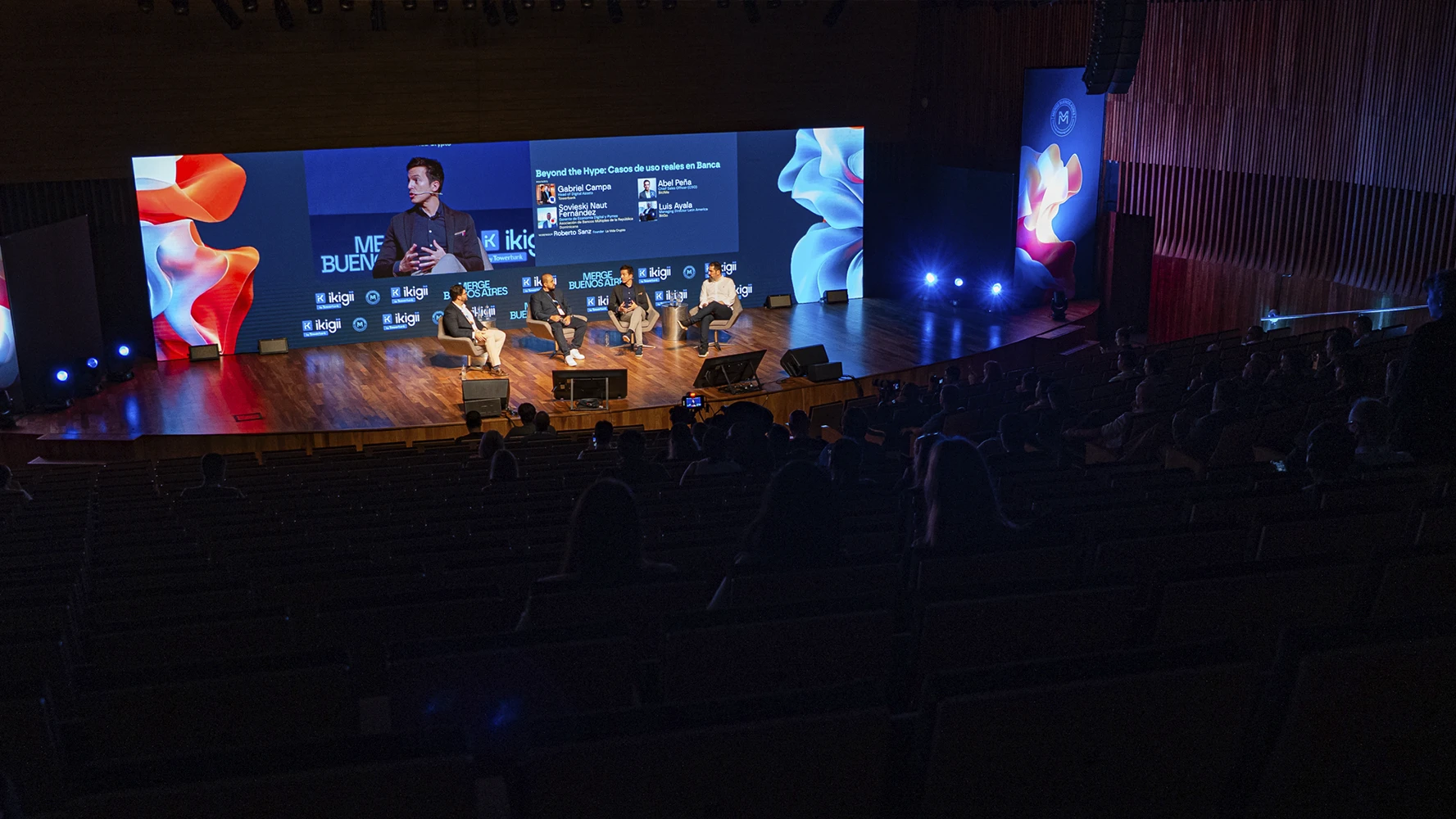
A university researcher presents at MERGE Madrid 2026 the progress of a project on market abuse in crypto-assets: data quality, pump and dump cases, the limits of artificial intelligence and a multidisciplinary approach
20min · Full recording from 29/10/2026 at MADRID Stage. Also available on YouTube.
Market abuse in crypto-assets: data, artificial intelligence and early detection
Overview
Can market manipulation in crypto-assets be detected before it happens? In this MERGE Madrid 2026 talk, a university researcher from a technical background shares the progress of a research project involving companies in the sector. He explains why data is the biggest obstacle, which patterns appear before a pump and dump and why artificial intelligence is not enough on its own.
What you'll learn
- A little-explored field: why market abuse is more complex with digital assets
- The data problem: when what you download from a provider does not reflect what really happened
- Pump and dump: which signals are seen beforehand and why they are not enough to predict
- Limits of AI: resource consumption, suboptimal results and overconfidence
- Analogies with other systems: looking for patterns like those that precede an earthquake
- The role of the university: rigorous, multidisciplinary research at the service of companies
Session summary
A challenge for compliance: the speaker explains that, with blockchain technology and digital assets, the ways of abusing the market are becoming ever more complex, which is a challenge for any company required to monitor it. His team has spent two years testing different detection methods.
Data, the greatest difficulty: any machine learning algorithm needs data, and the project has found that the data offered by top-tier providers and exchanges often does not reproduce what happened. When information from messaging groups that organize these operations is compared with the exchange's records, it frequently does not match.
What is seen before a pump and dump: after analyzing a large set of cases on a major exchange, the researchers observed that activity triples in the hour beforehand. Even so, that signal does not allow reliable prediction, because it does not clearly distinguish these episodes from other moments of high activity.
Beyond artificial intelligence: applying artificial intelligence consumes a lot of resources and does not always give the best result. That is why the team draws on concepts from distant fields: since all activity is recorded in the order book, it looks for patterns of change similar to those of other systems, for example those that precede earthquakes. He adds that regulation, sometimes contradictory, shapes which methodologies can be applied.
The university as an ally: the project brings together researchers from computer science, physics, mathematics and law. The speaker warns that artificial intelligence, by always answering in a positive tone, can give a false sense of control, and argues for the role of academic institutions, used to reviewing information rigorously, in supporting companies on problems that require research.
Watch the full talk
Watch the full recording on MERGE's YouTube channel, with the progress of a university project on detecting market abuse in crypto-assets.
FAQs
Why is it hard to detect market abuse in crypto-assets?
According to the talk, mainly because of data: what is available does not always reflect what happened, and without reliable data algorithms cannot give good results.
Can a pump and dump be predicted?
According to the speaker, there are advance signals, such as a notable increase in activity, but for now they are not enough to make a reliable prediction.
Is artificial intelligence enough to solve it?
According to the talk, no: it consumes a lot of resources, does not always deliver the optimal result and its answers need to be reviewed by specialists.
What does the university offer companies in the sector?
Teams from several disciplines and a rigorous review method to tackle complex problems, such as the early detection of market abuse.