Solana in Spain: La Familia and Tokenized Securities Issuance
La Familia, the Solana community in Spain, and a platform for issuing tokenized financial instruments explain at MERGE Madrid 2026 what is being built on Solana: support for startups, business tokenization and regulated issuances step by step
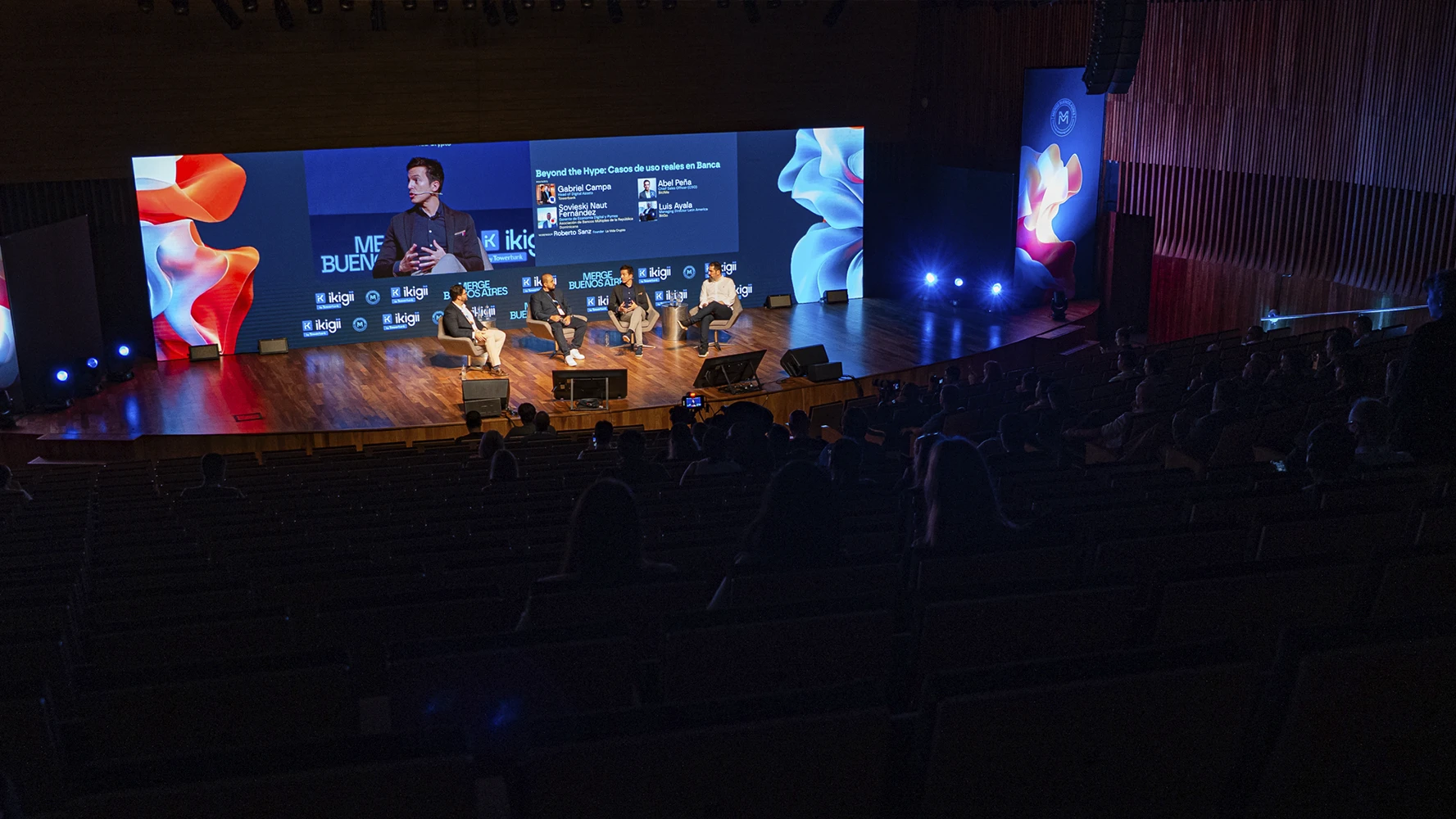
30min · Full recording from 28/10/2026 at MADRID Stage. Also available on YouTube.
Solana in Spain: La Familia and the issuance of tokenized financial instruments
Overview
What is being built on Solana from Spain? In this double session at MERGE Madrid 2026, La Familia, the Solana community in Spain, explains how it supports entrepreneurs and startups, and a platform for issuing tokenized financial instruments explains how a regulated issuance is structured, which providers are involved and why it expects to be able to issue on Solana soon as well.
What you'll learn
- La Familia: what the Solana community in Spain offers those who want to build
- Tokenizing a business: how a small company could turn its customers into investors
- What a tokenized financial instrument is: equity or debt represented on a blockchain
- The steps of an issuance: company, instrument, registry and investors
- Who is involved: law firms, investment firms, the registry entity, investor verification and payments
- Supported networks: Ethereum and Polygon today, and the plans to integrate Solana
Session summary
What La Familia is: the community presents itself as a Spanish-language support point for anyone who wants to build on Solana, with technical, distribution and marketing help. It explains that in recent months it has toured several cities with workshops, opened a physical workspace in Madrid during a startup competition and brought together the projects created from Spain. Its goal, it says, is for local talent not to have to leave the country.
Why tokenization matters: La Familia illustrates it with a neighbourhood business that wants to grow: if it could be tokenized, its own customers could become investors and provide the liquidity it needs. It acknowledges that the regulatory framework in Europe is strict, which it considers necessary, but which many founders see as a limit.
How an issuance is structured: the guest platform explains that a financial instrument can be equity or debt and that tokenizing means dividing it into parts bought by investors, with a right to their share of the profits. It sums up the process in four elements: a company, the instrument, the entity responsible for the registry (known in Spain as the ERIR) and the investors.
The token is not the hard part: according to the platform, the technology is the easy part. The complexity lies in coordinating between four and six providers, including law firms, investment firms, the registry entity, investor verification and payment gateways, which usually takes between six and twelve months. Its proposal is to bring that whole circuit together in one place, with a guided process for the issuer.
A regulated instrument: the platform points out that this is not just any crypto asset. As a financial instrument under MiFID II, it must be possible to block tokens or recover them if the investor loses access to their wallet. The issuer, for its part, can see its investors, distribute returns and publish communications.
Coming to Solana: the platform says that today it can only issue on Ethereum and Polygon and that, after bringing the parties together with the help of La Familia, work on integrating Solana will begin from the first quarter of next year.
Watch the full talk
Watch the full recording on MERGE's YouTube channel, with La Familia and a platform for issuing tokenized financial instruments on what is being built on Solana from Spain.
FAQs
What is La Familia?
The Solana community in Spain, focused on supporting, in Spanish, entrepreneurs and startups building on this blockchain.
What does it take to issue a tokenized financial instrument?
According to the session, a company, an equity or debt instrument, an entity responsible for the registry and the investors, plus legal and verification providers.
How long does it take to structure an issuance?
According to the guest platform, it usually takes between six and twelve months when all the providers have to be coordinated separately.
Can tokenized securities already be issued on Solana?
According to the platform, it currently works with Ethereum and Polygon and expects the integration with Solana to begin from the first quarter of next year.