AI Agents That Pay: Identity, Mandate and Traceability
ISBE, the Community of Madrid and Bitso discuss at MERGE Madrid 2026 AI agents that act and pay on behalf of companies and citizens: who is accountable, how to leave verifiable evidence, the role of blockchain and when real adoption will arrive
40min · Full recording from 28/10/2026 at MADRID Stage. Also available on YouTube.
AI agents that pay: identity, mandate and traceability in business and public administration
Overview
If an AI agent acts or pays on behalf of a company, who records what it did and with what permission? In this MERGE Madrid 2026 panel, ISBE, the Community of Madrid and Bitso contrast two views: that of public administration, which demands identity, mandate and verifiable evidence, and that of industry, which doubts agents will buy on their own and places the change in conversational apps and purchasing processes.
What you'll learn
- The four questions: who acted, on whose behalf, with what authorisation and what they did
- AI and blockchain: why they converge when evidence of an agent's actions is needed
- Agents in public administration: three levels of use and where the limits lie
- Payments in the conversational channel: why Bitso expects cards before stablecoins
- Business purchasing: faster supplier approval and more competition
- What is missing: real cases, a mandate model for agents and recording standards
Session summary
The administration's view: the Community of Madrid explains that, faced with an autonomous agent, the first question is not technological: who is acting, on whose behalf, with what permissions and how it will later be shown that the action was correct. That is where it sees artificial intelligence, which allows delegation, converging with blockchain, which provides a trust infrastructure to record and verify evidence.
ISBE, from network to trust: the Community of Madrid reviews the origin of ISBE as a national blockchain network connected to Europe, promoted together with other regional governments and already in production. The new phase, it notes, is about finding real problems the network can solve, and AI agents are a good example. ISBE adds that it has already executed operations between agents representing companies, with invoice submission and stablecoin payments.
Bitso's view: Bitso compares the current moment with the early years of blockchain, when many bets never materialised. In its view, agents that buy on their own do not yet have market fit. It expects change to come when the major AI apps allow card payments inside the conversation, with the user pressing the buy button, and believes cards make more sense than stablecoins in that scenario.
Business purchasing: Bitso does not expect to see agents hiring suppliers on their own in large corporations, but it does expect a transformation of approval and purchasing processes, making it easier for an SME to sell to a large company or to the public sector and increasing competition.
Three levels in public administration: the Community of Madrid distinguishes the already widespread use in preparing and reviewing documentation, acting on behalf of a person or company, which first requires solving representation and mandate, and decision-making. At this last level, the more a decision affects people's rights, the more safeguards and the less autonomy the system allows.
How to trace what an agent does: Bitso argues that observability is already solved in the enterprise solutions of the major AI providers and will be shaped by certifications, although implementation is uneven. The Community of Madrid asks four things of any system with economic or legal effects: identity, authorisation, traceability with checkable evidence and control to stop and review. On a neutral registry between organisations, the administration sees a role for ISBE as a source of verifiable, explainable evidence, while Bitso doubts it is needed in most processes.
Watch the full talk
Watch the full recording of the panel on MERGE's YouTube channel, with ISBE, the Community of Madrid and Bitso on AI agents, payments and verifiable evidence.
FAQs
What do you need to know when an AI agent acts on someone's behalf?
According to the Community of Madrid, who acted, on whose behalf, with what authorisation and exactly what they did and when.
Will AI agents pay for us?
According to Bitso, the most likely near-term scenario is the user buying inside a conversation with an AI app and confirming the payment themselves, not delegating the whole purchase to an agent.
Can an agent make administrative decisions?
According to the Community of Madrid, when there are legal or economic consequences, decisions must be traceable and explainable, with more safeguards the more they affect people's rights.
What role can ISBE play?
According to the panel, that of a trust infrastructure providing verifiable evidence of relevant actions, without replacing public administration, banks or companies.


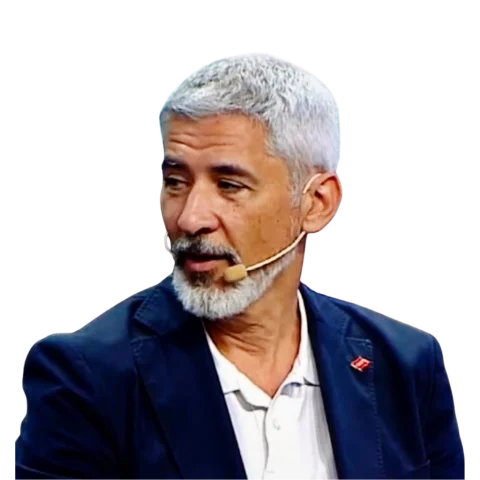

Miguel Ángel Calero
Executive Director at ISBE