Use Cases for 2027: Tokenization, Accessibility and Stablecoins
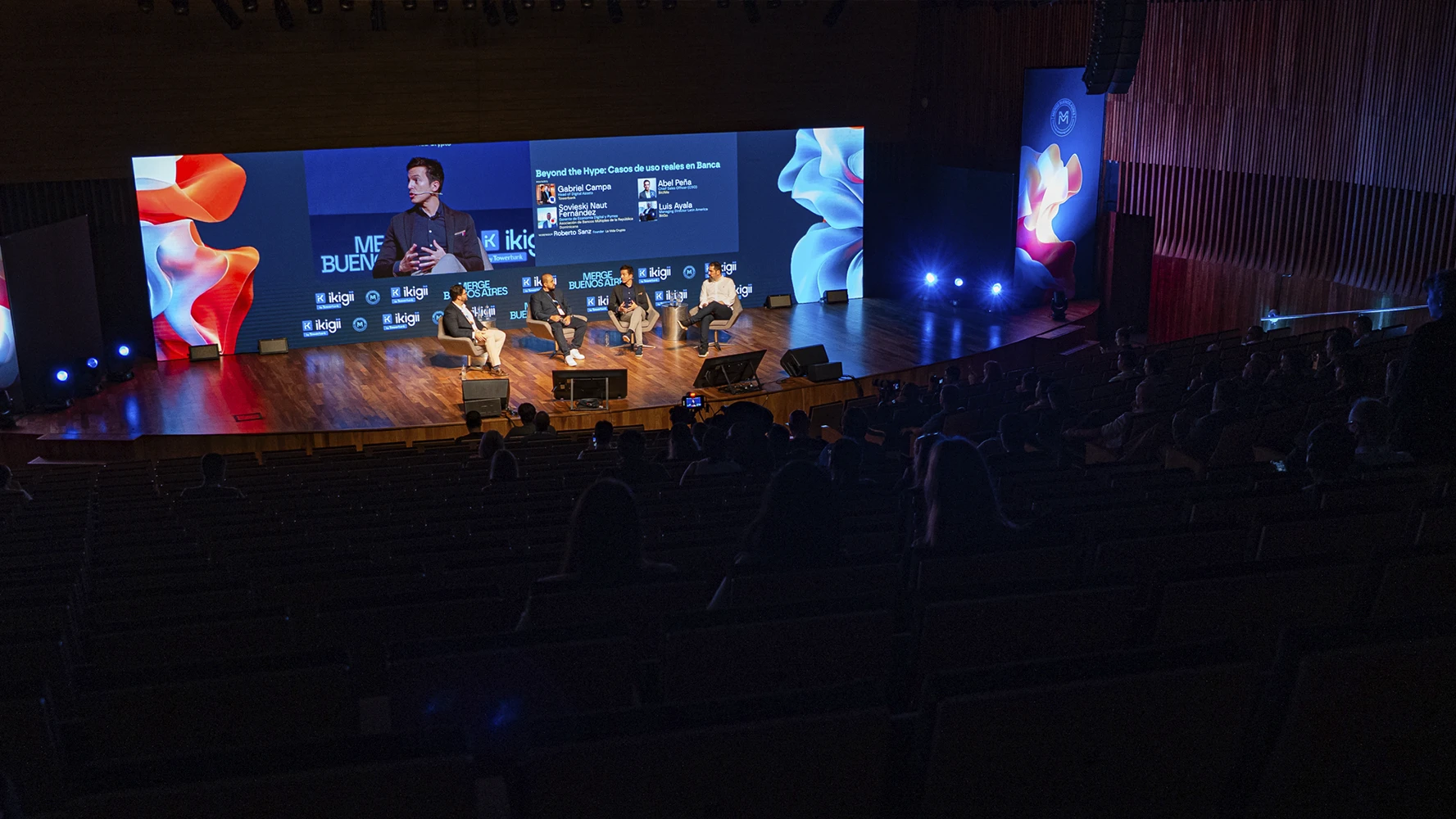
Tether, Swift and Tutellus discuss at MERGE Madrid 2026 what is coming in 2027: tokenized capital markets, more accessibility for investors, stablecoins as the rail to interconnect assets, the cash leg challenge and tokenized financing for small businesses
30min · Full recording from 29/10/2026 at MERGE Stage. Also available on YouTube.
Use cases for 2027: tokenization, accessibility and stablecoins
Overview
What will a company or a person be able to do in 2027 that they can't today? That question opens the closing panel of MERGE Madrid 2026, with Tether, Swift and Tutellus. The common thread is that what is coming is not so much new visible technology as removing friction: more accessibility, tokenized capital markets and stablecoins acting as the rail that interconnects assets.
What you'll learn
- Accessibility: why almost everything is permissioned today and what would open it in 2027
- Tokenized markets: issuing the asset directly on chain instead of duplicating steps
- The cash leg: why the money, not the asset, is the hard part
- Stablecoins as a rail: moving between tokenized assets without ramping in and out of fiat
- AI agents: an ecosystem that eases access, with limits and controls
- SME financing: tokenizing debt or equity as an alternative funding route
Session summary
What changes in 2027: from Tether it is noted that the big leap will be accessibility, because today most tokenized assets are permissioned and require demanding verification on every platform, which leaves access mostly to institutional players. The expectation is to move towards more open models that are easy to use for both institutions and retail.
Scalability and the money: from Swift it is described that, when building its ledger between banks, the first thing they wanted to solve was not the asset but the cash and liquidity, because connecting the money with their core systems is costly and slow. The value banks seek in tokenized deposits is around-the-clock payments, outside operating hours, and in the retail segment the goal is to replicate a best-in-class instant payment experience over existing rails, with programmability as the next step.
Less fear, more access: from Tutellus it is expected that in 2027 many people who do not invest in crypto will find new ways in, with regulation providing trust and an ecosystem of artificial intelligence agents simplifying interaction. Privacy is also defended as an important piece that should gain weight, and it is stressed that what is missing is not so much interconnection between solutions as accessibility and regulatory clarity.
What enters production: the panel agrees in pointing to tokenized capital markets as the use case with the most momentum. According to Tether, today the supply of tokenized money market funds and fixed income exceeds demand, but once they balance, big institutions will start issuing products directly on chain instead of creating them first in traditional finance and tokenizing them afterwards. The tokenization of private company equity is also mentioned as an opportunity to give access to assets today reserved for closed circles.
Stablecoins as a rail: from Tether, which acknowledges its bias as the issuer of USDT, it is argued that stablecoins are the natural pipeline to interconnect everything: when buying a tokenized asset through an institution there is no longer a need to ramp in and out of fiat, and it opens the possibility of placing a stablecoin in a tokenized money market fund for hours to capture yield and then return to the stablecoin. Swift, in turn, places its role in an orchestration layer with common standards that connects the different forms of value with existing infrastructures, which will keep coexisting.
Financing small businesses: from Tutellus it is explained how tokenizing debt or equity opens an alternative funding route for small companies beyond the big players, with the example of a small farming project in Argentine Patagonia seeking funding for greenhouse crops. The panel closes on regulation: some see it as a brake on innovation and others as a condition to interoperate with existing market infrastructures, concluding that it should balance innovation and trust.
Watch the full talk
Watch the full panel on MERGE's YouTube channel, with Tether, Swift and Tutellus on the use cases coming in 2027 in tokenization, accessibility and stablecoins.
FAQs
What changes in 2027 according to the panel?
Above all accessibility: moving from permissioned, mostly institutional access to more open models that are easy to use.
Why is the cash leg the hard part?
Because tokenizing the asset is only half of it; connecting the money and liquidity with banks' core systems is what is hardest.
What role do stablecoins play?
That of a rail to move between tokenized assets without ramping in and out of fiat, as argued in the panel.
Is this investment advice?
No. This content is informational and summarizes what was presented in the panel; it does not constitute investment or legal advice. Consult a professional for your specific case.




Esther Molina
Co-founder & CEO at Wildcom