Borderless Crypto Compliance: MiCA, AML and Gaps
The Spanish Treasury, Banco Santander and a firm specializing in real estate purchases with crypto-assets analyze at MERGE Madrid 2026 the gaps in compliance: MiCA, anti-money laundering, European supervision and competitiveness
30min · Full recording from 29/10/2026 at MERGE Stage. Also available on YouTube.
Borderless crypto compliance: MiCA, anti-money laundering and gaps to close
Overview
How do you comply in a market that is global when each jurisdiction regulates in its own way? In this MERGE Madrid 2026 panel, the Spanish Treasury, Banco Santander and a firm specializing in buying real estate with crypto-assets review, a year after MiCA began to apply, where the gaps and overlaps in the European framework lie, how anti-money laundering supervision will work and what should change in the review of the regulation.
What you'll learn
- Gaps in the current framework: Travel Rule, decentralized finance, stablecoins and providers outside the perimeter
- A bank's view: what certainty MiCA brings and why it was born outdated
- Compliance in practice: the traceability report when buying property with crypto-assets
- European supervision: the role of the new anti-money laundering authority and the proposal to centralize in ESMA
- Overlaps: MiCA, payment services, DORA and data protection applying to the same firm
- MiCA review: flexibility, mutual recognition and clearer definitions
Session summary
The gaps, according to the Treasury: the Treasury's anti-money laundering unit, which regulates and sanctions in this area, points out that the rules must follow the international FATF standards and that many jurisdictions still do not fully comply with them. It identifies gaps in the Travel Rule, in decentralized finance, in the use of stablecoins with unhosted wallets and in providers operating from outside the national perimeter.
What MiCA gives a bank: Banco Santander explains that a supervised institution cannot carry out unregulated activities, so only with regulation can it enter this market. MiCA brings common control standards across custodians, brokers and liquidity providers, and gives investors someone to hold accountable.
A rule that was born outdated: the bank warns that a global group ends up fragmented by different regulations in each country and that Europe may lose competitiveness. It gives staking as an example, which already existed when MiCA was approved and was left out, and calls for flexibility to react in time.
Compliance as a product: the real estate firm describes the problem facing anyone who wants to buy a home with crypto-assets: the bank may freeze the funds for months if it does not know their origin. The solution is a traceability report, but often the bank accepts it and the notary or the land registry does not. The company verifies the property and the source of funds through a regulated custodian, and asks for that report to be valid for everyone.
How supervision will work: the Treasury explains that the new European anti-money laundering authority will directly supervise a small group of firms, selected by their presence in several countries and by their risk, while the rest will remain under national supervision. It also argues for public-private collaboration and announces the first meeting of a new national council in this field.
Overlaps between rules: Santander stresses that a single platform may be subject to MiCA, payment services rules, DORA and data protection, with different supervisors for securities and for payments. In its view, traditional regulation is being extended without recognizing that crypto-assets work differently.
What to ask of the MiCA review: the panel agrees on flexibility and common criteria. Santander proposes mutual recognition regimes with other jurisdictions; the Treasury, more information in passporting to know who supervises and clear definitions of staking, lending and decentralized finance; the real estate firm, that new rules do not add further layers of difficulty.
Watch the full talk
Watch the full recording of the panel on MERGE's YouTube channel, with the Spanish Treasury and Banco Santander on the gaps in crypto-asset compliance.
FAQs
What gaps does crypto-asset regulation have today?
According to the panel, uneven application of international standards, the Travel Rule, decentralized finance, some stablecoins and providers operating from outside the regulated perimeter.
Does MiCA give banks legal certainty?
According to Banco Santander, yes: it allows supervised institutions to offer these services and work with providers subject to common controls, although the rule needs more flexibility.
What is a traceability report?
According to the talk, the document that proves the origin of crypto-assets so they can be used, for example, to buy a property without the bank freezing the funds.
What is being asked of the MiCA review?
Flexibility to adapt to the market, common criteria across rules and supervisors, mutual recognition with other jurisdictions and clear definitions of the activities currently left out.


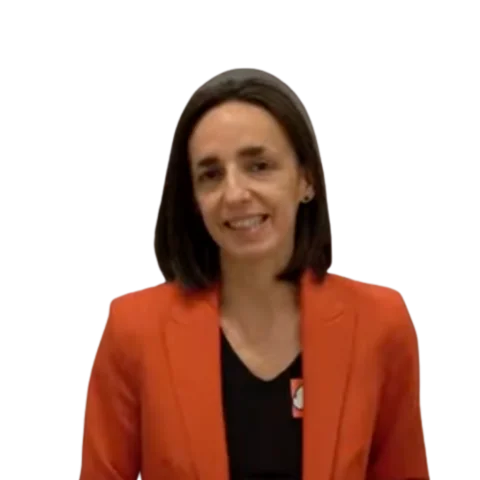


Adriana Torres Vergara
EU Regulatory Affairs Director at Adan